
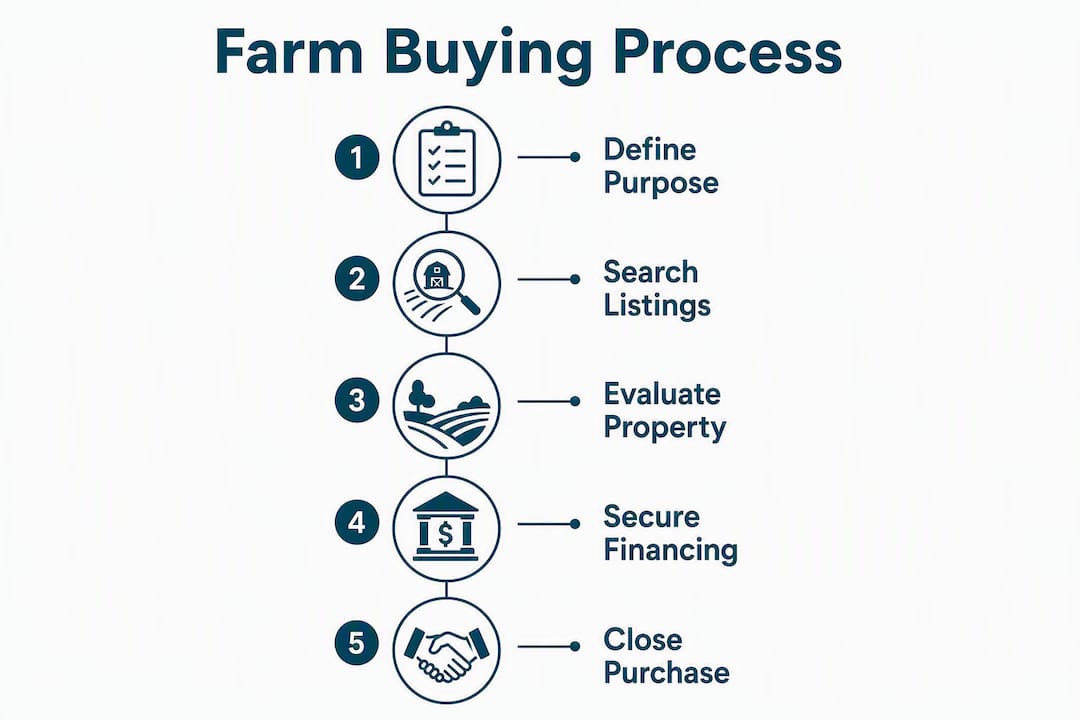
The fastest way to find a farm for sale is to combine targeted listing searches with a local farm-specialist agent and a clear farm-purpose checklist. Before you open a single listing, nail down three things:
- Define your farm purpose and budget. Dairy, row-crop, cattle, vegetable, or recreational land each demands different soil, water, and infrastructure. Land needs differ dramatically between a hobby farm and a commercial grain operation.
- Search two or three listing channels. National land portals, your state's FarmLink program, and local farm brokers cover different inventory. No single source shows everything.
- Contact a prequalified farm-specialist agent. Get representation before you make an offer, not after. Beamsrealtygroup connects Virginia buyers with local market expertise and step-by-step transaction support. Reach out here to start a tailored property search.
Table of Contents
- Where can you find farms for sale right now?
- What should you look for when evaluating a farm property?
- How is a farm purchase financed, and what does it actually cost?
- What does the farm-buying timeline look like?
- How do farm auctions work, and when should you bid?
- Should you buy a farm or lease one first?
- How does a farm-specialist agent help you buy?
- Key Takeaways
- What buying a farm actually demands from you
- Beamsrealtygroup helps Virginia farm buyers close with confidence
- Useful resources for farm buyers
Where can you find farms for sale right now?
Listing channels are not interchangeable. Each one surfaces a different slice of the market, and missing one can mean missing the right property.
- National land portals aggregate thousands of rural property listings with filters for acreage, price, land type, and location. They are the best starting point for broad geographic searches and for comparing price-per-acre across states.
- Local farm brokers and MLS. Many agricultural properties never reach national portals. A farm broker with local roots often knows about off-market listings, recent comparable sales, and sellers who prefer a quiet transaction.
- State FarmLink and farmland matching programs. Programs like NY FarmLink and similar state extension services match buyers with landowners, including lease-to-own and community-matched land arrangements. These are especially useful for beginning farmers or buyers targeting a specific county.
- County auction listings and USDA/FSA inventory. The USDA Farm Service Agency maintains loan programs and occasionally lists foreclosed or inventory properties. County auction calendars surface estate sales and motivated sellers.
- Private networks and farmland preservation programs. Some of the best agricultural land for sale moves through word-of-mouth, conservation organizations, and regional farmland trusts before it ever hits a public portal.
Search tactics that save time: Filter by property type first (dairy, row crop, pasture, recreational), then set an acreage band, then add keywords like "PI," "irrigation," "CRP enrolled," or "grain storage." Those terms filter out hobby parcels fast when you are shopping for a working operation.
What should you look for when evaluating a farm property?
A listing price tells you almost nothing on its own. The real evaluation happens on-site and in the documents.
Core property features
- Soil productivity index (PI). For row-crop land, PI is the single most important number. A field with a PI of 130 in the Corn Belt commands a premium over one at 100 for good reason.
- Water rights and access. Confirm legal water rights, not just physical proximity to a well or stream. Unclear water rights are one of the most common deal-killers in western states.
- Irrigation infrastructure. Pivot systems, drip lines, and pump capacity all affect what you can grow and what it costs to operate.
- Topography and drainage. Flat, well-drained fields reduce equipment costs and crop loss. Tile drainage maps, if available, are worth requesting.
- Existing infrastructure. Barns, grain bins, fencing, and equipment sheds significantly affect purchase price and operational viability and should be budgeted separately from land cost.
- Residence condition. If the property includes a farmhouse, budget for renovation separately. Extension experts note that farmhouse renovation, barns, fencing, and equipment costs often match or exceed land improvement costs.
Documents to request before making a serious offer
- Soil survey and field maps
- Well test and water quality report
- Title report and easement schedule
- Property breakdown showing cropland vs. timber vs. pasture vs. grassland acreage
- Conservation easement status and any deed restrictions
- CRP or other program enrollment records and contract expiration dates
Red flags
- Undisclosed easements that limit access or restrict building
- Vague or contested water rights documentation
- Major deferred maintenance on grain storage, irrigation pumps, or structural buildings
- Zoning that prohibits the specific agricultural use you intend
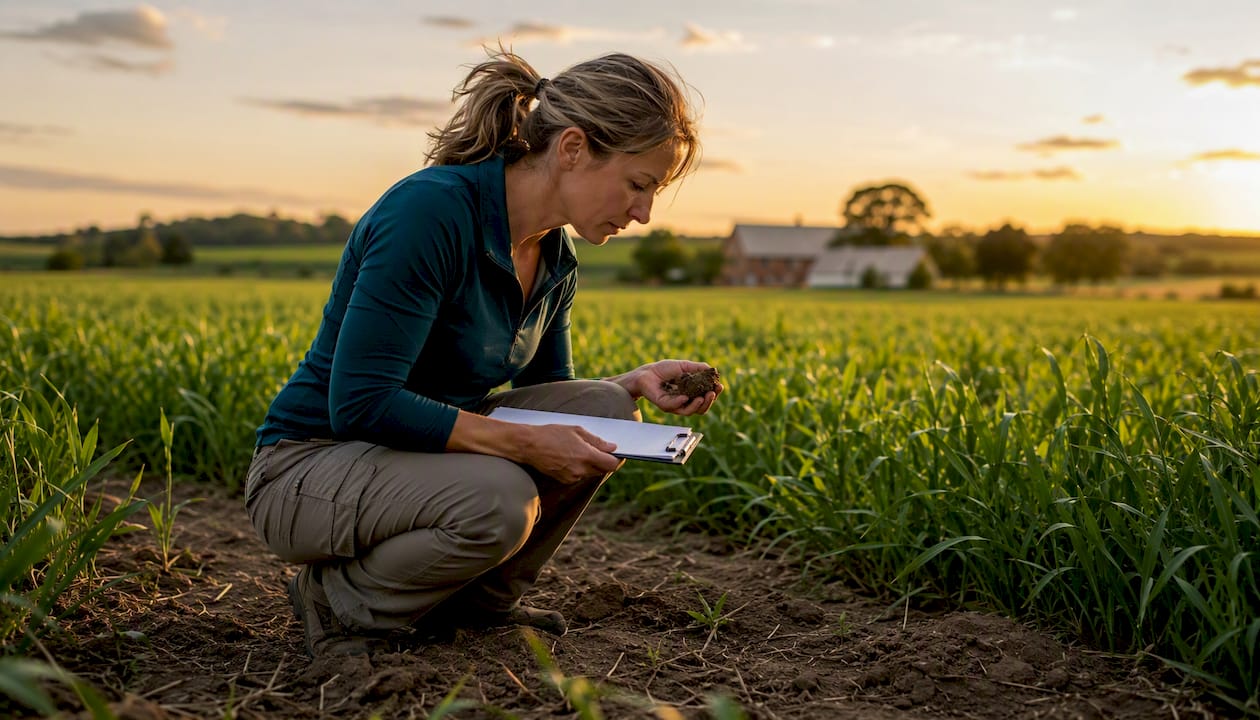
Pro Tip: Visit the property at least twice: once during dry conditions to assess field shape and drainage, and once after rain to see how water moves. Bring a soil consultant on the second visit and an equipment appraiser if the sale includes machinery.
How is a farm purchase financed, and what does it actually cost?
Farm financing works differently from a residential mortgage, and most conventional lenders are not equipped to underwrite a working agricultural operation.
Primary financing routes
- FSA direct and guaranteed loans. The USDA Farm Service Agency offers direct loans and loan guarantees for land purchase. Many programs have experience or eligibility requirements, particularly for beginning farmers, so plan for that barrier early.
- Farm Credit System. Regional Farm Credit associations specialize in agricultural lending and understand seasonal income, commodity price risk, and farm collateral in ways commercial banks often do not.
- Commercial agricultural lenders. Some regional banks with strong ag portfolios offer competitive rates, especially for buyers with an established farm history.
- Seller financing. On larger parcels, sellers occasionally carry a portion of the note, which can bridge a gap when conventional financing falls short.
Pro Tip: Talk to a farm-specific lender before you start touring properties. Conventional residential mortgages typically do not cover large working farms, and getting prequalified for an agricultural loan tells you exactly what acreage and price range is realistic.
Full cost picture beyond the purchase price

| Budget Category | What to Plan For |
|---|---|
| Infrastructure repairs | Barns, grain bins, fencing, irrigation systems |
| Equipment | Tractors, implements, harvest equipment |
| Working capital | Seeds, inputs, operating expenses for year one |
| Closing costs | Title insurance, survey, legal fees, lender fees |
| Insurance | Crop insurance, property and liability coverage |
| Permits or remediation | Environmental assessments, well permits, zoning variances |
None of these categories is optional. Buyers who budget only for land price routinely find themselves undercapitalized before the first growing season ends.
What does the farm-buying timeline look like?
Farm purchases move slower than residential deals, and auctions move faster. Know which track you are on before you start.
- Define criteria and start searching (2–4 weeks). Lock in farm purpose, acreage range, geography, and budget. Identify two or three listing channels and set up saved searches or alerts.
- Shortlist and schedule site visits (2–6 weeks). Narrow to three to five properties. First visits are for eliminating obvious mismatches; second visits are for detailed evaluation with specialists.
- Request documents and run due diligence (2–4 weeks). Pull the title report, soil survey, well test, easement schedule, and program enrollment records. Hire a licensed surveyor if boundary lines are unclear.
- Secure financing (4–8 weeks). FSA and Farm Credit loans take longer to process than residential mortgages. Start the application as soon as you have a target property, not after an offer is accepted.
- Negotiate and execute the purchase agreement (1–2 weeks). Farm contracts often include contingencies for financing, inspections, and program transferability. Do not waive them.
- Closing (2–4 weeks). Title company coordinates final title search, deed transfer, and disbursement. Budget for closing costs in your total cash-to-close figure.
Due-diligence checklist before closing:
- Title search and title insurance commitment
- Boundary survey (especially for large or irregularly shaped parcels)
- Environmental phase I assessment if prior industrial or chemical use is suspected
- Conservation easement verification
- CRP contract review and transferability confirmation
- Final walk-through with infrastructure inspection
For sealed-bid and auction sales, the entire timeline compresses. Due diligence windows can be as short as one to two weeks, which means financing must be pre-arranged and inspections must happen before the bid deadline.
How do farm auctions work, and when should you bid?
Auctions are a legitimate and common way to buy agricultural land, but they reward prepared buyers and punish unprepared ones.
- Sealed-bid auctions require a written offer submitted by a deadline. There is no back-and-forth; your first number is your only number. The Stevenson Farm in Henderson County, Illinois is a current example: 160 acres offered in a one-chance sealed-bid format with a fixed deadline.
- Live on-site auctions are competitive and fast. Bidding opens, escalates, and closes in minutes. Emotion drives prices up; set a hard cap before you walk in.
- Online and simulcast auctions let remote buyers participate in real time alongside on-site bidders. Bid increments and buyer premiums apply the same way they do in person.
- Hybrid formats combine an online bidding period with a live close, giving buyers more time to evaluate but still requiring pre-arranged financing.
When auctions make sense for buyers: estate sales, motivated sellers who want a fast close, and properties where competitive price discovery actually works in your favor when other bidders are thin.
Risks to account for: buyer premiums (typically 2–5% added to the hammer price), limited due-diligence windows, and the binding nature of a winning bid. Many farm auctions require proof of financing or a deposit at registration.
Pro Tip: At any auction format, set your maximum bid before the event, add the buyer premium to it, and treat that combined number as your true ceiling. Inspect the property during any allowed preview window and have your lender's commitment letter in hand.
Should you buy a farm or lease one first?
Buying locks in long-term equity and operational control. Leasing costs less upfront and lets you test whether the land and the enterprise actually work before you commit to a mortgage.
- Lease when: — you are a beginning farmer, you are testing a new enterprise model, you lack farm management experience, or your financing is not yet farm-ready. USDA resources recommend beginning farmers consider leasing first to test their enterprise before committing to land purchase and long-term debt.
A rough comparison for a 50-acre vegetable operation: buying requires a substantial down payment, closing costs, and immediate infrastructure investment. Leasing the same acreage through a FarmLink or county farmland program typically requires only a security deposit and first-year rent, leaving capital available for equipment and working inputs. The trade-off is no equity accumulation and no guarantee of lease renewal.
County and regional farmland programs also provide sample lease agreements and matching services that reduce the legal friction of getting started. For buyers who are undecided, leasing for one to two seasons on the target land type is the most reliable way to validate the business model before signing a purchase contract.
How does a farm-specialist agent help you buy?
A general residential agent can close a farm transaction. A farm-specialist agent can tell you whether the property is worth buying in the first place.
What a specialist should provide:
- Local market analysis with comparable farmland sales (price per acre by soil type and land class)
- Property breakdown assistance: cropland, timber, pasture, and wasteland acreage
- Auction navigation and bidding strategy
- Referrals to agricultural lenders, soil consultants, and title companies that handle farm closings
- Contract negotiation that accounts for program transferability, infrastructure contingencies, and farm-specific closing timelines
Questions to ask any farm real estate agent:
- How many farm transactions have you closed in this county in the past two years?
- Can you show me comparable sales for this land type and acreage range?
- Do you have relationships with FSA, Farm Credit, or ag-specific lenders?
- How do you approach due diligence on a property with conservation easements or CRP enrollment?
Red flags: an agent who cannot produce recent comparable farmland sales, who is vague about commission structure, or who has no network of agricultural consultants is likely a residential specialist working outside their expertise.
Beamsrealtygroup brings local Virginia market knowledge, personalized guidance, and transaction support from first search through closing. For buyers targeting Virginia farmland, that local depth matters more than a national portal's acreage count.
Key Takeaways
Finding and buying the right farm requires defining your purpose, using multiple listing channels, and engaging farm-specific financing and representation before you make an offer.
| Point | Details |
|---|---|
| Define purpose first | Soil, water, and infrastructure needs vary completely by farm type; set your criteria before searching. |
| Use multiple listing channels | National portals, FarmLink programs, and local brokers each surface different inventory. |
| Budget beyond land price | Infrastructure, equipment, working capital, and closing costs often match the land investment itself. |
| Prepare financing early | FSA and Farm Credit loans take longer than residential mortgages; prequalify before touring properties. |
| Work with Beamsrealtygroup | For Virginia farm buyers, Beamsrealtygroup provides local market analysis, auction support, and step-by-step closing guidance. |
What buying a farm actually demands from you
There is a version of this process that looks tidy on paper: define your farm type, search the portals, call an agent, close in 90 days. The reality is messier, and the buyers who get hurt are almost always the ones who skipped the preparation steps because a listing looked perfect.
The most underestimated part of buying agricultural property is not the price. It is the gap between what a listing describes and what the land can actually support. A 200-acre parcel advertised as "prime cropland" can include 40 acres of timber, 30 acres of drainage ditches, and a grain bin that needs $80,000 in repairs. None of that shows up in the headline acreage or the asking price.
The second thing buyers consistently underestimate is financing lead time. FSA and Farm Credit approvals do not move at residential mortgage speed. Showing up to a negotiation without a commitment letter is how you lose a property to a cash buyer who did the paperwork three months earlier.
My honest recommendation: treat the agent selection as seriously as the property selection. The right farm real estate specialist will tell you to walk away from a bad deal. That is the service worth paying for.
Beamsrealtygroup helps Virginia farm buyers close with confidence
Virginia farm buyers face a specific market: a mix of row-crop operations in the Shenandoah Valley, livestock and pasture land in the Piedmont, and smaller rural parcels that blur the line between agricultural and residential. Knowing which category a property actually falls into, and what it is worth per productive acre, requires local expertise that a national portal simply cannot provide.
Beamsrealtygroup offers personalized guidance through every stage of a farm purchase: local market analysis, property evaluation support, auction navigation, lender introductions, and contract negotiation through closing. The process starts with a conversation about your farm criteria, budget, and timeline. From there, the team builds a tailored search and keeps you ahead of new listings before they hit the public portals.
To start your farm property search in Virginia, contact Beamsrealtygroup today and share your criteria. A dedicated agent will follow up with a localized search plan and relevant listings.
Useful resources for farm buyers
These government and extension resources are worth bookmarking before you start your search.
- USDA Farmers.gov: Find Land and Fund Your Farm — FSA loan programs, beginning farmer resources, and federal land inventory. Start here for financing options and eligibility requirements.
- NC FarmLink at NC State Extension — Detailed buying guides covering soil evaluation, property breakdowns, conservation easements, and due-diligence checklists. Useful for buyers in any state, not just North Carolina.
- NY FarmLink / Farmland Finder — A model for state-level farmland matching programs. Search for similar FarmLink services in your target state through your state's land-grant extension office.
- Farm King County Farmland Programs — An example of county-level farmland leasing and preservation programs that provide matching services and sample lease agreements for new farmers.