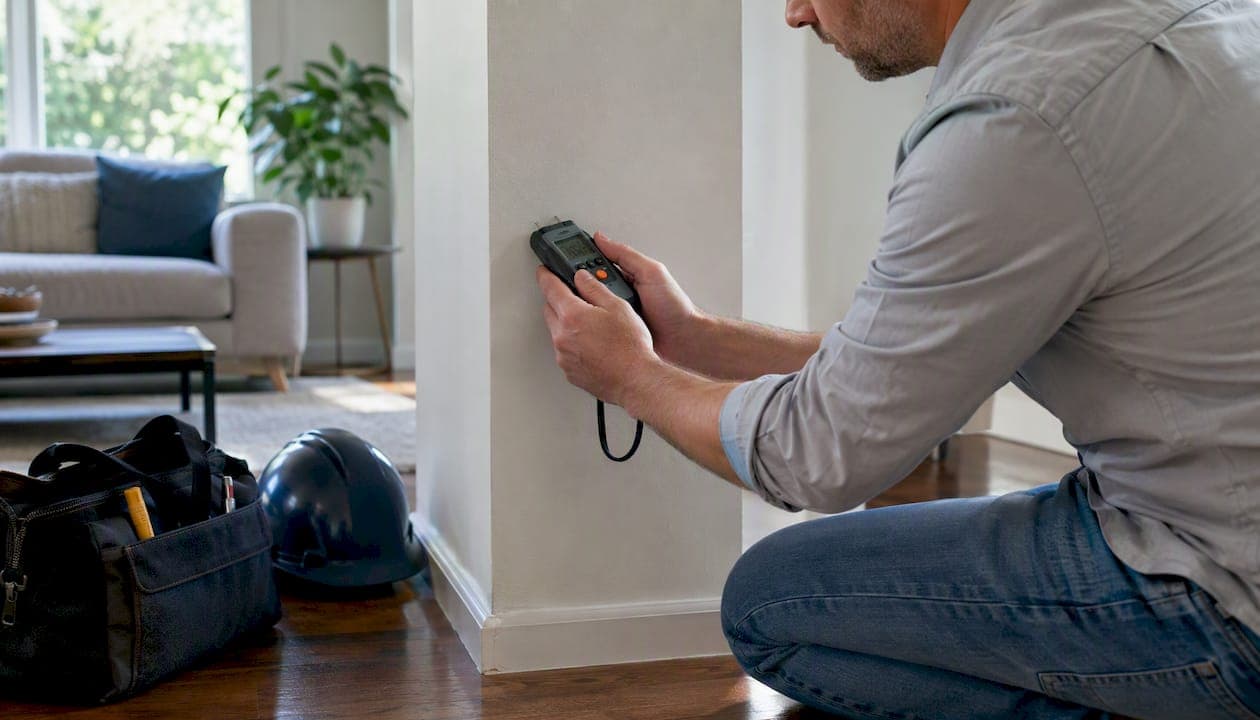
Hire a Virginia-licensed home inspector and verify their license number on the Virginia Department of Professional and Occupational Regulation site before you sign anything. If the property is new construction, that inspector also needs the NRS specialty designation. Skip this step and you risk paying for a report that carries no legal weight.
Before you schedule anything, confirm the inspector has:
- An active DPOR license number you can look up yourself
- The NRS specialty if the home is a new residential structure
- Errors & Omissions insurance
- A membership with InterNACHI, ASHI, or VAREI
Verify the license online, then book the walkthrough for a date you can attend in person.
Key Takeaways
A lawful Virginia home inspection requires a DPOR-licensed inspector, a signed written contract, and a report covering major systems plus start and finish times and weather conditions.
| Point | Details |
|---|---|
| Verify the license first | Look up the inspector's DPOR number online before signing any contract. |
| Match specialty to property | New construction requires the NRS specialty; standard licensure covers resale homes. |
| Read the exclusions section | Septic, wells, pests, and inaccessible areas are typically excluded from the base inspection. |
| Attend the walkthrough | Being present lets you ask questions and see issues the report can't fully capture. |
| Work with Beams Realty Group | Beamsrealtygroup connects clients with vetted, DPOR-verified inspectors and helps use reports in negotiation. |
Where to Verify Licensing and Inspector Credentials
- DPOR licensing page: confirm license status and NRS specialty.
- Virginia inspection code: required report contents.
- InterNACHI directory: check membership and certification status.
Table of Contents
- What Questions Should You Ask Before Hiring a Home Inspector?
- How Long Does a Home Inspection Take in Virginia, Start to Finish?
- What Do Virginia Inspection Contracts Exclude?
- What Are Your Rights as a Buyer or Seller During a Virginia Inspection?
- How We Help Clients Work With Licensed Inspectors
- How Beams Realty Group Helps You Hire the Right Inspector
- Sources
What Questions Should You Ask Before Hiring a Home Inspector?
Start every call with the DPOR license number and ask the inspector to spell it out so you can check it yourself. Then ask how long the report takes to arrive, whether it's digital with photos, and whether the price includes add-ons like radon testing or thermal imaging. Many Virginia inspection companies bundle these in, and knowing what's included before you book avoids a surprise invoice later.
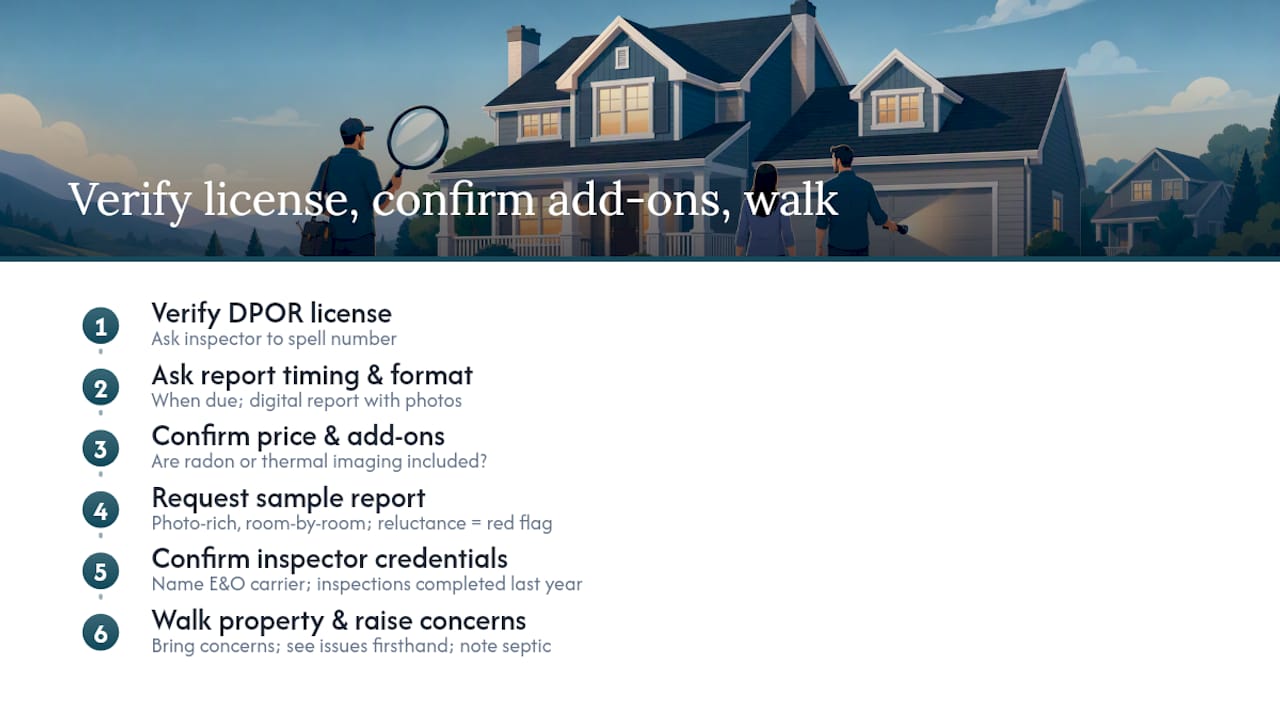
Ask for a sample report. A vague, checkbox-style document tells you less than a photo-rich one that flags specific issues room by room. If the inspector hesitates to share a sample, that's a red flag worth taking seriously.
Watch for inspectors who won't name their E&O insurance carrier or who dodge questions about how many inspections they've completed in the past year. A licensed, experienced inspector answers both without pausing.
Plan to walk the property with the inspector to better understand the pre-listing inspection process. Professional guidance on attending your own inspection consistently points to the same benefit: you see cracks, stains, and wear firsthand instead of reading about them secondhand, and you can ask the inspector to explain what's cosmetic versus what needs a specialist. Septic systems are one example. Virginia's own inspection standards note they typically require a separate licensed professional, not the general home inspector.
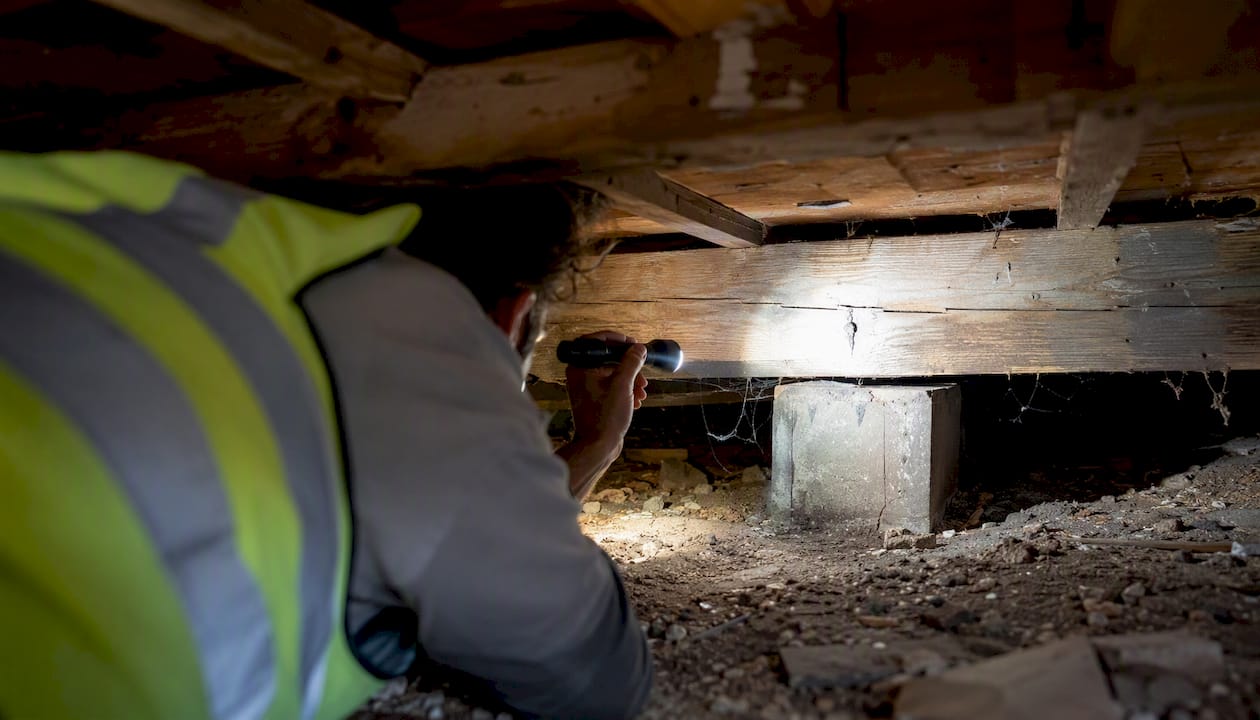
Bring your own list of concerns, especially for older homes: knob-and-tube wiring, foundation settling, roof age. A good inspector welcomes the list. One who brushes it off is telling you something.
How Long Does a Home Inspection Take in Virginia, Start to Finish?
Most Virginia buyers can go from scheduling to signed report in about a week, sometimes faster if the inspector has capacity. Booking usually happens within a day or two of an accepted offer, since most purchase contracts give you a defined inspection contingency window of several days.
The inspection itself typically runs a few hours for an average single-family home, longer for larger properties or homes with additional systems like a well, septic tank, or detached structures. Virginia's administrative code requires the report to document the inspection's start and finish times along with weather conditions, so you'll see those details recorded even if you weren't watching the clock yourself.
Report delivery is where turnaround varies most between companies. Some inspectors deliver a digital report the same evening; others take 24 to 48 hours. A handful still take longer, which can eat into your contingency window if you're not paying attention. Ask about turnaround time when you book, not after the inspection is done.
If you're adding radon testing, budget extra time. Radon results typically require a 48-hour continuous test, which pushes your final report timeline back even if the general home inspection wraps up quickly. Build that into your contingency deadline calculations, especially if your contract has a tight window.
What Do Virginia Inspection Contracts Exclude?
Every Virginia home inspection contract has to be written and signed before work begins, and state regulation requires it to spell out the scope of what's covered and what isn't. Reading that section matters more than most buyers realize.
Standard exclusions typically include:
- Septic systems and wells, which usually need a separately licensed specialist
- Pest and termite activity, covered under a different license category
- Pools, spas, and detached outbuildings not part of the primary structure
- Cosmetic issues like paint, carpet wear, or minor drywall cracks
- Anything hidden behind walls, under insulation, or otherwise inaccessible without invasive testing
Virginia's regulations focus inspectors on "readily accessible" components. That phrase does real work in a dispute. If a leak was hidden behind finished drywall and the inspector had no way to see it, the contract almost certainly protects them from liability. This is exactly why sample reports matter during your hiring process. A good one tells you plainly where the inspector's view was limited, rather than staying silent on it.
Ask directly whether radon, mold, or thermal imaging are included or billed separately. These add-ons frequently sit outside the base contract, and assuming they're covered when they're not is one of the more common misunderstandings buyers run into after the fact.
What Are Your Rights as a Buyer or Seller During a Virginia Inspection?
Buyers have the right to a written, signed contract before the inspector starts work, and to a report that meets the state's minimum content standards. That report must document the condition of major systems (foundation, roof, plumbing, electrical, HVAC) along with the inspection's start time, finish time, and weather conditions, all spelled out in Virginia's administrative code. If a report you receive is missing these basics, you have grounds to question whether the inspector met licensing requirements.
Sellers have obligations too, primarily around access. Virginia doesn't require sellers to be present during the inspection, but they do need to provide reasonable access to the property and its systems, including areas like the attic, crawlspace, and electrical panel. Blocking access can complicate a transaction and raise questions during negotiation.
Neither party has the right to pressure an inspector into softening or omitting findings. Virginia's licensing regulations tie an inspector's continued licensure to following the state's standards of practice, which exist specifically to keep the report objective regardless of who's paying for it.
Once you have the report, negotiation is a separate legal process from the inspection itself. Buyers commonly use findings to request repairs, a price reduction, or a credit at closing, but Virginia law doesn't obligate a seller to agree to any of it. That's a contract negotiation, not a regulatory requirement.
How We Help Clients Work With Licensed Inspectors
I've sat through enough inspection walkthroughs to know the difference between a report that helps a negotiation and one that just sits in a file. Part of what we do at Beamsrealtygroup is help clients think through whether they need a standard inspection or one that includes the NRS specialty for new construction, then use those findings productively once the report lands.
A DPOR license number and a clean report are the legal minimum. What actually protects you at the closing table is knowing how to read that report and use it.
How Beams Realty Group Helps You Hire the Right Inspector
Finding a licensed inspector shouldn't mean scrolling through directories at midnight trying to cross-reference DPOR numbers yourself. Beamsrealtygroup helps Virginia buyers and sellers get connected with inspectors who already carry verified DPOR licenses, the right specialty designation for new construction, and current E&O insurance, so you're not doing that verification alone.

Beyond the referral, we help you schedule around your contingency window, flag which add-ons (radon, thermal imaging) actually make sense for the property you're buying, and use the inspection report as leverage during repair negotiations rather than letting it sit unread. That's the part most buyers underestimate: a report is only as useful as what you do with it afterward.
If you're under contract or about to make an offer in Virginia, reach out through Beams Realty Group and we'll help you line up a vetted inspector and walk through what the findings mean for your negotiation.
Sources
- Important Notice for Home Inspectors | Virginia Department of Professional and Occupational Regulation
- Certified Home Inspectors in Virginia - InterNACHI®
- Home Inspection Checklist - A-Pro Home Inspection Leesburg VA