
Working with a real estate agent is the single most effective way to protect your financial interests when buying or selling a home. A real estate agent is a licensed professional who represents your interests, manages negotiations, and guides you through every legal and logistical step of a transaction. According to 2025 NAR data, 88% of homebuyers used an agent for their purchase, and 91% reported high satisfaction. Sellers who use agents earn a $55,000 higher median sale price than those who sell on their own. Those two numbers tell you everything about the value of professional representation.
How to find and choose the right real estate agent
Finding the right agent starts before you ever sign anything. The agent you choose will influence your offer strategy, your negotiation outcomes, and how smoothly your closing goes. Treat the selection process with the same care you would give to choosing a doctor or attorney.
Start with referrals and research
Referrals from friends, family, or your lender are the fastest way to build a shortlist. Online reviews on platforms like Google add a second layer of verification. Attending open houses in your target neighborhood lets you observe agents in action before committing to a conversation.
Interview more than one agent
75% of homebuyers interviewed only one agent before hiring, even though experts consistently recommend speaking with at least two or three. That statistic reveals a costly shortcut. A single interview gives you no baseline for comparison, which means you cannot tell whether an agent's communication style, local knowledge, or negotiation approach is above average or merely adequate.

During each interview, ask about their recent sales in your price range, how they communicate with clients, and how they handle multiple offers. Ask specifically how many transactions they closed in the past 12 months in your target area. An agent who cannot answer that question with specifics is not the right fit.
Understand fiduciary duty and agent types
Realtors are bound by the National Association of Realtors Code of Ethics, which goes beyond standard state licensing requirements. That distinction matters because it means a Realtor has a formal obligation to act in your best interest, not just follow the law.
Buyer's agents represent buyers. Listing agents represent sellers. Dual agency, where one agent represents both parties in the same transaction, creates a direct conflict of interest and is best avoided. If you are a buyer, contact a dedicated buyer's agent rather than calling the listing agent directly.
- Ask each candidate: "How many buyers or sellers did you represent in this zip code last year?"
- Ask: "How do you prefer to communicate, and how quickly do you respond to clients?"
- Ask: "Have you handled transactions in my price range recently?"
- Ask: "What happens if I am unhappy with the relationship?"
Pro Tip: Request a sample of a recent purchase agreement or listing contract before you sign anything. Reviewing the paperwork in advance tells you exactly what you are committing to.
What to expect when working with a real estate agent
Setting clear expectations from day one prevents frustration later. Agents handle far more than showings and listings. Their work includes market research, offer preparation, negotiation, inspection coordination, lender communication, and document management. Most of that work happens off-market and out of sight.
Agent responsibilities vs. client responsibilities
The table below shows the division of labor in a typical transaction.
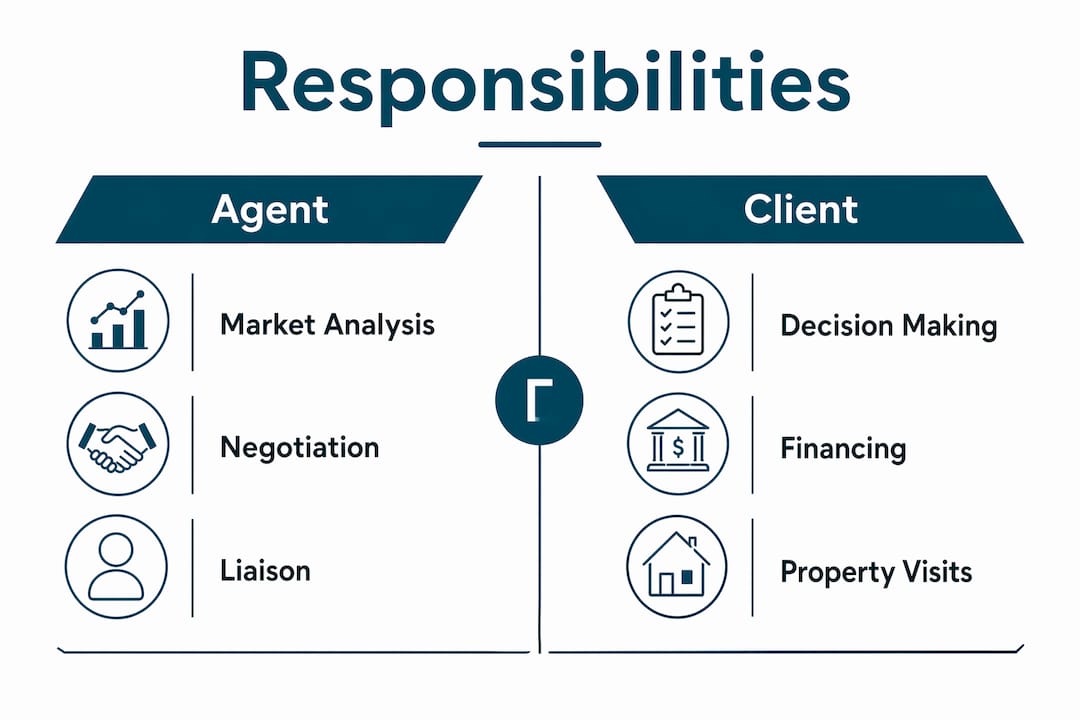
| Responsibility | Agent | Client |
|---|---|---|
| Market analysis and pricing | Runs comparative market analysis | Reviews and approves pricing strategy |
| Property search or prep | Identifies listings or stages home | Attends showings, gives feedback |
| Offer and negotiation | Drafts and presents offers | Makes final decisions on terms |
| Inspection coordination | Schedules and attends inspection | Reviews report and decides on repairs |
| Paperwork and deadlines | Prepares and tracks all documents | Signs documents on time |
| Lender and title coordination | Communicates with all parties | Responds promptly to lender requests |
Your agent manages the process. You make the decisions. That division is non-negotiable.
What clients often miss
Timely client responsiveness directly affects outcomes in competitive markets. A delayed response to a counteroffer can cost you a deal. A slow reply to a lender's document request can push back your closing date. Your agent can only move as fast as you allow them to.
Honest feedback also matters more than most first-time buyers and sellers realize. If a property does not feel right, say so immediately and explain why. If an offer feels too low, push back with your reasoning. That kind of direct communication helps your agent refine their approach and serve you better.
- Review every document your agent sends within 24 hours.
- Attend the home inspection in person whenever possible.
- Give written feedback after every showing, even if it is brief.
- Tell your agent immediately if your priorities change.
Best practices for collaborating with your agent
Effective real estate agent collaboration does not happen automatically. It requires structure, honesty, and consistent follow-through from both sides. Setting clear expectations from the start prevents misunderstandings and keeps the transaction moving.
-
Treat the first consultation as a two-way interview. You are evaluating the agent just as much as they are evaluating your needs. Bring a written list of your goals, your budget, your timeline, and your non-negotiables.
-
Define your communication preferences upfront. Tell your agent whether you prefer texts, calls, or emails, and how quickly you expect responses. Ask them to do the same. Mismatched communication styles are one of the most common sources of friction.
-
Use your agent's market knowledge for pricing strategy. Agents' negotiation expertise can save thousands and prevent deals from falling apart. When your agent recommends a specific offer price or list price, ask them to walk you through the comparable sales data behind that number. Understanding the reasoning makes it easier to commit.
-
Follow your agent's guidance during inspections and contingencies. Inspection results often trigger renegotiation. Your agent knows which repair requests are reasonable and which ones will kill the deal. Trust their read on the situation, but make the final call yourself.
-
Never contact the listing agent directly as a buyer. Contacting the listing agent directly as a buyer undermines your own representation and creates a conflict of interest. All communication should flow through your agent.
-
Document every verbal agreement in writing. If your agent tells you the seller agreed to leave the appliances, get it in the contract. Verbal commitments do not hold up at closing.
Pro Tip: Before your first showing or listing appointment, write down your three absolute deal-breakers. Share that list with your agent in writing. It saves hours of back-and-forth and keeps the search focused.
When should you reconsider your real estate agent?
Not every agent-client relationship works out. Recognizing the warning signs early saves time and money.
The clearest red flags include:
- Missed deadlines or appointments without explanation
- Failure to return calls or messages within a reasonable window
- Pressure to make decisions faster than you are comfortable with
- Lack of knowledge about your target neighborhood or price range
- Unwillingness to share comparable sales data to support their recommendations
"The agent-client relationship works best when both parties communicate openly and honestly. If you feel your concerns are being dismissed or your questions are going unanswered, raise the issue directly before assuming the relationship is broken."
Most problems resolve with a direct conversation. Tell your agent specifically what is not working and give them a chance to adjust. If the behavior continues, review your buyer or seller agreement to understand the termination process. Most contracts include a clause that allows either party to exit with written notice. Switching agents is a professional decision, not a personal one. The goal is a successful transaction, and the right agent makes that possible.
Key Takeaways
Choosing the right agent, setting clear expectations, and staying responsive are the three factors that most directly determine whether your transaction succeeds.
| Point | Details |
|---|---|
| Agent usage drives results | 88% of buyers use agents, and sellers earn $55,000 more on average than FSBO sellers. |
| Interview multiple agents | 75% of buyers hire the first agent they meet; speaking with two or three gives you a real comparison. |
| Know the division of labor | Agents manage the process; clients make the final decisions on price, terms, and timing. |
| Avoid dual agency | Use a dedicated buyer's or seller's agent to avoid conflicts of interest in the same transaction. |
| Responsiveness wins deals | Timely feedback and quick document turnaround prevent missed opportunities in competitive markets. |
What I have learned from watching agent-client relationships succeed and fail
The clients who get the best outcomes are not the ones who know the most about real estate. They are the ones who show up prepared, communicate clearly, and trust their agent's process while staying actively involved.
The biggest mistake I see first-time buyers and sellers make is treating their agent like a search engine. They expect the agent to deliver results without providing any input. That approach fails every time. Your agent needs to know your real priorities, not just the ones that sound reasonable. If you hate open floor plans, say so. If you need to close by a specific date for a job relocation, put that on the table in the first meeting.
The second mistake is underestimating what agents do behind the scenes. Most clients only see showings and phone calls. They do not see the hours spent reviewing title reports, coordinating with inspectors, pushing lenders to meet deadlines, and drafting counteroffers at 10 PM. That invisible work is where deals get saved or lost.
The agent-client relationship works best when you treat it as a genuine partnership. You bring the goals and the decisions. Your agent brings the expertise and the execution. Neither side can succeed without the other. If you find an agent who communicates well, knows your market, and earns your trust, protect that relationship. It is one of the most valuable professional partnerships you will have in your financial life.
— Myra
Beamsrealtygroup is ready to guide you through your transaction
Buying or selling a home in Virginia requires local expertise, clear communication, and an agent who puts your goals first.

Beamsrealtygroup specializes in personalized real estate services for buyers and sellers across Virginia. The team pairs deep market knowledge with direct, honest communication so you always know where your transaction stands. Whether you are purchasing your first home or listing a property you have owned for years, Beamsrealtygroup assigns you an agent matched to your specific needs and timeline. Visit Beamsrealtygroup to schedule a consultation and connect with an agent who will represent your interests from the first conversation to closing day.
FAQ
What does it mean to work with a real estate agent?
Working with a real estate agent means hiring a licensed professional to represent your interests in a home purchase or sale. Your agent handles market research, negotiations, paperwork, and coordination with lenders and inspectors on your behalf.
How do I find a real estate agent I can trust?
Start with referrals from people you know, then interview at least two or three candidates. Ask about their recent transactions in your area, their communication style, and how they handle negotiations.
What questions should I ask a real estate agent before hiring?
Ask how many transactions they closed in your target area in the past year, how quickly they respond to clients, and what their process looks like from first showing to closing. Ask specifically how they handle multiple-offer situations.
What are the main benefits of using a Realtor?
Sellers who use agents earn a median of $55,000 more than FSBO sellers. Buyers benefit from negotiation expertise, access to off-market information, and protection from costly contract errors.
Can I switch real estate agents if the relationship is not working?
Yes. Review your buyer or seller agreement for the termination clause, then submit written notice. Most contracts allow either party to exit the relationship with proper notice.