
The right list price is a competitive, data-driven number tied directly to recent local comps and your own timeline, not a figure you pick because you'd "like to get" that much. If you need to sell in 30 days, price at or just under fair market value. If you can wait for the right buyer, you can price closer to the top of your comp range and adjust from there.
This works because your list price is a marketing tool, not a prediction. It attracts buyers into your search bracket, and the final sale price gets negotiated from there. Pricing too aggressively above comps just delays that negotiation and burns your best window of buyer attention, the first two weeks on market.
Your immediate next step:
- Pull three to five recently sold comps within a half mile from the past 90 days.
- Note their price per square foot and how it compares to your home's condition.
- Call an agent for a full Comparative Market Analysis (CMA) if the comps are inconsistent or thin.
Pro Tip: Don't just average your comps. Weight the ones most similar to your home in size, condition, and age of systems, they matter more than a raw mean.
Homes typically sell for 97 to 98 percent of list price nationally, though that ratio swings hard with local supply and demand.
Key Takeaways
Setting the right list price means combining recent local comps, a professional CMA, and your own timeline into one defensible number, then adjusting based on real buyer feedback.
| Point | Details |
|---|---|
| Start with data, not hope | Pull sold comps from the last 90 days before settling on any number. |
| Use tools in sequence | Run an online estimate, then a CMA, then an appraisal if comps are thin. |
| Watch the 14 day mark | Few showings by day 14 signals a price problem, not a marketing one. |
| Know your local ratio | Sale-to-list ratios near 97 to 98 percent nationally vary a lot by market. |
| Get local expertise | Beamsrealtygroup offers a free CMA and ongoing price monitoring after listing. |
Table of Contents
- What Factors Actually Influence Your Home's Price?
- How Does the Local Market Change Your Price Strategy?
- Comps, CMA, Zestimate, or Appraisal: Which Should You Trust?
- What Pricing Strategy Fits Your Situation?
- Which Pre-Listing Fixes Actually Pay Off?
- How Do You Get the Most Out of Your Agent's Pricing Advice?
- A 7-Step Checklist for Setting Your List Price
- What Does a Typical Sale-to-List Ratio Actually Tell You?
- How Should Buyer Concessions Factor Into Your Price?
- How Does Your List Price Shape What Buyers Think of Your Home?
- How We Typically Advise Sellers on Price
- How Beamsrealtygroup Helps You Price and Sell With Confidence
- Quick Reference: Where to Check Your Home's Value
- Sources
What Factors Actually Influence Your Home's Price?
Agents and appraisers evaluate a specific, comparable set of attributes, not vague curb appeal impressions. The core list: location and neighborhood, square footage, bedroom and bathroom count, lot size, overall condition, upgrades, and the age of major systems like the roof and HVAC. Local market analysis combined with comparable sales data forms the backbone of any credible valuation.

Some of these are easy to document yourself. Square footage, lot size, and system ages usually live in public records or old invoices you can dig up. Others, like true condition or the quality of a kitchen remodel, need someone to actually walk the property.
Watch for negative factors that require a price adjustment:
- A busy road or train noise nearby
- An easement or shared driveway
- A prior expired or withdrawn listing on record
That last one matters more than sellers expect. A home that sat unsold for 120 days last year signals to agents (and savvy buyers) that something about the original pricing or condition didn't work, and it often demands a more conservative relaunch price.
Pro Tip: Pull your own property's public record before your agent does. If there's an error in square footage or lot size, you want to catch it before it undercuts your comps.
How Does the Local Market Change Your Price Strategy?
A seller's market, where inventory is tight and buyers outnumber listings, supports pricing at or slightly above your strongest comps. A buyer's market, with more inventory than demand, usually calls for pricing at or just below comps to stay competitive.
Seasonality shifts your buyer pool too. Spring and early summer typically bring more buyers and shorter days on market; late fall and winter narrow the pool, though serious buyers remain.
Weight your data sources differently depending on what they tell you:
- Recent solds are your most reliable anchor for actual value.
- Pending listings show what's about to close and how the market is moving right now.
- Active listings show your direct competition, what buyers will compare you against.
In tight inventory conditions, a deliberately modest underprice can draw a crowd and spark multiple offers. When inventory is heavy, precise comp matching and a conservative number keep you from stalling on the market.
Comps, CMA, Zestimate, or Appraisal: Which Should You Trust?
Each valuation method answers a different question, and the smartest sellers use them in sequence rather than picking just one.
Comps and a CMA are built from actual sold properties near you, adjusted for differences in size, condition, and features. This is the most reliable starting point because it reflects what buyers in your specific area have actually paid recently, not a national algorithm's guess.
Online automated estimates like a Zestimate are useful for a fast ballpark. Start there for a rough number, then refine it, because these tools miss local nuance like a busy street, a dated kitchen, or a premium lot.
A professional appraisal costs money, usually a few hundred dollars, but it's worth commissioning when comps are scarce, your home has unusual features, or you want an unbiased number to defend your price to a skeptical buyer's lender later.
| Method | Best For | Limitation |
|---|---|---|
| Online estimate (Zestimate) | Quick ballpark before deeper research | Misses condition and local nuance |
| Comps / CMA | Local, buyer-informed pricing | Requires recent, truly comparable sales |
| Professional appraisal | Objective, lender-ready valuation | Costs money; takes days to schedule |
Pro Tip: Run all three in that order: estimate, then comps, then appraisal if needed. Each one should narrow your range, not contradict the last.
What Pricing Strategy Fits Your Situation?
Competitive pricing, setting your list price at or slightly under comps, generates faster showings and often multiple offers. It's the right call when speed matters or when inventory is thin enough that a bidding war is realistic.
Aspirational pricing, aiming above your comps for top dollar, only works in strong seller's markets with genuinely unique properties. Try it in a balanced or slow market and you risk sitting unsold while buyers assume something's wrong.
Pricing tactics like price banding, setting a number just under a round threshold such as $499,000 instead of $505,000, keeps you visible in buyer search filters that cut off at round numbers.
Watch for these triggers to cut price:
- No showings in the first 10 to 14 days
- Showings happening but zero offers after three weeks
- Buyer feedback repeatedly citing price as the objection
- New, lower-priced competition entering your immediate area
Underpricing risks appraisal gaps if a bidding war pushes the sale price past what a lender's appraiser supports. Overpricing risks a stale listing that eventually forces multiple visible price cuts, which themselves signal weakness to buyers watching your listing history.
Pro Tip: If you cut price, cut meaningfully. A token $2,000 reduction rarely re-triggers buyer interest; a real adjustment does.
Which Pre-Listing Fixes Actually Pay Off?
- Address safety issues and major systems first, a failing roof or dead HVAC unit will surface in any inspection or appraisal regardless of how good your photos look.
- Handle curb appeal next: fresh mulch, a clean walkway, and a painted front door cost little and shape the first photo buyers see.
- Declutter and depersonalize every room before your photo shoot, this alone often outperforms expensive renovations for ROI.
- Consider staging, physical or virtual, only after the basics are done. It helps most on vacant homes or awkward layouts, not homes already well furnished.
Pro Tip: Skip full kitchen remodels before selling in most cases. Buyers rarely recoup dollar for dollar, and a clean, decluttered version of your current kitchen usually photographs just as well.
How Do You Get the Most Out of Your Agent's Pricing Advice?
Ask any listing agent for their comps, their marketing plan, and their expected days on market before you agree to a number. A vague "I think we can get X" without supporting data isn't a pricing strategy.
Getting a second or third agent opinion is reasonable, especially if the first CMA feels off. Compare their comp selections directly. If one agent's comps are all a mile away and another's are three blocks from your house, the second set deserves more weight.
Here's the part sellers sometimes forget: you have final say on list price, always. A good agent will push back with data if they disagree, but the number on the sign is your decision, and it should be documented clearly in your listing agreement. Keeping emotion out of that decision and leaning on the CMA data is what separates a fast, clean sale from a frustrating one.
Pro Tip: Ask each agent directly: "What's your track record for sale-to-list ratio on your last five listings?" It reveals more than any glossy marketing packet.
A 7-Step Checklist for Setting Your List Price
- Gather basic facts: square footage, lot size, system ages, and recent upgrades from public records and your own files.
- Pull recent local comps: sold, pending, and active listings within your immediate area.
- Decide your actual goal: fastest possible sale or the highest achievable price.
- Request a CMA or full agent consultation to sanity check your own research.
- Test a price band against buyer search brackets, then publish your listing.
- Monitor showings and feedback closely for the first 14 days.
- Adjust price based on real triggers, not impatience, if the data says to move.
Pro Tip: Set a calendar reminder for day 14. If you haven't had at least three showings by then, that's your signal to reassess, not a signal to panic.
What Does a Typical Sale-to-List Ratio Actually Tell You?
Homes nationally sell for roughly 97 to 98 percent of list price, but that benchmark shifts significantly by local market conditions, don't treat it as universal.
- A ratio near or above 100% in your area suggests a tight, competitive market where slightly aggressive pricing works.
- A ratio well below 97% suggests buyers are negotiating hard, and a more conservative initial price avoids repeated cuts.
If your own listing is tracking well below your area's typical ratio after a few weeks, that's a direct signal your price, not just your marketing, needs a second look.
How Should Buyer Concessions Factor Into Your Price?
Concessions, like covering a buyer's closing costs or a rate buydown, are a negotiating tool, not a discount you should build into your list price upfront. Think of them as a lever you pull during negotiation, separate from the number on the sign.
If you know you're likely to offer $5,000 toward closing costs to attract more buyers, that's usually smarter to keep off the listed price and offer selectively once you're in talks with a serious buyer. Advertising "will consider concessions" in your listing remarks can actually widen your buyer pool, especially first-time buyers stretched on cash to close, without you lowering your headline price and losing visibility in search filters that use price as a cutoff.
The exception is a slow market where competing listings are openly offering concessions. In that case, build a modest concession budget into your pricing math from the start so your number stays competitive once buyers start comparing net costs, not just sticker prices, across listings.
Talk this through with your agent before you list. A concession strategy decided mid-negotiation, under pressure from a specific offer, tends to be less favorable than one you planned for calmly beforehand.
How Does Your List Price Shape What Buyers Think of Your Home?
Buyers read your price as information about your home before they ever step inside. A price that matches your comps signals a serious, realistic seller. A price noticeably above comps signals either an inexperienced seller or an owner unwilling to negotiate, and many buyers simply skip those listings rather than bother with a lowball offer.
The flip side matters too. A price that's unusually low for the area doesn't just attract more buyers, it can also raise suspicion about hidden problems, especially if your home has sat on public record with a prior price history. Buyers and their agents check that history.
There's also a hard mechanical effect: most buyers search using price filters set in $25,000 or $50,000 increments. A home priced at $455,000 misses buyers searching up to $450,000, even though the gap is trivial. That single detail, more than staging or photography, often determines how many buyers even see your listing in the first place.
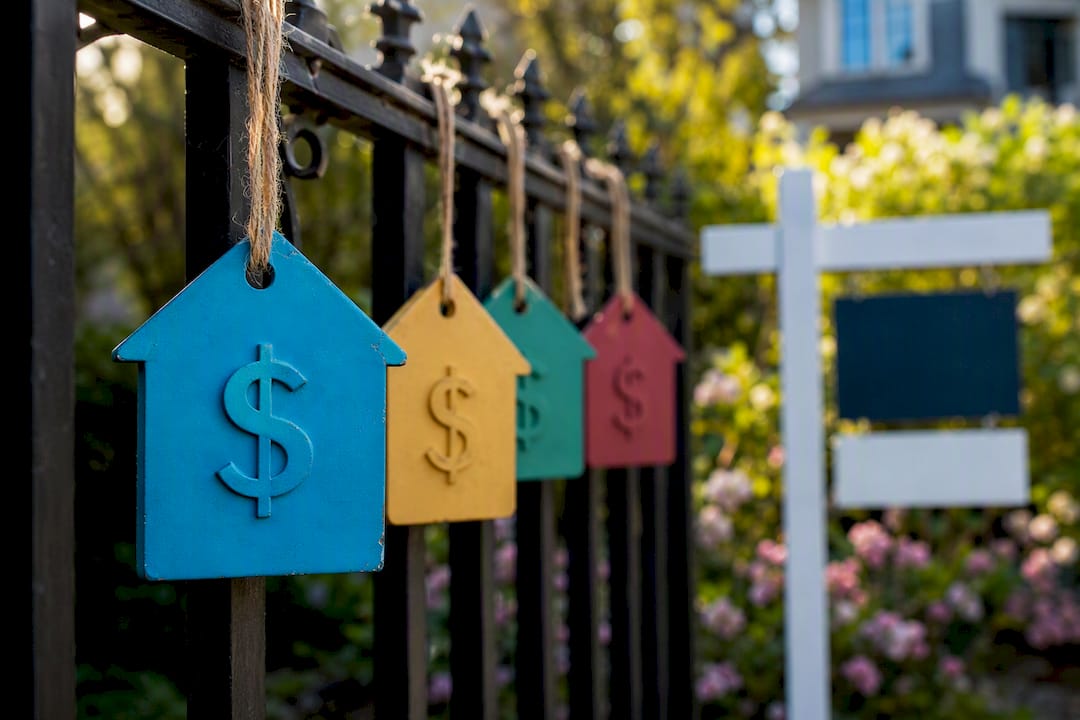
Correct pricing widens your exposure, and more exposure typically means more offers and stronger negotiating leverage for you as the seller. Overpricing does the opposite quietly. Your listing doesn't get rejected, it just gets skipped by the search filters that would have shown it to interested buyers in the first place.
How We Typically Advise Sellers on Price
Beamsrealtygroup starts every pricing conversation with the data, recent solds, active competition, and a realistic read on your timeline, before any staging or marketing talk begins. We build a staging budget recommendation into that initial conversation and keep watching the market after you go live.
Our local transaction history and buyer-network reach mean our CMAs reflect what's actually happening on your street, not a broad zip-code average. Call us when your own research raises more questions than it answers.
How Beamsrealtygroup Helps You Price and Sell With Confidence
Beamsrealtygroup gives you something a spreadsheet or an online estimate can't: a local agent who's tracked recent sales on your specific street and can defend your price to a skeptical buyer's agent.
We offer a free CMA built from current MLS data, help coordinating a professional appraisal when your home needs one, staging coordination to get your listing photo-ready, and a full marketing plan once your price is set. A first consult usually starts with a walkthrough of your comps and a conversation about your actual goals, speed or top dollar, so the number we recommend fits your situation instead of a generic formula.
If you're weighing a Comparative Market Analysis against an online estimate right now, skip the guesswork and get both numbers from one source. Request a free CMA from Beamsrealtygroup and get a defensible price range before you ever put a sign in the yard.
Quick Reference: Where to Check Your Home's Value
- MLS: best source for final, agent-verified comps
- Zestimate: fast ballpark before deeper research
- Public records: verify square footage, lot size, and history
- Professional appraiser: objective number when comps fall short
This article is general information, not a substitute for advice from a qualified financial advisor. Consult a qualified financial professional about your own circumstances before acting on anything here.