
A real estate timeline is defined as the ordered sequence of contractual, financial, and administrative steps that govern a property transaction from the first offer to the final closing. Understanding what is a real estate timeline matters because missing a single deadline can cost you your earnest money, delay your closing, or void your contract entirely. A standard financed transaction runs 30–45 days from contract to closing, while the full home buying timeline including pre-approval and property search typically spans 3–6 months. Beamsrealtygroup treats this timeline not as a fixed calendar but as a living project management tool, one that shifts with contract terms, lender requirements, and local regulations.
What are the main stages of a real estate timeline?
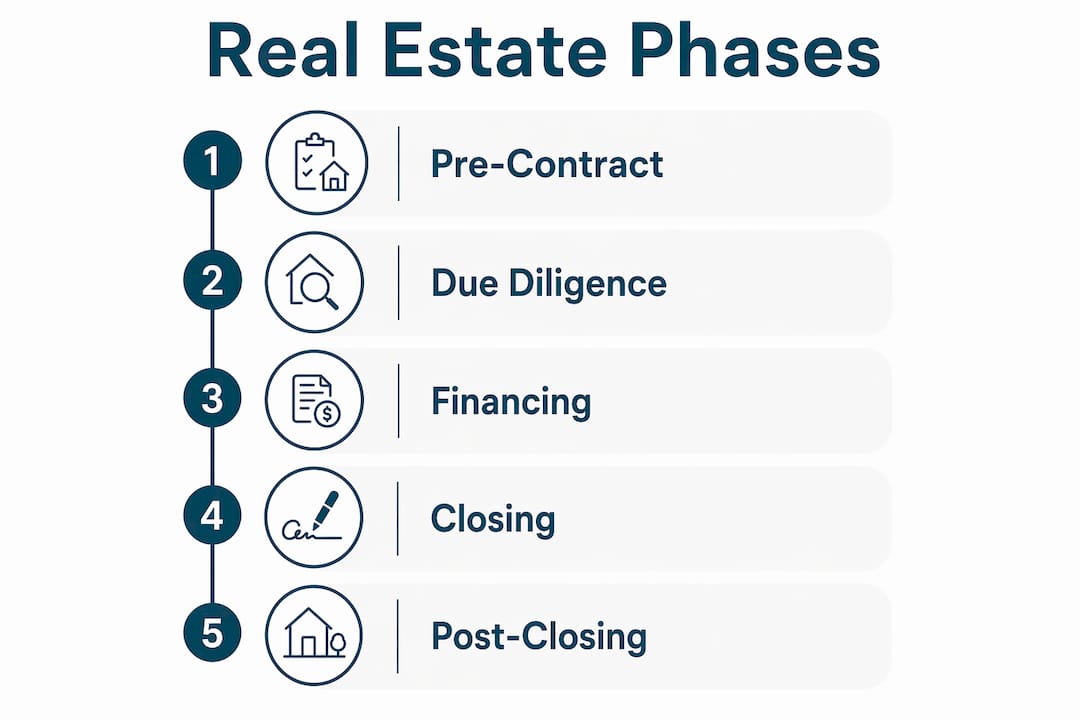
A real estate transaction follows four defined phases, each with its own tasks, deadlines, and responsible parties. Skipping or mis-sequencing any phase creates legal exposure and closing delays.
Phase 1: Pre-Contract
The pre-contract phase covers everything before an accepted offer. Buyers secure mortgage pre-approval, which takes 1–3 days for initial review, then search for properties and prepare competitive offers. Sellers prepare disclosures and set listing terms. Agents on both sides negotiate price, contingencies, and possession dates. The contract becomes binding only after both parties sign.

Phase 2: Due Diligence
Due diligence begins the moment the contract is executed. This phase includes home inspections, appraisals, title searches, and disclosure reviews. A typical transaction involves 30–60 discrete tasks during this window alone. Buyers usually have 7–10 days to complete inspections and must deposit earnest money, typically 1%–3% of the purchase price, within 3 days of contract execution. Title companies run parallel searches to confirm clean ownership.
Phase 3: Financing and Underwriting
The lender orders an appraisal, collects financial documents, and submits the file to underwriting. This phase is the most unpredictable because underwriters can issue conditions requiring additional documentation. Federal TRID regulations require lenders to deliver a Closing Disclosure at least 3 business days before closing. That mandatory waiting period gives buyers time to review final loan terms and catch any last-minute changes.
Phase 4: Closing and Post-Closing
Closing day involves signing settlement documents, transferring funds, and recording the deed. After the "Clear to Close" status is issued, a mandatory 3-business-day waiting period applies before funding can occur. Buyers conduct a final walkthrough during this window. Post-closing tasks include recording the deed with the county and transferring utility accounts.
How do timelines vary by financing type and transaction specifics?
The property sale timeline changes significantly based on how the deal is financed and what type of property is involved.
Cash buyers move the fastest. A cash transaction can close in as little as 7–14 days because there is no loan underwriting or lender-mandated appraisal. Title search and due diligence still apply, but the overall process compresses dramatically. That speed gives cash buyers a real negotiating edge in competitive markets.
Loan type also shapes the timeline. Conventional loans typically close in 30–45 days. FHA and VA loans often run longer because they require government-mandated appraisals with stricter property condition standards. USDA loans can add additional weeks due to rural development approval requirements. Each loan type carries its own appraisal schedule and underwriting checklist.
Distressed properties add the most complexity. Short sales and foreclosures can extend the timeline by 45–90 days beyond contract execution because third-party lender or bank approval is required. Foreclosure deals may also require specialized title insurance endorsements to protect against prior liens. Buyers entering these transactions need to plan for extended contingency periods and flexible moving schedules.
State-specific rules add another layer. Virginia, for example, has specific disclosure deadlines and settlement agent requirements that differ from states like California or Texas. Contract contingency windows, attorney review periods, and recording timelines all vary by jurisdiction. Working with an agent who knows local rules prevents costly surprises.
| Transaction type | Typical timeline | Key variable |
|---|---|---|
| Cash purchase | 7–14 days | Title search speed |
| Conventional loan | 30–45 days | Underwriting conditions |
| FHA or VA loan | 45–60 days | Government appraisal standards |
| Short sale or foreclosure | 75–135 days | Third-party lender approval |
Why should you use the timeline as a project management tool?
Viewing a transaction as a project with task dependencies, critical milestones, and assigned ownership is the single most effective way to prevent delays. A visual timeline shows you which tasks block others. For example, the appraisal cannot be ordered until the contract is executed, and underwriting cannot clear until the appraisal is received. Knowing these dependencies lets you push the right tasks forward at the right time.
Assigning clear task ownership drastically cuts errors throughout the transaction. When every task has a named owner and a deadline, nothing falls through the cracks. Buyers own document submissions and inspection scheduling. Sellers own disclosure delivery and repair responses. Agents coordinate between all parties and flag approaching deadlines.
A structured checklist also protects your legal rights. Contingency deadlines are contractual. If you miss the inspection deadline, you may lose the right to negotiate repairs. If you miss the financing contingency deadline, you risk losing your earnest money deposit. Tracking these dates on a shared calendar or project app keeps everyone accountable.
Practical tasks to track on your timeline include:
- Earnest money deposit deadline (typically 3 days after contract execution)
- Inspection completion and repair request deadline (7–10 days)
- Appraisal order and receipt dates
- Loan commitment deadline
- Closing Disclosure delivery and the mandatory 3-day review window
- Final walkthrough scheduling
- Wire transfer confirmation and fraud verification
Pro Tip: Schedule your final walkthrough on the same day you receive the Closing Disclosure. That way, you review the property condition and your final loan terms at the same time, giving you a full picture before you commit to funding.
What are common pitfalls in real estate transaction timing?
Most missed deadlines happen because buyers and sellers misunderstand how tasks connect to each other, not because they are careless. The real estate process steps are sequential, and a delay in one task cascades into every task that follows it.
The most frequent problems include:
- Slow document submission. Lenders need tax returns, pay stubs, and bank statements quickly. A 2-day delay in submitting documents can push the closing date back by a week or more.
- Appraisal gaps. If the appraised value comes in below the purchase price, buyers and sellers must renegotiate or the deal may fall apart. Building extra time into the financing phase reduces this pressure.
- Inspection repair disputes. Repair negotiations after inspections can extend the due diligence phase by days or weeks. Sellers who respond slowly to repair requests risk triggering buyer cancellation rights.
- Wire fraud. Closing wire instructions are a frequent target for fraud. Always verify wire details by calling your title company directly using a phone number you find independently, not one provided in an email.
- Title issues. Liens, unpaid taxes, or ownership disputes found during the title search can halt a transaction entirely. Starting the title search early gives the title company time to resolve problems before closing day.
Sellers carry their own timeline responsibilities. Delivering accurate disclosures on time protects both parties legally. Responding to repair requests within the contract window keeps the deal on track. Sellers who treat their obligations as optional create delays that can push buyers to cancel.
Pro Tip: Set calendar alerts 48 hours before every major deadline. That buffer gives you time to act if a document is missing or a party is unresponsive, without triggering a contract default.
Communication is the most underrated timeline tool. A quick daily check-in with your agent during the due diligence and underwriting phases catches problems before they become emergencies. Beamsrealtygroup uses checklist-driven coordination to keep all parties aligned from contract to closing.
Key Takeaways
A real estate transaction requires active timeline management across four phases, with clear task ownership and deadline tracking protecting both buyers and sellers from costly errors.
| Point | Details |
|---|---|
| Four-phase structure | Every transaction follows Pre-Contract, Due Diligence, Financing, and Closing phases in sequence. |
| Timeline length varies | Financed deals close in 30–45 days; cash deals can close in as little as 7–14 days. |
| TRID rules are mandatory | Lenders must deliver the Closing Disclosure at least 3 business days before funding. |
| Task ownership prevents delays | Assigning every task to a named party with a deadline reduces errors and missed deadlines. |
| Distressed properties take longer | Short sales and foreclosures can extend the timeline by 45–90 days beyond contract execution. |
What I have learned from watching timelines succeed and fail
Every transaction I have seen fall apart had one thing in common: someone treated the timeline as a formality rather than a working document. The buyers assumed their agent was tracking every deadline. The sellers assumed the lender would flag any issues. Nobody owned the calendar, and the deal collapsed two days before closing when a document was missing from underwriting.
The timeline is not a schedule someone hands you at contract signing. It is a tool you actively manage. I have watched experienced buyers lose earnest money deposits because they missed an inspection deadline by 24 hours. That is not a paperwork error. That is a financial loss that could have been prevented with a single calendar alert.
The part that surprises most buyers is how many tasks run simultaneously during due diligence. The inspector, the appraiser, the title company, and the lender are all working at the same time, and their outputs feed into each other. If the appraisal is delayed, underwriting stalls. If the title search finds a lien, closing moves. Treating these as independent events is the fastest way to miss a dependency.
My honest advice: print your contract deadlines on day one and put them somewhere visible. Do not rely on email threads to track critical dates. Use a simple spreadsheet or a task app, assign every item to a person, and check it every morning during the active transaction period. That habit alone separates smooth closings from stressful ones.
— Myra
How Beamsrealtygroup supports your real estate timeline
Managing a real estate transaction means tracking dozens of deadlines across multiple parties, and one missed date can cost you the deal.

Beamsrealtygroup works with buyers and sellers in Virginia to manage every stage of the transaction with checklist-driven coordination. The team tracks contingency deadlines, confirms document submissions, and communicates directly with lenders and title companies to prevent delays. Whether you are buying your first home or selling an investment property, you get dedicated support from contract to closing. Visit Beamsrealtygroup to connect with an agent who treats your timeline as seriously as you do.
FAQ
What is a real estate timeline?
A real estate timeline is the ordered sequence of contractual, financial, and administrative steps required to complete a property transaction from accepted offer to closing. It typically spans 30–45 days for financed deals and 3–6 months when including the pre-contract search and pre-approval phase.
How long does the home buying timeline take?
The full home buying timeline usually runs 3–6 months from the start of your property search to closing day. The contract-to-close period alone takes 30–45 days for most financed transactions.
Can a real estate transaction close faster with cash?
Cash transactions can close in as little as 7–14 days because there is no loan underwriting or lender appraisal requirement. Title search and due diligence still apply and cannot be skipped.
What happens if you miss a deadline in the real estate process?
Missing a contractual deadline can result in loss of your earnest money deposit, cancellation of the contract, or legal liability. Contingency deadlines are binding, so tracking them with calendar alerts is the most reliable way to protect your rights.
What is the TRID rule and how does it affect closing timing?
TRID is a federal regulation requiring lenders to deliver a Closing Disclosure at least 3 business days before closing. This mandatory waiting period gives buyers time to review final loan terms and prevents last-minute surprises at the settlement table.