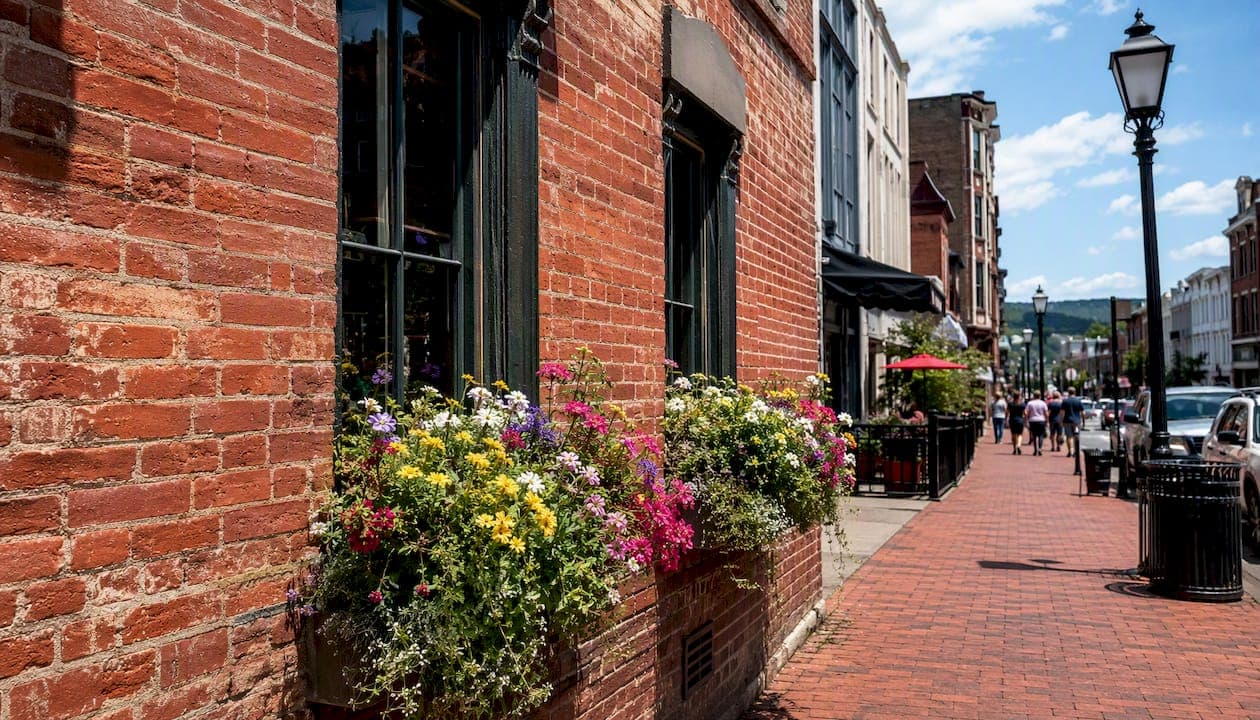
Staunton, Virginia (often searched as "Stanton VA") is an independent city in the Shenandoah Valley, roughly 39 miles northwest of Charlottesville, with one of the most intact Victorian-era downtowns on the East Coast. It is not a suburb of anything. It governs itself, funds its own schools, and runs its own services, which matters the moment you start thinking about buying property here. Three things make it stand out: it is the birthplace of Woodrow Wilson and home to Mary Baldwin University, giving it an academic and historic anchor most small cities lack; it hosts the American Shakespeare Center and the Frontier Culture Museum, which drive a year-round arts calendar; and its compact, walkable downtown sits at the intersection of I-81 and I-64, making it genuinely easy to reach from Richmond, D.C., or the Shenandoah backcountry.
- History and education: Birthplace of the 28th U.S. president, Woodrow Wilson; home to Mary Baldwin University, one of Virginia's oldest liberal arts institutions.
- Cultural draw: The American Shakespeare Center performs year-round at the Blackfriars Playhouse, and the Frontier Culture Museum preserves living-history farmsteads from four continents.
- Practical appeal: A walkable downtown grid, direct interstate access, and a council-manager government that publishes long-range infrastructure and flood-resilience plans for residents to track.
Key Takeaways
Staunton, VA is a self-governing independent city in the Shenandoah Valley with a nationally significant historic downtown, a year-round arts calendar, and a set of jurisdictional and preservation rules that every buyer must verify before closing.
| Point | Details |
|---|---|
| Independent city status | Staunton governs separately from Augusta County; tax rates, schools, and utilities differ across the city line. |
| Population and size | The 2020 Census recorded 25,750 residents at 1,417 ft elevation. |
| Top cultural draws | American Shakespeare Center, Frontier Culture Museum, and Woodrow Wilson Presidential Library anchor the visitor calendar. |
| Historic-district rules | Exterior changes to homes in designated districts require Architectural Review Board approval; budget time and cost accordingly. |
| Beamsrealtygroup | Beamsrealtygroup provides local Virginia real-estate expertise for buyers navigating Staunton's jurisdictional complexity and historic-home market. |
Table of Contents
- What are the key facts about Staunton, VA?
- How did Staunton develop into the city it is today?
- Where is Staunton and what is the climate like?
- Who lives in Staunton and what are the neighborhoods like?
- What drives Staunton's local economy?
- What are Staunton's must-see arts and cultural attractions?
- What are the best things to do in Staunton, and when should you visit?
- How do you get to Staunton and get around once you're there?
- Where should you stay and eat in Staunton?
- How does Staunton's local government work?
- Moving to Staunton: what you need to check before you buy
- Useful local resources and official contacts
- What a local agent would tell you first about Staunton
- Ready to buy or sell in Staunton? Beamsrealtygroup can help
- Sources
What are the key facts about Staunton, VA?
Staunton, Virginia recorded a population of 25,750 in the 2020 U.S. Census, making it a small but self-sufficient independent city with its own tax base, school system, and municipal services entirely separate from surrounding Augusta County.
Staunton sits in the central Shenandoah Valley between the Blue Ridge Mountains to the east and the Allegheny Mountains to the west, roughly 150 miles southwest of Washington, D.C. Shenandoah National Park's southern entrance is about an hour's drive north, and the George Washington National Forest wraps around the city's western edge.
Staunton's population, according to the 2020 Census, confirms its status as a small independent city with full municipal services.
How did Staunton develop into the city it is today?
The city's history runs deeper than most Virginia towns its size, and that depth shows up in the architecture, the institutions, and the way residents talk about their downtown.
- Augusta County was established with Staunton serving as the county seat, making it a regional administrative hub from the colonial era forward.
- The town of Staunton was formally laid out and named, likely after Lady Rebecca Staunton, wife of Virginia Governor William Gooch.
- Woodrow Wilson was born at the Presbyterian manse on Coalter Street, a fact the city has built an entire museum around.
- During the Civil War, Staunton served as a Confederate supply and hospital center, given its position along the Valley Turnpike and the Virginia Central Railroad.
- Staunton became an independent city, separating its governance from Augusta County, a status it retains today.
- Staunton adopted the council-manager form of government, reportedly becoming the first city in the United States to do so. That administrative model has since been widely adopted by other cities.
- Late 19th–early 20th century: The railroad economy drove commercial growth and produced the dense Victorian and Italianate streetscapes that now define the Historic Downtown Staunton district.
The Woodrow Wilson connection is the most-cited historical fact, but the council-manager government story is arguably more consequential: a model now used by thousands of American cities started here.
Where is Staunton and what is the climate like?
Staunton occupies a bowl-shaped valley floor at roughly 1,417 feet elevation, flanked by ridgelines on both sides. Lewis Creek drains the city's core, feeding into the Middle River and eventually the Shenandoah River to the north. Britannica's entry on Staunton places it clearly within the central Shenandoah Valley, a geographic position that shapes both its climate and its outdoor recreation options.
Seasons at a glance:
- Spring (March–May): Mild temperatures, blooming dogwoods, and the start of the outdoor festival calendar. One of the best windows for hiking in the George Washington National Forest.
- Summer (June–August): Warm and humid, with highs typically in the upper 80s°F. The Shakespeare theater season runs through summer, and downtown foot traffic peaks.
- Fall (September–November): The most popular season for visitors. Foliage in the Blue Ridge and Allegheny ridges frames the valley, and temperatures stay comfortable well into October.
- Winter (December–February): Cold with occasional snow; the valley's elevation means ice is a real factor on mountain roads. Indoor cultural programming (theater, museums) carries the calendar.
Best months to visit: September through October for foliage and outdoor activities; May through June for festivals and comfortable hiking. If you are coming specifically for Shakespeare, check the American Shakespeare Center's season schedule, which typically runs from late winter through early fall.
Who lives in Staunton and what are the neighborhoods like?
Staunton's population skews slightly older than the Virginia state median, reflecting a mix of long-term residents, retirees drawn by the cost of living and walkability, and a younger cohort connected to Mary Baldwin University and the arts economy. Population has held relatively stable since the 2020 count of 25,750, with modest growth driven by in-migration from higher-cost Virginia metros.
Downtown and the Gospel Hill district
The historic core is the most walkable part of the city, with red-brick sidewalks, 19th-century commercial buildings, and a concentration of restaurants, galleries, and performance venues. Gospel Hill, just south of downtown, contains some of the city's most architecturally significant Victorian homes. Buyers here get character and walkability; they also get historic-district review requirements for exterior changes, which adds time and cost to any renovation project.
West End and Newtown
These neighborhoods sit west and northwest of downtown and offer a mix of early-to-mid 20th-century housing stock at somewhat lower price points than Gospel Hill. They are still within easy walking distance of downtown amenities but feel more residential and quieter on weekday mornings.
Suburban outskirts and the Augusta County border
The city's edges blur into Augusta County along routes like U.S. 250 and U.S. 11. Properties here tend toward newer construction, larger lots, and lower density. The critical point for buyers: a house that looks like it is "in Staunton" on a map may actually sit in Augusta County, which means different tax rates, different school assignments, and different service providers. Verify the parcel's jurisdiction before making any assumptions about schools or utilities.
What drives Staunton's local economy?
Three sectors carry most of the economic weight: education, healthcare, and tourism-driven services.
- Education: Mary Baldwin University is one of the city's largest employers and generates year-round demand for housing, dining, and services. Its presence also supports a higher concentration of arts and cultural programming than a city this size would typically sustain.
- Healthcare: Augusta Health, the regional hospital system, is a major employer and serves a catchment area well beyond the city limits.
- Tourism and hospitality: The combination of the American Shakespeare Center, the Frontier Culture Museum, the Woodrow Wilson Presidential Library, and a well-preserved downtown generates significant visitor spending. Tourism seasonality is real: downtown restaurants and shops see their strongest traffic from May through October, and some smaller businesses adjust hours or staffing accordingly.
- Government and public services: As an independent city, Staunton maintains its own municipal workforce, adding a layer of stable public-sector employment.
- Small business and retail: The downtown Main Street designation has supported independent retail and food businesses, though the mix turns over more than the historic storefronts suggest.
For movers and investors, the practical implication is a relatively stable employment base anchored by institutions that are not going anywhere, combined with a tourism-driven retail sector that rewards location and timing.
What are Staunton's must-see arts and cultural attractions?
Visit Staunton and TripAdvisor's Staunton attractions listing consistently point visitors toward the same five institutions, and for good reason. Each one is genuinely distinctive, not just locally but nationally.
American Shakespeare Center
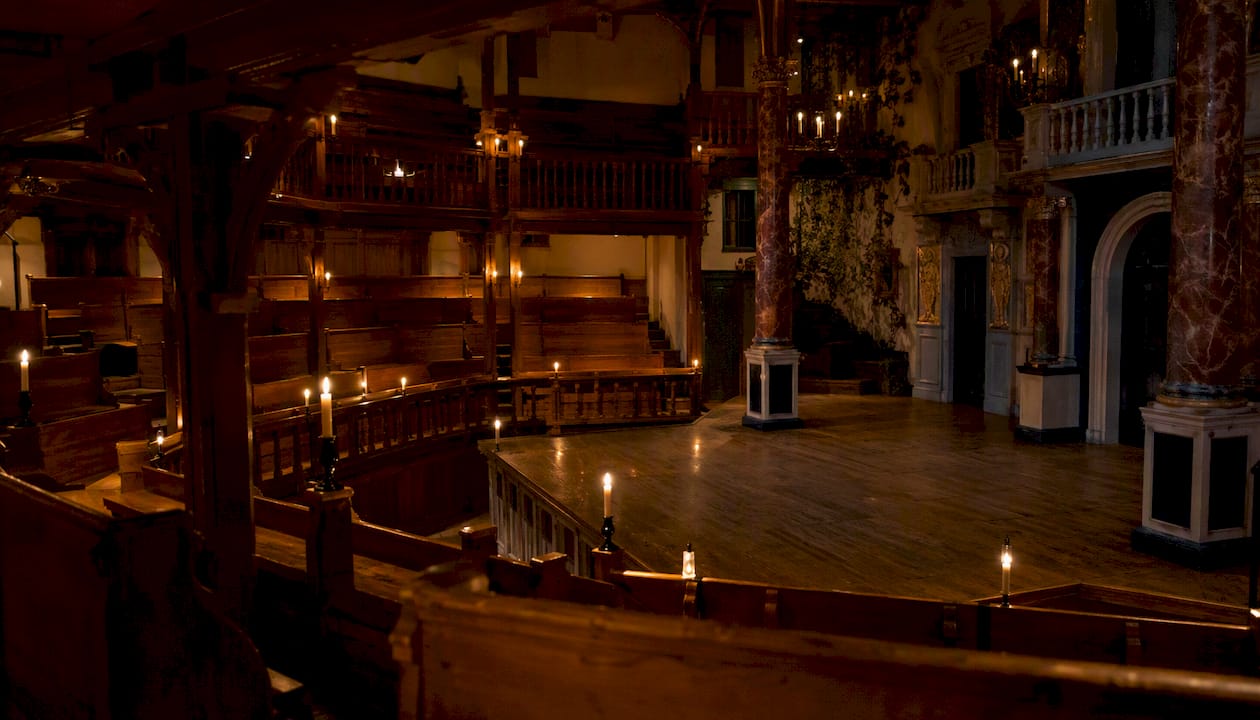
The Blackfriars Playhouse on East Market Street is the world's only re-creation of Shakespeare's original indoor theater. Performances run nearly year-round, using Elizabethan staging conventions: no lighting changes, minimal set pieces, and actors who share the same candlelit space as the audience. If you have never seen Shakespeare performed this way, the experience is disorienting in the best possible sense. Check the season schedule in advance; popular productions sell out on weekends.
Frontier Culture Museum
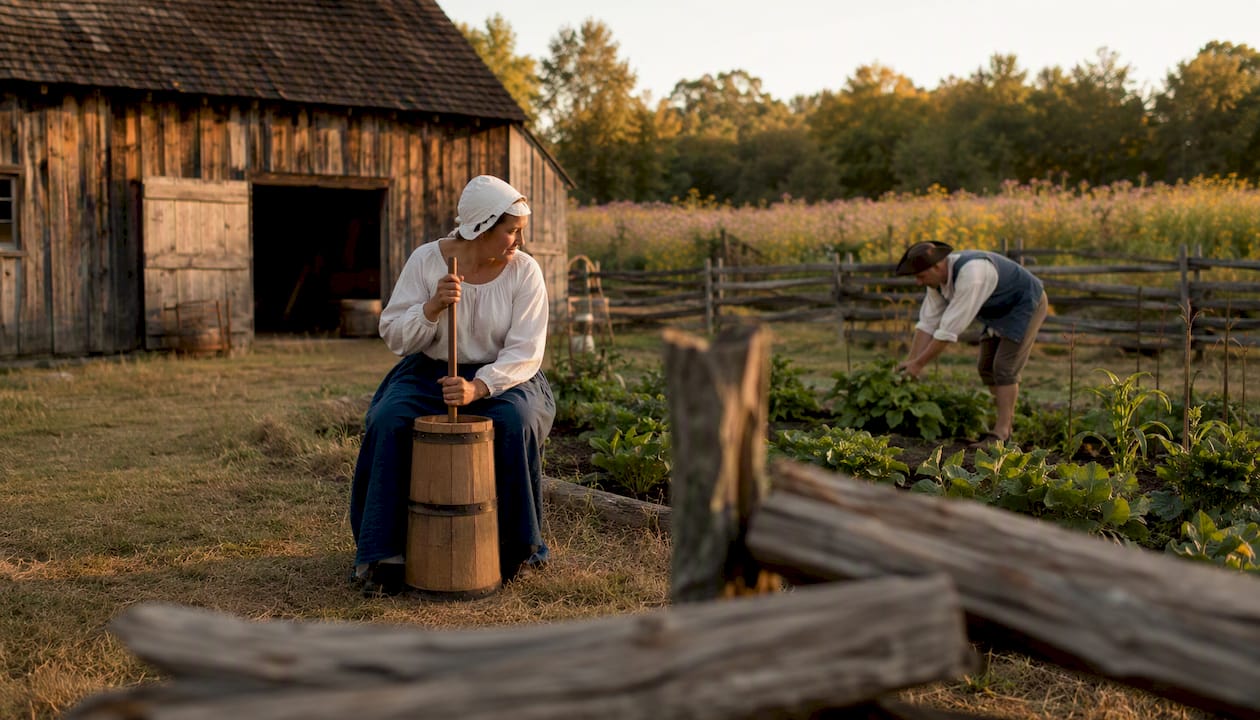
This living-history museum on Richmond Road operates four reconstructed working farmsteads representing the cultures that shaped the Shenandoah Valley: West African, German, Ulster Scots-Irish, and English. Staff in period dress demonstrate actual agricultural and domestic practices, not just narrate them. It runs roughly 10 acres of outdoor exhibits, so wear comfortable shoes and budget two to three hours minimum.
Woodrow Wilson Presidential Library and Museum
The birthplace of the 28th president sits on Coalter Street in the Gospel Hill neighborhood. The museum covers Wilson's presidency, his role in World War I diplomacy, and his push for the League of Nations. The 1919 Pierce-Arrow presidential limousine on display is one of those objects that makes history feel unexpectedly physical.
Mary Baldwin University campus
The campus occupies a hillside above downtown and is worth a short walk for its architecture and views of the valley. The university's Murphy Deming College of Health Sciences has expanded the institution's footprint in recent years and added a healthcare-education dimension to the city's academic profile.
Gypsy Hill Park
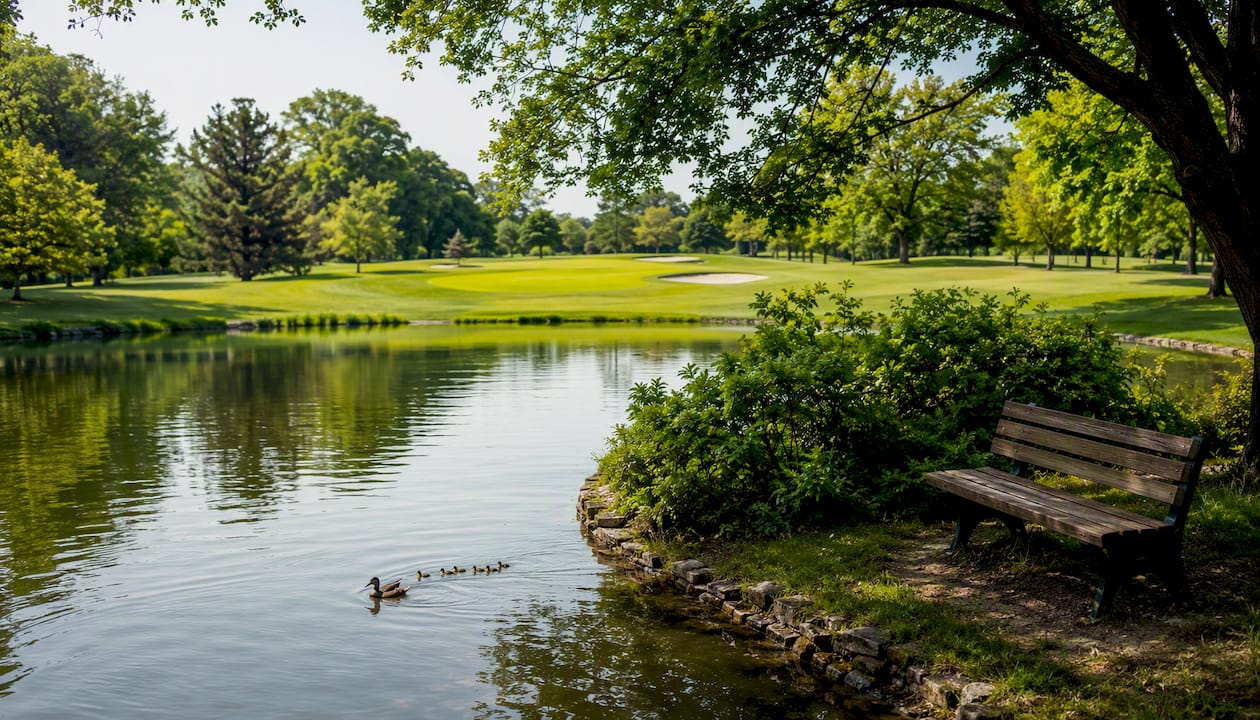
A 214-acre city park less than a mile from downtown, Gypsy Hill is where residents actually spend their weekends. It has a public golf course, a duck pond, tennis courts, a bandstand for summer concerts, and enough open space to make it feel like a genuine escape from the commercial core. Free admission. Open year-round.
What are the best things to do in Staunton, and when should you visit?
One-day downtown arts and food loop
- Start at the Woodrow Wilson Presidential Library (opens at 9 AM most days; plan 90 minutes).
- Walk downhill to Historic Downtown for coffee and a browse through the independent shops along Beverley Street.
- Lunch at one of the farm-to-table restaurants on or near Augusta Street.
- Afternoon at the Frontier Culture Museum (allow two to three hours; closes at 5 PM in peak season).
- Evening performance at the American Shakespeare Center's Blackfriars Playhouse (book tickets in advance for weekend shows).
Weekend combining museums and outdoor recreation
- Day 1: Follow the one-day loop above, ending with dinner downtown.
- Day 2 morning: Drive 45 minutes north to the Shenandoah National Park southern entrance near Waynesboro for a morning hike on the Appalachian Trail or a Skyline Drive overlook.
- Day 2 afternoon: Return to Staunton for a walk through Gypsy Hill Park and a late lunch before heading out.
Annual events and festivals worth planning around
- Staunton Music Festival (typically August): chamber and classical music performances in historic venues across the city.
- American Shakespeare Center's Actors' Renaissance Season (late winter/early spring): productions rehearsed without a director, following original Elizabethan practice.
- Staunton Fall Foliage Weekend (October): downtown events timed to peak leaf color in the surrounding ridges.
- Gypsy Hill Park summer concert series (June–August): free outdoor performances at the park bandstand.
Visitor tips: Parking in the downtown garage on Wharf Road is the most reliable option during busy weekends. Weekday mornings before 11 AM are the least crowded time for museum visits. For Shakespeare performances, the Blackfriars Playhouse sells standing-room tickets at the door if shows are sold out online, but arrive early.
How do you get to Staunton and get around once you're there?
Driving
Staunton sits at the intersection of I-81 (running north-south through the Shenandoah Valley) and I-64 (running east-west toward Charlottesville and Richmond). From Charlottesville, take I-64 West for about 35 minutes. From Washington, D.C., take I-66 West to I-81 South, roughly 2.5 hours depending on Northern Virginia traffic. U.S. Route 250 and U.S. Route 11 both pass through the city and connect it to smaller Valley communities.
Airports
- Charlottesville-Albemarle Airport (CHO): About 45 minutes east on I-64; the closest commercial airport with direct flights to major hubs.
- Shenandoah Valley Regional Airport (SHD): Located in Weyers Cave, about 15 minutes north of Staunton; limited scheduled service but convenient for private and charter flights.
- Dulles International Airport (IAD): About 2.5 hours northeast; the best option for international connections.
- Richmond International Airport (RIC): About 1.5 hours east via I-64.
Rail
Amtrak's Cardinal and Crescent lines stop at Staunton's historic train station on Middlebrook Avenue, connecting the city to Washington, D.C., New York, and points south. The station itself is a beautifully restored 1902 building worth seeing even if you are not catching a train.
Getting around locally
Downtown Staunton is genuinely walkable. The core attractions, restaurants, and shops sit within about a half-mile radius. A car is useful for the Frontier Culture Museum (about a mile from downtown on Richmond Road) and for day trips to Shenandoah National Park. Street parking is available throughout downtown, and the Wharf Road parking garage handles overflow on busy weekends.
Where should you stay and eat in Staunton?
Lodging options
- Historic B&Bs and inns: Several restored Victorian properties in and near downtown offer rooms with period architecture and walking access to all major attractions. These book up quickly for fall foliage weekends and Shakespeare season.
- Downtown boutique hotels: A small number of independent hotels occupy renovated historic buildings in the core; rates tend to be higher but the location is unbeatable for a theater-and-dining weekend.
- Chain hotels near the interstates: Several national chain properties cluster near the I-81/I-64 interchange, offering lower rates and easy highway access. Less atmosphere, but practical for early-morning departures or hiking-focused trips.
- Vacation rentals: Short-term rental properties are available throughout the city and in surrounding Augusta County, ranging from downtown apartments to rural farmhouses a short drive out.
For festival weekends and peak fall foliage (mid-October), book at least six to eight weeks out. Visit Staunton's lodging directory is the most current source for availability and new properties.
Dining highlights
Historic Downtown Staunton has a dining scene that punches well above its population size. The concentration of farm-to-table restaurants, craft breweries, and specialty food shops along Beverley Street and Augusta Street reflects both the tourism economy and the university influence. Expect locally sourced menus that change seasonally, a handful of wine bars, and at least one craft brewery within walking distance of the theater. Reservations are advisable on Friday and Saturday evenings during peak season. For a more casual meal, the Central Grocery and several counter-service spots near the downtown core offer good options without the wait.
Pro Tip: If you are visiting for a Shakespeare performance, eat before the show rather than after. Post-show restaurant demand spikes sharply, and the best downtown spots fill up fast on performance nights.
How does Staunton's local government work?
Staunton holds a specific place in American civic history: it was the first city in the United States to adopt the council-manager form of government, doing so in 1908. Under this model, an elected city council sets policy and a professional city manager handles day-to-day administration. The mayor is a member of the council, not a separately elected executive. This structure tends to produce more consistent long-range planning than strong-mayor systems, which is why Staunton has published multi-year projects like a downtown infrastructure program and a Flood Resilience Plan.
Key services and contacts for residents are centralized through the City of Staunton's official website, which hosts service request portals, permit applications, utility billing, and emergency alert sign-ups. The city's public library system, parks and recreation department, and public safety agencies all publish contact information and service schedules there.
For new residents, the most practical first step is registering on the city's online portal for utility service and confirming your address falls within city limits rather than Augusta County, since that distinction affects which services you receive and at what rates.
Moving to Staunton: what you need to check before you buy
Staunton's mix of historic homes, newer suburban construction, and independent-city governance creates a specific set of due-diligence requirements that differ from buying in a standard Virginia county. Work through this checklist before making an offer.
- Verify jurisdiction. Confirm whether the parcel is within Staunton city limits or Augusta County. The line is not always obvious from a street address. City and county have different tax rates, school assignments, and utility providers. The City of Staunton's website has parcel lookup tools to confirm this.
- Check school assignment. Staunton City Schools and Augusta County Public Schools are separate systems. If schools are a factor, verify the assignment for the specific address, not just the general neighborhood.
- Assess historic-district status. Properties in the Gospel Hill Historic District and parts of downtown are subject to Architectural Review Board oversight for exterior changes. Budget extra time and cost for any renovation that touches the facade, roof, or windows.
- Review flood resilience. The city has published a Flood Resilience Plan addressing Lewis Creek drainage. Ask your agent about flood zone status for any property near the creek corridor.
- Inspect for deferred maintenance on older homes. Victorian and Edwardian-era homes in Staunton often have original plaster, knob-and-tube wiring in older sections, and masonry foundations that require specialist contractors. A standard home inspection may not catch everything; consider a historic-home specialist.
- Time your commute. If you are commuting to Charlottesville or the Northern Shenandoah Valley, drive the route at your actual commute time before committing. I-64 East toward Charlottesville is generally smooth, but weather events in winter can close mountain grades.
- Confirm utilities and services. City water, sewer, and trash pickup apply within city limits. Properties just outside may rely on well water, septic systems, or private waste hauling.
Pro Tip: Always pull the GIS parcel record from the city or county assessor before your offer, not after. A property marketed as "Staunton" may sit in Augusta County, and discovering that after contract can unwind your financing assumptions, school plans, and utility setup all at once.
Local real-estate expertise matters here more than in most markets. The combination of historic-district rules, jurisdictional complexity, and a housing stock that ranges from 1870s Victorians to 2010s subdivisions means the right agent is not just a convenience but a genuine risk-management tool.
Useful local resources and official contacts
Before visiting or moving, bookmark these sources. Hours and event dates change seasonally, so always confirm on the official page before you go.
- City of Staunton official website: Service requests, permits, utility billing, city council agendas, and emergency alerts. The authoritative source for all municipal information.
- Visit Staunton (CVB): Trip planning, event calendar, lodging directory, and dining guides. Updated regularly for seasonal changes.
- Woodrow Wilson Presidential Library and Museum: Hours, admission, and exhibit information for the birthplace museum on Coalter Street.
- American Shakespeare Center: Season schedule, ticket sales, and education programs at the Blackfriars Playhouse.
- Frontier Culture Museum: Hours, admission, seasonal programming, and school group information.
- Mary Baldwin University: Academic programs, campus events, and community engagement opportunities.
- Virginia Tourism Corporation listing for Historic Downtown Staunton: State-level overview of downtown shops, dining, and visitor services.
- Augusta Health: The regional hospital system serving Staunton and the surrounding Valley; search "Augusta Health Staunton" for current contact and urgent care information.
- Staunton Public Library: Located on Churchville Avenue; hours and digital resources available through the city website.
Confirm event dates and museum hours on official pages, especially around holidays and during seasonal transitions when schedules shift.
What a local agent would tell you first about Staunton
Most people who move to Staunton fall in love with the downtown first and figure out the details later. That order of operations costs them. The single most useful thing you can do before touring properties is to pull up the city's GIS map and confirm exactly where the city limit runs relative to any address you are considering. The line cuts through what looks like a continuous neighborhood in several places, and the consequences on the other side of it, different schools, different tax rates, different utility providers, are not minor.
The second thing worth knowing: historic homes here are genuinely beautiful and genuinely demanding. The preservation standards that protect the streetscape also mean that replacing a window or repainting a facade in a historic district requires a review process. That is not a reason to avoid these homes; it is a reason to budget correctly and work with an agent who has navigated those approvals before.
For visitors, the practical tip is simpler: walk Beverley Street on a Tuesday morning rather than a Saturday afternoon. You will see the same storefronts and architecture with a fraction of the foot traffic, the shop owners will actually have time to talk to you, and you will get a much more honest sense of what the city is like to live in, not just to visit.
Ready to buy or sell in Staunton? Beamsrealtygroup can help

Staunton's appeal is real, but so is its complexity. Independent-city governance, historic-district review requirements, and a housing stock that spans 150 years of construction styles mean the difference between a smooth transaction and an expensive surprise often comes down to who is guiding you. Beamsrealtygroup specializes in exactly this kind of Virginia market: local knowledge deep enough to catch a jurisdictional boundary issue before it derails your financing, and experience with historic properties that translates preservation rules into plain-language guidance you can actually use. Whether you are buying your first home in the Gospel Hill district, selling a property near the Augusta County line, or evaluating an investment in the downtown corridor, the team brings the market analysis and transaction expertise to get it done without the guesswork. Reach out to Beamsrealtygroup directly to get a current market assessment and a clear picture of what your next move in Staunton actually looks like.
Sources
These are the primary sources behind the facts and guidance in this article. Check official pages directly for current hours, event dates, and service updates.
- City of Staunton | Home
- Visit Staunton
- Staunton, Virginia
- Things to Do in Staunton, VA - Staunton Attractions
- Staunton | Virginia, Map, & History | Britannica
- Historic Downtown Staunton