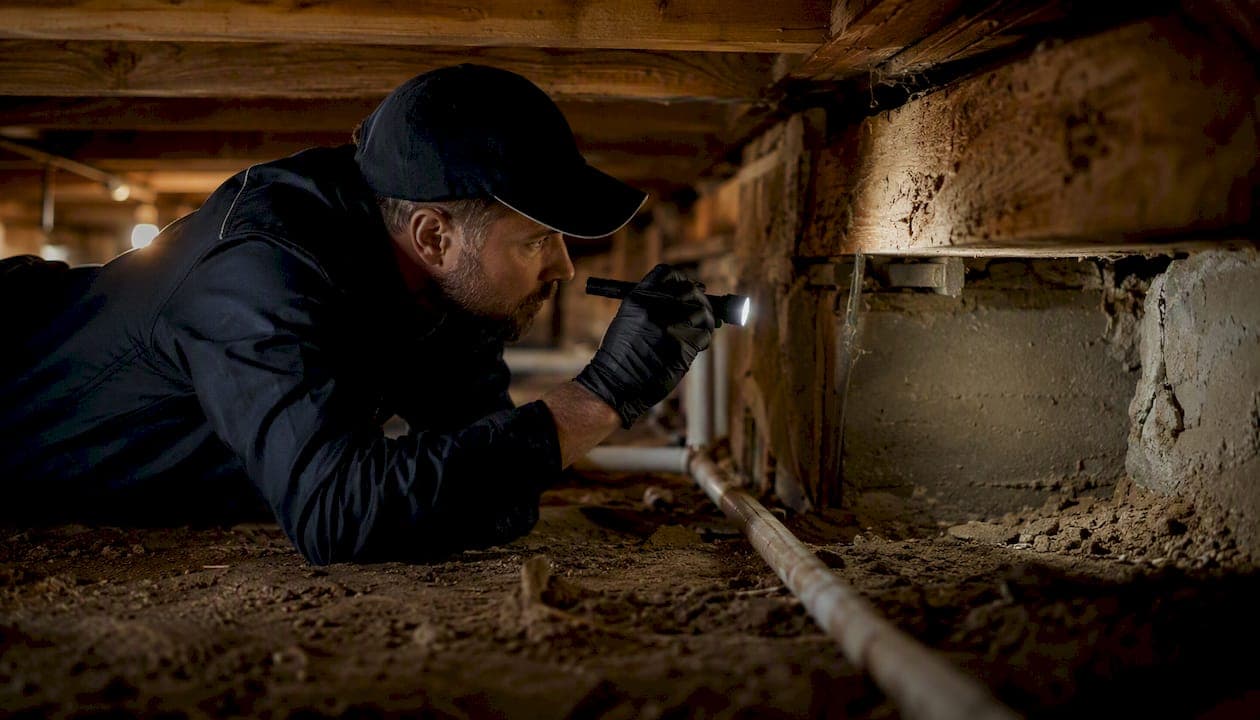
If you're buying a home in Virginia with a VA loan, a Wood-Destroying Insect (WDI) inspection is very likely required before closing. The NPMA-33 form is the standardized report lenders accept, and only a licensed Virginia pest control operator can sign it. A general home inspector cannot substitute. Here's what to do right now:
- Call a licensed Virginia pest control company and ask specifically for a "WDI inspection with an NPMA-33 report for a real estate closing." Confirm they hold a Virginia pesticide business license and employ a certified applicator.
- Ask your real estate agent — ideally one familiar with VA loan transactions, like the team at Beamsrealtygroup — to coordinate the WDI order alongside the appraisal so you don't lose time at the end of the transaction.
Whether the inspection is mandatory depends on three factors: your loan type, your lender's requirements, and whether the VA appraiser flags any pest-related concerns during the property visit. For most VA-backed purchases in Virginia, a WDI report is expected. Get it ordered early.
Key Takeaways
A WDI inspection on the NPMA-33 form is required for most VA-backed purchases in Virginia, and ordering it at contract ratification, not closing week, is the single most effective way to protect your closing date.
| Point | Details |
|---|---|
| WDI required for VA loans | Most Virginia VA transactions require an NPMA-33 report; confirm with your loan officer on day one. |
| Only licensed operators can sign | A Virginia pesticide business license and certified applicator are required; home inspectors cannot substitute. |
| Order early, not late | Schedule the WDI alongside the appraisal to avoid last-minute delays if active infestation is found. |
| Treatment has a clear sequence | Treatment, then reinspection letter, then lender delivery — all three documents must be in the file before funding. |
| Beamsrealtygroup coordinates it | Beamsrealtygroup manages WDI scheduling, NPMA-33 delivery, and treatment negotiations to keep Virginia closings on schedule. |
Table of Contents
- When VA and lender rules require a termite inspection in Virginia
- What the NPMA-33 report covers and who can legally sign it in Virginia
- Signs of termite or wood-destroying insect activity to watch for
- If the WDI finds active termites or damage: treatment, repairs, and the clearance letter
- Typical costs in Virginia for WDI inspections and treatments
- How to prevent termite problems and protect your Virginia home year-round
- How to find and vet a licensed WDI inspector in Virginia
- Step-by-step actions for buyers and sellers when a WDI affects a VA loan closing
- How Beamsrealtygroup helps Virginia buyers and sellers manage WDI inspection issues
- Sources
When VA and lender rules require a termite inspection in Virginia
The VA does not issue a single national rule that mandates a WDI inspection on every loan. Instead, VA local requirements and lender overlays determine when one is needed, which means the answer varies by county, lender, and transaction.
Three triggers typically make a WDI inspection non-negotiable:
- State or county blanket requirement. Many Virginia localities treat WDI inspections as standard for any purchase involving a government-backed loan. Lenders operating in high-termite-risk areas often require one regardless of appraiser comments.
- Appraiser observation. If the VA appraiser notes mud tubes, wood damage, or conditions conducive to infestation during the property visit, the lender must order a WDI inspection before the loan can proceed. Failing to provide one at that point can delay or block loan approval.
- Lender-specific overlay. Even when state rules are silent, individual lenders frequently require a WDI report as a condition of underwriting. Ask your loan officer directly on day one.
Virginia's climate and soil conditions push lender behavior toward requiring inspections more often than not. Subterranean termites thrive in the Mid-Atlantic's warm, humid summers and moist clay soils, and lenders who have seen structural damage claims know the risk is real. Most lenders also want the WDI letter dated within 90 days of closing, so timing matters.
On who pays: Virginia custom generally assigns the WDI inspection cost to the buyer, though sellers sometimes cover it as a negotiating concession. For VA loans specifically, there are restrictions on what buyers can pay for, and some lenders require the seller to cover the cost. Confirm this with your loan officer before the inspection is ordered.
Pro Tip: Order the WDI inspection at the same time as the appraisal, not after. If the appraiser flags a pest issue and you haven't already scheduled a WDI, you're looking at a week or more of added delay. Parallel scheduling keeps the closing timeline intact.
Virginia's termite pressure is concentrated enough that annual inspections are recommended for many homes in the state, particularly those with crawl spaces, wood-to-soil contact, or older construction. That context shapes why lenders here rarely skip the requirement.
What the NPMA-33 report covers and who can legally sign it in Virginia
The NPMA-33 is a federally standardized form that documents three things: active infestation, evidence of prior infestation, and conditions conducive to infestation. Lenders accept it for VA, FHA, and many conventional loans precisely because it follows a uniform structure that underwriters recognize.
The inspection itself is a visual examination, typically 30–60 minutes, covering the foundation perimeter, crawl space, attic, and exterior wood. It does not involve destructive probing unless the homeowner separately authorizes it. The report reflects only what was visible and accessible at the time of inspection.
Organisms in scope for a Virginia WDI report:
- Subterranean termites (Reticulitermes spp., the dominant Virginia species)
- Drywood termites
- Carpenter ants
- Wood-boring beetles (including old house borers and powderpost beetles)
Common exclusions: hidden damage behind finished walls, non-visible wood rot, inaccessible areas blocked by stored items or insulation, and any damage that requires destructive investigation to confirm.
Who can legally sign the NPMA-33 in Virginia: only a licensed pest control operator holding a valid Virginia pesticide business license and employing a certified applicator. A general home inspector cannot legally issue a lender-accepted WDI report unless they also hold the specific pest-control licensing Virginia requires. These are separate regulatory frameworks, and mixing them up is one of the most common mistakes buyers make.
| Feature | Standard home inspection | Licensed WDI / NPMA-33 report |
|---|---|---|
| Who issues it | Licensed home inspector | Licensed pest control operator (VA pesticide business license + certified applicator) |
| Form used | Inspector's proprietary report | NPMA-33 (federal standard form) |
| Legal standing for closings | Not accepted by lenders as WDI documentation | Accepted by VA, FHA, and conventional lenders |
| Organisms covered | Not in scope | Termites, carpenter ants, wood-boring beetles |
| Invasive probing | Not standard | Not included unless separately authorized |
The Virginia Residential Code also includes termite inspection provisions for new construction under Section R408.3.1, which building officials reference for foundation-gap requirements. That's a separate context from a real estate transaction WDI, but it's worth knowing if you're buying new construction.
Pro Tip: When you call to schedule, ask the company for their Virginia pesticide business license number and the name of the certified applicator who will sign the NPMA-33. Record both. Your lender may ask for this information, and having it upfront saves a phone call later.
Signs of termite or wood-destroying insect activity to watch for
Virginia homeowners can run a useful check in 5–10 minutes if they know what to look for. Virginia Tech Extension documents the biology and warning signs of subterranean termites, the species responsible for most structural damage in the state.
Visual signs that should prompt an immediate WDI inspection:
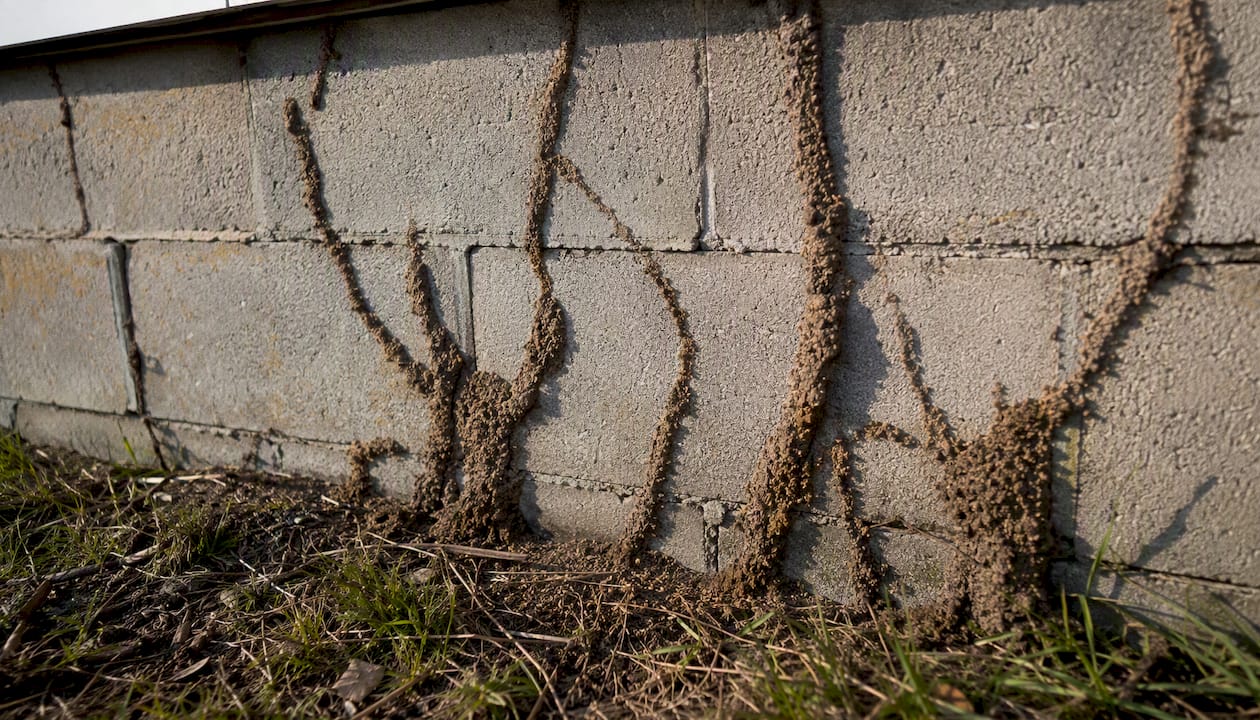
- Mud tubes on foundation walls, piers, or exterior siding (pencil-width tunnels of soil and debris that subterranean termites build to travel above ground)
- Discarded wings near windowsills, door frames, or light fixtures after a swarm (swarmers shed wings within minutes of landing)
- Hollow-sounding wood when you knock on baseboards, door frames, or floor joists
- Blistering or bubbling paint on wood surfaces, which can indicate moisture from termite activity beneath
- Wood dust or frass (tiny pellets resembling sawdust or coffee grounds) near wood trim, furniture, or structural members
- Sagging floors or sticking doors in older homes, which can signal joist damage
- Attic or crawl space clues: darkened or damaged wood, visible galleries in exposed joists, or mud deposits on piers
Virginia's swarm season runs roughly March through June, peaking in April and May when subterranean colonies send out reproductives. Seeing a swarm inside the house is a strong indicator of an established colony nearby, not just a passing event.
High-risk property features to note: wood-to-soil contact at the foundation, poor drainage that keeps soil wet against the structure, dense mulch piled against siding, and crawl spaces with inadequate ventilation. Moisture is the common thread. Research from the USDA Forest Service ties termite distribution and activity directly to soil moisture and landscaping practices around foundations.
[Photo suggestion for editor: Add close-up images of mud tubes on a concrete block foundation, discarded swarmer wings on a windowsill, and frass near a baseboard. A crawl space photo showing darkened joists would also be useful here.]

If the WDI finds active termites or damage: treatment, repairs, and the clearance letter
Finding active termites on the NPMA-33 does not automatically kill a deal. It does add steps, and those steps have a sequence lenders expect.
Common treatment approaches and when each is used:
- Liquid soil barrier (termiticide): The most common treatment for subterranean termites. A licensed applicator treats the soil around and under the foundation to create a chemical barrier. Effective for active infestations and often provides multi-year protection.
- Baiting systems: Stations installed around the perimeter that attract and eliminate termite colonies over time. Better suited for monitoring and prevention than for clearing an active infestation before closing, since colony elimination takes weeks to months.
- Localized spot treatment: Used when infestation is confined to a small, accessible area. Faster and less expensive, but only appropriate when the scope is genuinely limited.
For a real estate closing, liquid soil treatment is the most common choice because it produces a clearance faster than baiting.
Typical timeline from treatment to reinspection:
Most pest control operators can reinspect within about one to two weeks of treatment for subterranean termites. The operator then provides a reinspection letter, either on an updated NPMA-33 or a signed addendum, confirming the structure has been treated and showing no evidence of active infestation at reinspection.
Pro Tip: Ask the pest control company for the reinspection letter on company letterhead with the license number, treatment date, chemical used, and the applicator's signature. Some lenders are specific about what the letter must contain. Getting it right the first time avoids a second round of back-and-forth with the underwriter.
Closing documents the lender or closing attorney will want:
- Signed NPMA-33 (original inspection)
- Treatment invoice showing company name, license number, chemical applied, and date
- Reinspection letter or updated NPMA-33 confirming clearance
- Any warranty documentation if a protection plan was part of the treatment
Repairs vs. remediation: the pest control company's responsibility ends at eliminating the infestation. Structural repairs to damaged joists, sills, or framing are a general contractor's work, not the pest operator's. In a transaction, the buyer and seller negotiate who pays for both. Sellers often prefer to handle treatment themselves and offer a repair credit rather than hiring a contractor mid-transaction, since contractor timelines can be unpredictable.
Typical costs in Virginia for WDI inspections and treatments
Price ranges vary by region, property size, and infestation severity, but the figures below reflect what Virginia buyers and sellers typically encounter.
Factors that push costs up: limited crawl space access, large square footage, severe or long-standing infestations, and properties in Northern Virginia where labor rates are higher than in rural parts of the state. Structural repair costs are the biggest variable and the hardest to predict without a contractor's assessment.
Who pays in Virginia transactions:
Buyers typically pay for the WDI inspection itself. Treatment costs, when required, are negotiated. For VA loans, buyers are restricted from paying certain fees, and some lenders require the seller to cover the WDI inspection cost. Check with your loan officer before assuming.
Negotiation norms: sellers who want to protect the closing timeline often agree to pay for treatment upfront rather than fight over credits. A treatment credit that goes into escrow can complicate underwriting; a paid invoice from a licensed operator is cleaner. Reviewing real estate contract terms before signing helps buyers understand how to structure inspection contingencies and repair requests without derailing the deal.
Pro Tip: Order the WDI inspection before the appraisal if the seller will allow it. If you find an issue early, you have time to negotiate treatment into the contract rather than scrambling after the appraisal flags it. Early discovery almost always costs less in stress and time than late discovery.
How to prevent termite problems and protect your Virginia home year-round
Prevention is cheaper than treatment by a wide margin. Industry estimates put U.S. termite damage in the billions annually, and most of that damage accumulates quietly before anyone notices. The steps below reduce risk substantially.
Annual maintenance priorities:
- Control moisture at the foundation. Fix leaking gutters, extend downspouts at least four feet from the foundation, and grade soil so water drains away from the house. Subterranean termites need moisture to survive.
- Eliminate wood-to-soil contact. Move firewood stacks away from the house, replace wood mulch near the foundation with gravel or rubber mulch, and repair any wood siding or framing that touches the ground.
- Ventilate the crawl space. Poor crawl space ventilation creates the humid conditions subterranean termites prefer. Install or clear vents, and consider a vapor barrier if the crawl space floor is bare soil.
- Maintain gutters and downspouts. Clogged gutters overflow against the fascia and soffit, saturating wood that termites can then exploit.
- Inspect and seal entry points. Check where utility lines enter the foundation and seal gaps with concrete or metal flashing. Termites can enter through gaps as small as 1/32 of an inch.
- Monitor mulch and landscaping. Keep mulch at least six inches from the foundation. Dense plantings that hold moisture against the structure are a risk factor.
- Schedule an annual WDI inspection. For Virginia homes, particularly those with crawl spaces or older construction, an annual visual inspection by a licensed pest control operator catches problems before they become structural.
Protection options beyond maintenance:
- Physical barriers: Stainless steel mesh or sand barriers installed during construction or renovation block termite entry at the foundation. Effective but difficult to retrofit.
- Baiting and monitoring stations: Installed around the perimeter, these attract termites before they reach the structure and allow the pest operator to detect activity early. Best used as an ongoing monitoring tool rather than a one-time fix.
- Annual protection contracts: Many Virginia pest control companies offer annual contracts that include inspections, monitoring station service, and retreatment guarantees. For high-risk properties, the cost is usually justified.
FEMA flood maps can help homeowners identify whether their property sits in a zone with persistent soil moisture, which correlates with higher termite pressure. It's a useful cross-reference when assessing long-term risk.
How to find and vet a licensed WDI inspector in Virginia
Not every pest control company that offers a "termite inspection" can produce a lender-accepted NPMA-33. Here's what to confirm before you book.
Vetting checklist:
- Virginia pesticide business license number (ask for it; verify it with the Virginia Department of Agriculture and Consumer Services, VDACS)
- Name of the certified applicator who will conduct and sign the inspection
- Confirmation they use the NPMA-33 form specifically (not a proprietary report)
- Turnaround time for the signed report (24–48 hours is standard for closings)
- Confirmation they will deliver the report to the buyer, seller, and lender as needed
- Experience with real estate closings and VA loan transactions specifically
Questions to ask over the phone:
- "Do you issue NPMA-33 WDI reports for real estate closings?"
- "Who is the certified applicator who will sign the report?"
- "What is your Virginia pesticide business license number?"
- "How quickly can you get the signed report to my lender?"
- "If active infestation is found, how soon can you treat and provide a reinspection letter?"
License verification: search the VDACS pesticide business license database online. If a company hesitates to provide their license number, that's a clear signal to call someone else.
Scheduling coordination: book the WDI inspector to arrive the same day as or within a day of the appraiser. If the appraiser flags a concern and the WDI inspector is already scheduled, you lose no time. If the property is in a flood-prone area (check FEMA flood maps for the address), mention that to the inspector so they pay extra attention to foundation moisture conditions.
Pro Tip: Ask the inspector whether they've worked with your specific lender before. Some lenders have formatting preferences for the reinspection letter, and an inspector who already knows those preferences will save you a revision cycle.
Step-by-step actions for buyers and sellers when a WDI affects a VA loan closing
For buyers:
- Notify your loan officer and real estate agent the moment a WDI inspection is required or recommended.
- Order the WDI inspection from a licensed Virginia pest control operator. Confirm NPMA-33 delivery to you, your agent, and your lender.
- Receive the signed NPMA-33. If it shows no active infestation and no conditions conducive, deliver it to the lender and move on.
- If active infestation or damage is found, share the report with the seller immediately and request treatment as a contract condition.
- Obtain the treatment invoice and schedule reinspection with the same pest control operator.
- Deliver the reinspection letter (updated NPMA-33 or signed addendum) to the lender along with the original report and treatment invoice.
- Confirm with the closing attorney that all WDI documents are in the file before the funding date.
For sellers:
- Consider a pre-listing WDI inspection. Under the Virginia Residential Property Disclosure Act, sellers who are aware of pest issues have disclosure obligations. A pre-listing inspection removes uncertainty and reduces the buyer's negotiating leverage if issues surface later.
- If a buyer's WDI report finds active infestation, respond quickly. Delays in authorizing treatment are the most common reason WDI issues push closing dates.
- Keep copies of all treatment invoices and warranty documents to provide at closing.
Closing document checklist for agents:
- Signed NPMA-33 (original)
- Treatment invoice with license number and applicator name
- Reinspection letter or updated NPMA-33
- Any structural repair invoices if lender required repairs
- Protection plan or warranty documentation if applicable
Timing with the appraisal: if the appraiser visits before the WDI inspector and flags a concern, the lender will condition the loan on a WDI report. That adds 5–10 business days minimum. Running the WDI and appraisal in parallel eliminates that gap.
How Beamsrealtygroup helps Virginia buyers and sellers manage WDI inspection issues
Beamsrealtygroup works with Virginia buyers and sellers on the coordination side of WDI inspections, which is where most transactions run into trouble. The team handles:
- Scheduling the WDI inspection alongside the appraisal so both happen in the same window
- Verifying that the signed NPMA-33 is delivered to the lender, buyer, and seller before it becomes a closing bottleneck
- Negotiating repair credits or seller-paid treatment when the WDI report finds active infestation or damage
- Tracking reinspection letters and treatment invoices to confirm the lender's file is complete before the funding date
- Coordinating with the closing attorney when WDI documents need to be added to the closing package at the last minute
A typical Beamsrealtygroup-managed transaction with a WDI issue runs like this: the WDI inspector is booked the same week as the appraisal, the NPMA-33 comes back within 48 hours, any treatment is authorized within 24 hours of the report, and the reinspection letter lands in the lender's file 10–14 days before closing. That sequence keeps the funding date intact.
For buyers who want to understand how inspection contingencies and repair requests fit into the contract, Beamsrealtygroup's agents walk through every clause before signing. Sellers preparing for a pre-listing inspection can also reach out for guidance on disclosure strategy and how to present a clean WDI history to prospective buyers.
What agents and buyers get wrong about WDI timing
The single most common mistake is treating the WDI inspection as a closing-week task. Agents schedule it after the appraisal comes back, after the inspection contingency is resolved, and after the lender has already started underwriting. By then, any finding that requires treatment adds two to three weeks to a timeline that has no room for it.
The smarter move is to order the WDI at contract ratification, not after. In Virginia's market, where subterranean termite activity is common enough that lenders expect the report, waiting is a choice to absorb risk. A clean NPMA-33 ordered early costs the same as one ordered late. The difference is that the early one gives you time to negotiate, treat, and reinspect without touching the closing date.
One concrete recommendation: make the WDI inspection part of the standard due diligence checklist your agent runs through at contract signing, right alongside the home inspection and appraisal order. If your agent doesn't have that checklist, ask for one.
Beamsrealtygroup keeps your Virginia closing on track
Termite inspection issues derail closings when no one is tracking the paperwork. Beamsrealtygroup coordinates every step: scheduling the licensed WDI inspector, verifying the NPMA-33 reaches your lender on time, and negotiating treatment costs so the deal stays on schedule.

The team works with Virginia buyers and sellers across the full transaction, from pre-listing WDI strategy to closing-day document delivery. Whether you're a first-time buyer navigating VA loan requirements or a seller managing disclosure obligations, Beamsrealtygroup handles the coordination so you don't have to chase down inspectors and lenders yourself. Contact the team at Beamsrealtygroup to get started.
Sources
FAQ
Is a termite inspection required for a VA loan in Virginia? For most VA-backed purchases in Virginia, yes. VA local requirements and lender overlays make a WDI inspection standard practice. If the VA appraiser notes any pest-related concerns, the inspection becomes a loan condition. Confirm the specific requirement with your loan officer at the start of the transaction.
What is the NPMA-33 form? The NPMA-33 is the federally standardized Wood-Destroying Insect report form that lenders accept for VA, FHA, and many conventional loans. It documents active infestation, prior infestation evidence, and conditions conducive to infestation. Only a licensed pest control operator can sign it.
Can a home inspector do the termite inspection? Not unless they also hold a Virginia pesticide business license and employ a certified applicator. A standard home inspection report cannot legally substitute for a lender-accepted NPMA-33. These are separate licenses and separate regulatory frameworks.
How much does a WDI inspection cost in Virginia? A formal NPMA-33 report typically runs $75–$150 for most Virginia properties. Treatment costs vary widely: a liquid soil barrier for an average home runs $800–$1,500, while structural repairs are a separate contractor cost that can range from a few hundred dollars to several thousand depending on the damage.
Who pays for the termite inspection in a Virginia real estate transaction? Buyers typically pay for the inspection itself. For VA loans, lender rules may require the seller to cover the cost. Treatment and repair costs are negotiated between buyer and seller. Confirm the specifics with your loan officer before the inspection is ordered.
How long does it take to clear a termite issue before closing? Treatment typically takes one day. Reinspection can happen 7–14 days after treatment. Add 24–48 hours for the reinspection letter to be issued. Total time from discovery to clearance: roughly two to three weeks in straightforward cases. Structural repairs add more time if required.
What should I look for to spot termites myself? Mud tubes on foundation walls, discarded wings near windows after a swarm, hollow-sounding wood, blistering paint, and wood dust near baseboards are the most common signs. Virginia's swarm season peaks in April and May. If you see any of these, call a licensed pest control operator for a WDI inspection.
This article is general information, not a substitute for advice from a qualified financial advisor. Consult a qualified financial professional about your own circumstances before acting on anything here.