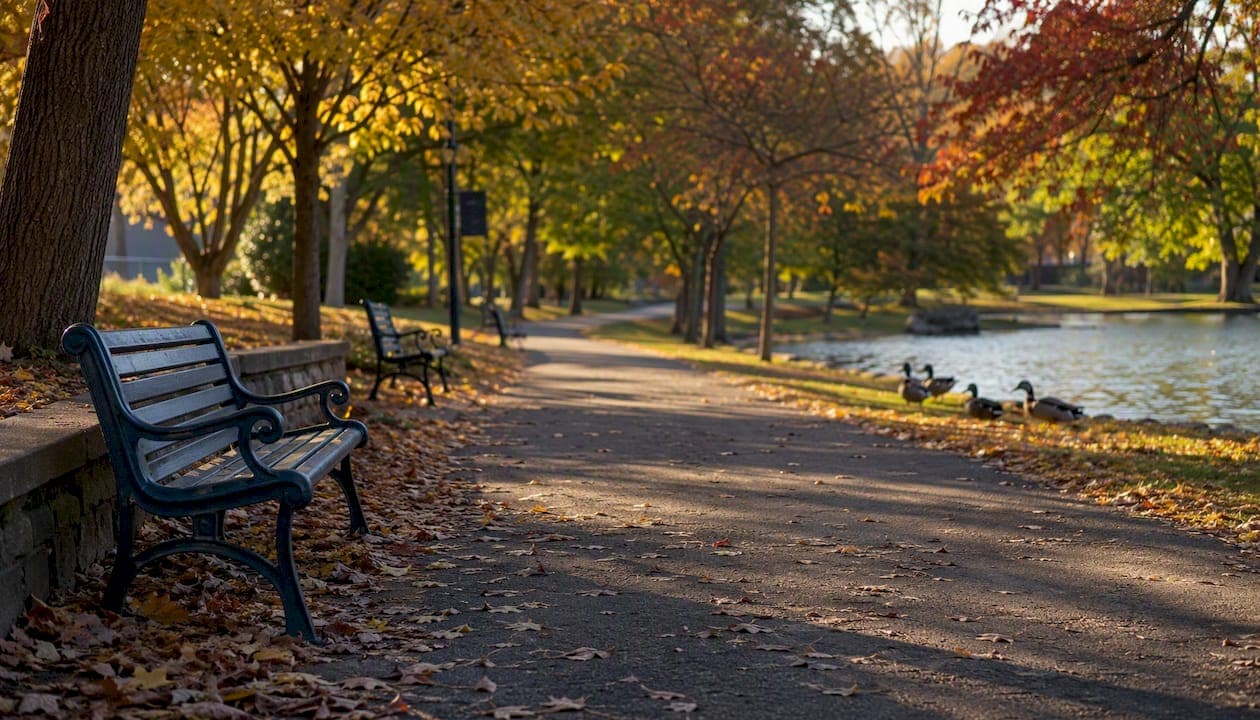
Waynesboro, VA is an independent city in Virginia's Shenandoah Valley that serves as the eastern gateway to Skyline Drive, the Blue Ridge Parkway, and the Appalachian Trail. The city brands itself the "Natural Capital of Virginia," and that label fits: you can fish a designated urban trout stream inside city limits, then drive to the entrance of Shenandoah National Park within a short time. The U.S. Census Bureau estimates Waynesboro's population at 23,951 as of July 1, 2025, a 7.9% increase from the 2020 count of 22,196. That growth reflects what buyers and movers are discovering: small-city convenience, mountain access, and home prices that still look reasonable compared to Northern Virginia or Charlottesville. Beamsrealtygroup is the local brokerage resource for anyone ready to act on that opportunity.
- Location: Independent city in Augusta County's geographic footprint, at the eastern edge of the Shenandoah Valley, where I-64 meets the Blue Ridge Mountains
- Population snapshot: 23,951 (2025 estimate), up 7.9% since 2020
- Best for: Outdoor-oriented families, remote workers, first-time buyers priced out of larger Virginia metros, and visitors using the city as a mountain basecamp
Key Takeaways
| Point | Details |
|---|---|
| Gateway location | Waynesboro sits at the eastern edge of the Shenandoah Valley, minutes from Skyline Drive and the Blue Ridge Parkway. |
| Population growth | The city grew 7.9% from 22,196 in 2020 to an estimated 23,951 in 2025, driven by affordability and outdoor lifestyle appeal. |
| Housing affordability | Median owner-occupied home value is approximately $245,500, well below Charlottesville and Northern Virginia comparables. |
| Independent-city rules | Waynesboro operates outside Augusta County, with its own taxes, schools, and permitting, which buyers must verify separately. |
| Beamsrealtygroup | Provides local buying, selling, and valuation services in Waynesboro with personalized guidance through every step of the transaction. |
Table of Contents
- What are the essential facts about Waynesboro, VA?
- Where do people live in Waynesboro, and what does housing cost?
- How do you buy or sell a home in Waynesboro?
- What are the best outdoor attractions and things to do in Waynesboro?
- What is the local economy, and what schools and healthcare are available?
- How do you get to and around Waynesboro?
- How safe is Waynesboro, and where can you find crime data?
- What does it cost to live in Waynesboro, and who lives there?
- How does Waynesboro's city government work, and how do you access services?
- What should new residents do first after moving to Waynesboro?
- How has Waynesboro's population changed since 2020?
- What makes Waynesboro worth a closer look than most people expect
- Beamsrealtygroup knows Waynesboro's market from the inside out
- Primary sources and helpful links
- Sources
What are the essential facts about Waynesboro, VA?
Waynesboro sits at roughly 1,340 feet of elevation where the South River cuts through the valley floor before the terrain climbs sharply toward the Blue Ridge. The city is an independent city in Virginia, meaning it operates entirely outside Augusta County's jurisdiction for taxes, schools, and services. That distinction matters when you're comparing tax bills or school assignments with properties just across the city line.
Quick links worth bookmarking:
- Official city site: waynesboro.va.us
- Tourism: waynesboro.va.us/9/Explore-Waynesboro
- Census QuickFacts: census.gov/quickfacts/waynesborocityvirginia
Where do people live in Waynesboro, and what does housing cost?
Waynesboro's neighborhoods range from walkable historic blocks to quiet residential streets near the city's edge, and the housing stock reflects about a century of growth.
Historic Downtown and Main Street corridor draws buyers who want walkability, character, and proximity to the Wayne Theatre and local restaurants. Homes here tend to be older, often pre-1950, with front porches and narrow lots.
The Tree Streets neighborhood (streets named for trees: Poplar, Elm, Oak, and so on) is one of the city's most recognizable historic districts. These early 20th-century homes, many of them craftsman bungalows and colonial revivals, attract buyers who want architectural detail at prices well below comparable homes in Charlottesville or Staunton's historic core. The neighborhood's origins trace to the 1923 consolidation of Waynesboro and Basic City, when the combined city began expanding its residential grid.
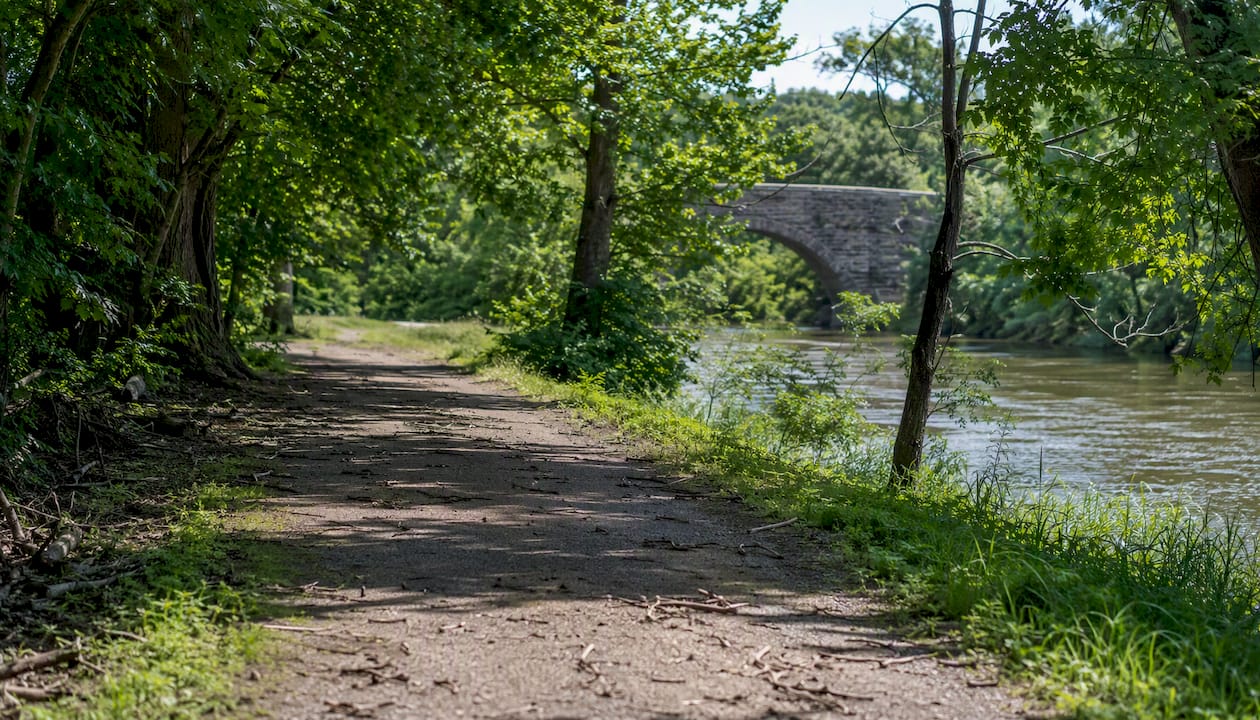
South River corridor properties offer easy access to the greenway trail and the urban trout fishery, but buyers should check FEMA flood maps before making an offer. Some parcels near the river carry flood insurance requirements that add meaningfully to annual carrying costs.
Newer subdivisions on the city's western and northern edges offer more recent construction, larger lots, and easier parking. These appeal to families and buyers who prioritize square footage over walkability.
On pricing, the Census-derived median owner-occupied home value sits at approximately $245,500 for the 2020–2024 estimate period. Entry-level single-family homes and condos typically come in below that figure, while updated historic homes and newer construction in desirable corridors push higher.
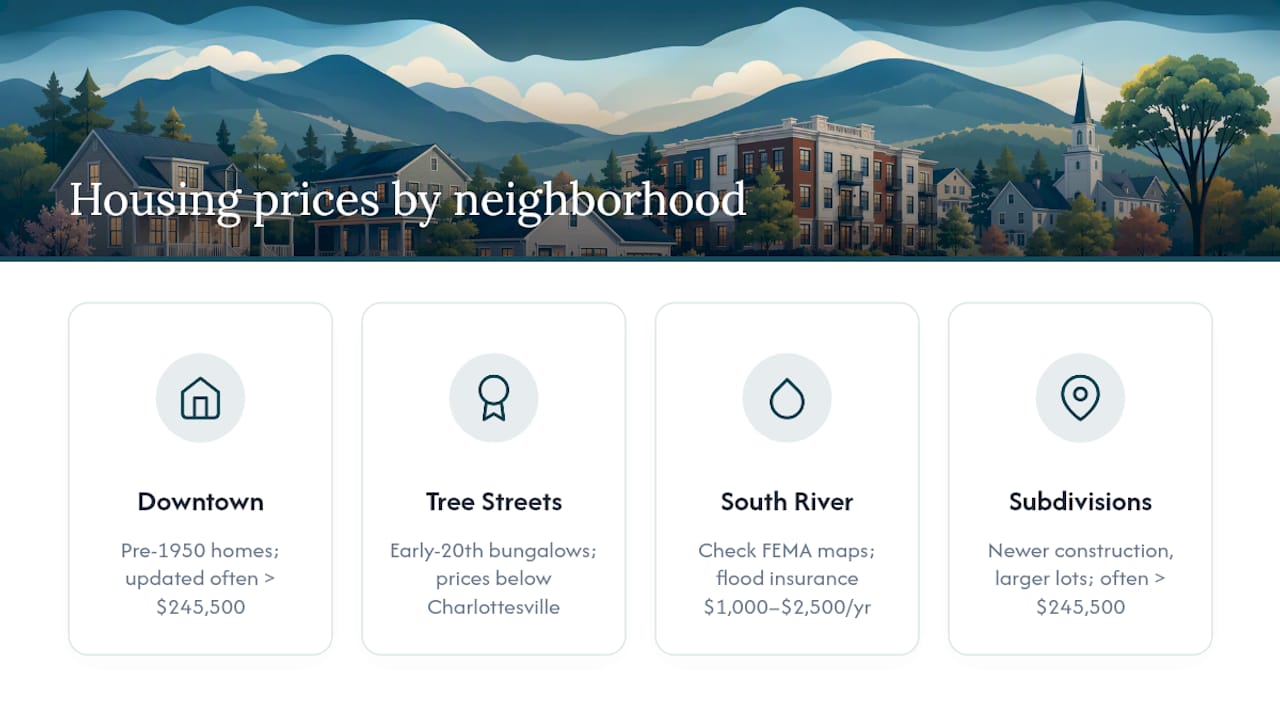
Pro Tip: Before touring any property near the South River, pull the FEMA Flood Map Service Center (msc.fema.gov) for the parcel address. A home in a Special Flood Hazard Area can carry $1,000–$2,500 or more in annual flood insurance premiums that won't show up in the listing price.
How do you buy or sell a home in Waynesboro?
The typical residential transaction in Waynesboro runs 45–75 days from accepted offer to closing, roughly in line with the broader Virginia market, but a few local factors shape the experience.
Steps for buyers
- Get pre-approved with a lender before you tour. Waynesboro's market has tightened with population growth, and sellers take pre-approval letters seriously.
- Define your neighborhood priorities. Walkability to downtown, school assignment zone, flood-zone status, and commute route to I-64 or I-81 all vary by block.
- Request a comparative market analysis (CMA). With a median home value near $245,500, pricing can shift quickly in a city this size. A local agent's CMA using recent Waynesboro comps is more reliable than automated estimates.
- Schedule a home inspection and, where appropriate, a survey. Older homes in the Tree Streets area may have deferred maintenance, aging electrical panels, or foundation quirks worth knowing before you waive contingencies.
- Understand independent-city closing costs. Waynesboro's property taxes, recordation fees, and grantor's tax are administered by the city, not Augusta County. Confirm the current rates with your agent or the city treasurer's office before you finalize your budget.
- Close. Virginia uses attorneys for real estate closings; budget for attorney fees on top of standard lender and title costs.
Steps for sellers
- Price using recent Waynesboro comps, not regional averages. The city's small size means a handful of sales can move the median noticeably.
- Staging matters more than many sellers expect in a market where buyers are comparing Waynesboro to Staunton and Harrisonburg simultaneously. A well-presented home photographs better and typically spends fewer days on market. For practical guidance on winning listings in a competitive market, preparation and presentation are the two levers sellers control most directly.
- Disclose flood-zone status and any known water intrusion history. Virginia's disclosure requirements are specific, and omissions create liability.
- Coordinate with your agent on permit history. Unpermitted additions are common in older Waynesboro homes and can complicate appraisals.
Questions to ask a local agent
- How many transactions have you closed in Waynesboro specifically in the past 12 months?
- What's your read on the Tree Streets market versus newer subdivisions right now?
- How do you handle appraisal gaps in this price range?
- What local inspectors do you recommend, and what do they typically flag in older Waynesboro homes?
Pro Tip: Order a survey on any older Waynesboro property where the lot lines aren't obvious. Fence lines and survey lines diverge more often than buyers expect in the Tree Streets area, and a boundary dispute after closing is expensive to resolve.
All buyers and sellers should be aware that federal fair housing protections apply to every transaction, covering nondiscrimination in financing, marketing, and sale.
What are the best outdoor attractions and things to do in Waynesboro?
Visit Shenandoah Valley describes Waynesboro as an ideal basecamp that pairs immediate outdoor access with a growing downtown arts and dining scene. That framing is accurate. You can be at the entrance to Shenandoah National Park in under 30 minutes, or on a Blue Ridge Parkway overlook in 20.
Outdoor highlights
- Skyline Drive access: The northern terminus of the Blue Ridge Parkway and the southern entrance to Skyline Drive are both within easy reach. Fall foliage season (mid-October) draws heavy traffic; plan to arrive early or on a weekday.
- Blue Ridge Tunnel West Trailhead: A converted 19th-century railroad tunnel through the mountain, now a 1.1-mile walking trail. It's one of the more unusual hikes in the region and genuinely worth the short drive.
- Appalachian Trail: The AT crosses the Blue Ridge just above Waynesboro, with Rockfish Gap serving as a common access point. Day hikers and thru-hikers both use the city as a resupply stop.
- South River Greenway: A paved trail running through the city along the South River. Good for cycling, walking, and casual runs without leaving town.
- South River urban trout fishery: The South River carries a state designation as an urban trout fishery, making it one of the few places in Virginia where you can fish for stocked trout within a city's limits. Kayaking is also popular on calmer stretches.
Downtown and cultural attractions
- Wayne Theatre: A restored 1926 movie palace that now hosts live performances, film screenings, and community events. It anchors the Main Street arts corridor.
- P. Buckley Moss Museum: A dedicated museum for the work of Virginia artist P. Buckley Moss, with rotating exhibits and a permanent collection. Free admission.
- Street Arts Trail: A public art installation that uses murals and sculptures to draw foot traffic through downtown blocks, connecting galleries, restaurants, and breweries.
Pro Tip: Combine a morning hike on the Blue Ridge Tunnel trail with lunch at one of Waynesboro's downtown breweries. The tunnel is cool (literally, around 55°F inside year-round), so bring a layer even in summer. Parking at the trailhead fills by 10 AM on weekends in peak season.
What is the local economy, and what schools and healthcare are available?
Economy and employment
Waynesboro's economy mixes light manufacturing, small professional services, and a growing hospitality and tourism sector tied to outdoor recreation. The city's location at the I-64/Blue Ridge corridor has historically supported distribution and light industrial operations. Remote work has added a new layer: the same affordability and quality of life that attracts buyers is drawing professionals who work for employers in Richmond, Northern Virginia, or Washington, D.C.
Schools
- Waynesboro City Public Schools operates the city's K-12 system independently from Augusta County Public Schools, a direct consequence of independent-city status.
- The district includes multiple elementary schools, Kate Collins Middle School, and Waynesboro High School.
- Nearby higher education options include Blue Ridge Community College (Weyers Cave campus, about 20 minutes north) and James Madison University in Harrisonburg (roughly 45 minutes).
- For enrollment information and school zone assignments, visit waynesboro.k12.va.us.
Healthcare
- Augusta Health is the primary regional hospital, located in Fishersville, roughly 10 minutes from downtown Waynesboro. It handles emergency care, surgery, and most specialty services.
- UVA Health (Charlottesville) is the nearest academic medical center, about 45 minutes east on I-64, and is where residents typically go for complex specialty or tertiary care.
- Several primary care and urgent care clinics operate within Waynesboro city limits.
The combination of good school independence and accessible healthcare makes Waynesboro genuinely functional for families, not just singles or retirees.
How do you get to and around Waynesboro?
Waynesboro sits at a natural crossroads. Interstate 64 runs through the city, connecting it east to Charlottesville and Richmond, and west through the mountains toward Staunton and the I-81 junction. That I-64/I-81 interchange, about 10 miles west in Staunton, is one of the more strategically located highway junctions in the mid-Atlantic, giving Waynesboro access to the entire I-81 corridor from Tennessee to Pennsylvania. Additional routes include U.S. 250, U.S. 340, and VA-254.
- Nearest airports: Shenandoah Valley Regional Airport (SHD) in Weyers Cave handles limited regional service. Charlottesville-Albemarle Airport (CHO), about 45 minutes east, offers more frequent connections. Dulles International (IAD) is roughly 2.5 hours north for international travel.
- Freight rail: Waynesboro sits at a historic rail intersection sometimes called the "Iron Cross," where two rail lines historically crossed. Freight rail remains active, though no passenger rail service currently serves the city.
- Local transit: Waynesboro Area Regional Transit (WART) provides limited local bus service. Most residents rely on personal vehicles; the city is walkable in the downtown core but car-dependent for most errands.
Pro Tip: If you're driving to Shenandoah National Park or the Blue Ridge Parkway during fall foliage season (mid-October), use U.S. 250 west from Waynesboro to Rockfish Gap rather than trying to enter from the north. It's faster, less congested, and puts you directly at the park entrance.
For out-of-area visitors planning international travel before or after a Waynesboro trip, Travel is the authoritative source for current travel advisories.
How safe is Waynesboro, and where can you find crime data?
Waynesboro is a small city with the crime patterns typical of small Virginia cities: property crime is more common than violent crime, and rates vary by neighborhood and time of year. Making broad safety claims without current data does readers a disservice, so the better approach is pointing to the sources that actually track it.
Where to find official crime data
- Waynesboro Police Department: The city's police department publishes annual reports and crime statistics at waynesboro.va.us. The department's non-emergency line is the right contact for neighborhood-specific questions.
- Virginia State Police Crime in Virginia report: Published annually, this report breaks down offenses by jurisdiction and is the most reliable state-level source.
- FBI Crime Data Explorer (cde.fbi.gov): The federal Uniform Crime Reporting database lets you compare Waynesboro's reported crime rates against similar-sized Virginia cities.
Practical safety tips for residents and visitors
- Downtown Waynesboro is well-lit and active during evening hours when events are running at the Wayne Theatre or local restaurants. Quieter blocks warrant the same awareness you'd apply in any small city.
- Flood preparedness is a genuine safety consideration near the South River. Sign up for the city's emergency alert system and know your property's flood zone before a storm event.
- Waynesboro has an active neighborhood watch network. New residents can connect through the police department's community liaison program.
What does it cost to live in Waynesboro, and who lives there?
Waynesboro is meaningfully more affordable than most of Virginia's larger metros. The Census-derived median home value of approximately $245,500 compares favorably to Charlottesville (where medians run considerably higher) and sits below the Northern Virginia suburban average by a wide margin. Median gross rent near $1,020 per month is also below the statewide median for Virginia cities of comparable size.
The city's 7.9% population growth between 2020 and 2025 reflects that affordability gap. Analysts tie the growth to professionals and families relocating from higher-cost Virginia metros who can maintain remote or hybrid work arrangements while cutting housing costs substantially.
- Median household income: Census QuickFacts places it in a range consistent with small Virginia cities, below the statewide median but supported by a mix of manufacturing wages, professional services, and growing tourism employment.
- Age profile: Waynesboro skews slightly younger than many Shenandoah Valley communities, partly because of its housing affordability for young families and partly because of its outdoor recreation draw.
- Racial and ethnic composition: The city is majority white, with Black or African American residents comprising the second-largest group, and a growing Hispanic and Latino population, consistent with broader Shenandoah Valley demographic trends.
- Compared to nearby Staunton: Staunton, about 10 miles west, carries a slightly higher median home value and a stronger historic tourism economy. Waynesboro offers comparable access to the same outdoor amenities at a lower price point.
How does Waynesboro's city government work, and how do you access services?
Waynesboro operates as an independent city, which in Virginia means it is legally and administratively separate from Augusta County. The city has its own governing body (City Council and City Manager), its own school system, its own courts, and its own tax administration. If you own property in Waynesboro, your real estate taxes go to the city, not the county.
Common resident tasks
- Utility setup: Water, sewer, and trash service are managed through the city. Contact the Utilities Department at waynesboro.va.us to establish service when you move in.
- Building permits: The Community Development department handles building, electrical, plumbing, and zoning permits. Any addition, deck, or structural change to a property requires a permit; unpermitted work creates problems at resale.
- Vehicle registration: Virginia vehicle registration is handled through the DMV, but Waynesboro levies a local vehicle license fee. Confirm the current fee schedule with the city treasurer.
- Trash and recycling: Curbside collection schedules and recycling guidelines are posted on the city website. Bulk item pickup requires scheduling in advance.
Key city contacts
- City of Waynesboro official site: waynesboro.va.us
- Community Development (permits): waynesboro.va.us/permits
- Utilities: waynesboro.va.us/utilities
- City Council and meeting schedule: waynesboro.va.us/citycouncil
What should new residents do first after moving to Waynesboro?
Getting settled in a new city is mostly a logistics problem. Here's the order that works for most people:
- Set up city utilities (water, sewer, trash) through waynesboro.va.us before your move-in date.
- Enroll children in school through Waynesboro City Public Schools at waynesboro.k12.va.us. Bring proof of residency, immunization records, and prior school records.
- Forward your mail through USPS and update your address with the Virginia DMV within 30 days of moving.
- Register to vote at vote.elections.virginia.gov. Virginia requires re-registration when you change your address to a new jurisdiction.
- Pay the local vehicle license fee to the city treasurer; this is separate from your state DMV registration.
- Set up recycling pickup and confirm your trash collection day on the city website.
A few community entry points worth knowing:
- The Waynesboro Farmers Market runs seasonally on Main Street and is one of the fastest ways to meet neighbors and local producers.
- The Waynesboro Chamber of Commerce hosts networking events and new-business resources that help newcomers connect with the local professional community.
How has Waynesboro's population changed since 2020?
The 2020 Census counted 22,196 residents in Waynesboro. For a city of this size, that's a meaningful growth rate.
The drivers are largely economic. Waynesboro's housing costs remain well below those of Charlottesville, Northern Virginia, and Richmond, and its position at the I-64 corridor makes it accessible to employers in those markets for hybrid workers. The outdoor recreation economy has also expanded, drawing residents who prioritize lifestyle alongside affordability.
Demographically, the city's growth has been broad-based rather than concentrated in a single age group, though the affordability advantage tends to attract young families and working-age adults more than retirees, who often prefer Staunton's more established historic tourism infrastructure. The net effect is a city that feels more active and commercially viable than its population count alone would suggest, particularly downtown, where galleries, breweries, and restaurants have moved into renovated spaces over the past decade.
What makes Waynesboro worth a closer look than most people expect
Most people who haven't spent time in Waynesboro assume it's a pass-through town on the way to Shenandoah. That assumption is wrong, and it's actually one of the reasons the housing market here still offers value.
The outdoor access is genuinely exceptional. You don't need to drive an hour to find a trail or a river. The South River runs through the city, the Blue Ridge Tunnel trailhead is minutes away, and Rockfish Gap puts you at the park entrance before most people have finished their morning coffee. That kind of access, inside city limits, with a median home value under $250,000, is rare in Virginia.
What I find underestimated is the downtown trajectory. The Wayne Theatre, the Street Arts Trail, and the breweries moving into renovated Main Street buildings aren't just amenities. They signal a community investing in itself, which is exactly what you want to see before a market moves. Buyers who waited on Charlottesville in 2015 know how that story ends.
The one honest caveat: Waynesboro is still a small city, and some services, specialty retail, and dining variety require a drive to Staunton or Charlottesville. For buyers who need urban density, it's not the right fit. For buyers who want mountain access, a real neighborhood, and a home they can actually afford, it deserves a serious look.
Beamsrealtygroup knows Waynesboro's market from the inside out
Buying or selling in a city this specific requires more than a national listing platform. Beamsrealtygroup brings personalized local expertise to every Waynesboro transaction: accurate pricing using real local comps, home preparation and staging guidance, and hands-on support from first showing through closing. Whether you're a first-time buyer navigating independent-city tax rules, a seller preparing a Tree Streets historic home, or an investor evaluating the rental market, the team provides the market knowledge and transaction management that generic platforms can't replicate.
The process starts with a free market valuation or buyer consultation. You'll get a clear picture of current Waynesboro pricing, neighborhood dynamics, and what to expect at each step, with no obligation. Connect with Beamsrealtygroup to schedule your consultation and get local guidance you can actually use.
Primary sources and helpful links
Use these official and authoritative sources to verify facts and research further:
- U.S. Census Bureau QuickFacts: Waynesboro, VA — Population estimates, housing metrics, income data, and demographic breakdowns.
- City of Waynesboro official website — Municipal services, permits, utilities, tourism, and city government contacts.
- Visit Shenandoah Valley — Regional tourism guide covering outdoor attractions, events, and dining in and around Waynesboro.
- Waynesboro, Virginia — Wikipedia — General reference covering history, geography, independent-city status, and transportation.
- HUD Office of Fair Housing and Equal Opportunity — Federal fair housing guidance for buyers, sellers, and renters.
- Travel — Travel advisories and international travel resources for out-of-area visitors.
Sources
- U.S. Census Bureau QuickFacts: Waynesboro city, Virginia
- Explore Waynesboro | Waynesboro, VA - Official Website
- Visit Shenandoah Valley - Things to Do in Waynesboro: Events, Outdoor Adventures, and Scenic Drives
- Waynesboro, Virginia — Wikipedia
- HUD: Office of Fair Housing and Equal Opportunity
- Travel