
Contingent means a seller has accepted an offer that still has strings attached, usually an inspection, appraisal, or financing condition that hasn't cleared yet. Pending means those conditions are resolved or waived, and the deal is closer to the finish line. Neither one is a done sale until closing day, but if you're watching a listing, pending is the status that should make you worry it's already gone.
TL;DR:
- Contingent status indicates a sale with unresolved conditions like inspection, appraisal, or financing, which can still cause the deal to fall apart.
- Pending means those conditions are either met or waived, but the deal is not yet closed, though the listing may still be showing backups or having delays.
- Backup offers are common on contingent and pending listings, and buyers should get preapproved, keep contingencies short, and negotiate clear timelines.
- Most deals move from contingent to pending within about a month for financed transactions, but longer times can signal complications such as short sales or legal issues.
- A seller’s choice to keep showing or stop showings on pending listings reflects confidence, but late-stage issues like appraisal shortfalls and title problems can still derail the closing.
Table of Contents
- What Does Contingent Mean in Real Estate?
- What Does Pending Mean, and What Are the Variants?
- Can You Still Make an Offer on a Contingent or Pending Home?
- How Long Does Contingent to Pending to Closed Usually Take?
- How an Agent Helps You Through the Contingent and Pending Stages
- A Practical Checklist for Where You Stand Right Now
- Get Help Negotiating Your Contingent or Pending Offer
- Where to Learn More
- Sources
What Does Contingent Mean in Real Estate?
A contingency is a condition written into the purchase contract that has to be satisfied before the sale can close. If it isn't met, either side can typically walk away, and the deal collapses. That's the whole point of a contingency: it protects the buyer from financing falling through, protects the seller from an appraisal disaster, and gives both parties a documented exit ramp.
Here's what shows up most often on a contract:
- Inspection contingency — lets the buyer back out or renegotiate if a home inspection turns up serious problems.
- Appraisal contingency — protects the buyer if the home appraises for less than the offer price.
- Financing contingency — gives the buyer an exit if their mortgage falls through.
- Home-sale contingency — the buyer's purchase depends on selling their current house first.
- Title contingency — the sale depends on a clean title search with no liens or ownership disputes.
Status labels get more specific from there. "Active contingent" or "contingent continue to show" means the seller can keep marketing the home and taking offers while the clock runs on the buyer's contingency. A "kick-out clause" gives that first buyer a set, limited window to drop their contingency or lose the house to a better offer. A "short-sale contingent" tag means the deal also needs lender approval on top of everything else, which can stretch things out for weeks.
Say a buyer has a home-sale contingency but their own house hasn't attracted a serious offer after 30 days. The seller invokes the kick-out clause, the buyer can't remove the contingency in time, and the house goes to the second offer waiting in line. That's the contingency system working exactly as designed.
What Does Pending Mean, and What Are the Variants?
Pending means the buyer's contingencies are cleared or waived, and the transaction is moving toward closing. The inspection is done, the appraisal came in, the loan is likely approved. This is the pending sale definition most buyers assume applies universally, but the label hides a few important variations worth knowing.
- Pending, taking backups — the seller will still review backup offers in case the current deal falls apart.
- Pending no-show — showings have stopped entirely; the seller considers the deal essentially locked in.
- Pending over four months — a red flag status meaning something is holding up closing, often a short sale or a complicated title issue.
- Pending short sale — closing depends on the lender approving a sale price below what's owed on the mortgage.
Sellers control whether they keep showing a pending home, and that choice usually tells you how confident they are. A seller who stops all showings believes the deal will close. One who marks the listing "taking backups" isn't so sure, maybe because the buyer's loan is still in underwriting or an appraisal contingency hasn't fully resolved. Even a pending sale can still fail over appraisal shortfalls, last-minute financing denials, or title problems that surface late. If you're renegotiating your own appraisal shortfall as a buyer, appraisal gap coverage options are worth understanding before you're stuck mid-contract.
Can You Still Make an Offer on a Contingent or Pending Home?
Yes, and this is where most buyers get stuck watching a listing they assume is already lost. Submitting a backup offer is legal and common, and sellers frequently accept them, especially on anything marked contingent continue to show or pending taking backups. A backup offer sits in line behind the current contract. If that deal falls apart, yours moves up automatically, no re-negotiation required.
Here's how to position yourself as a serious backup buyer:
- Get preapproved before you submit anything. A backup offer without financing behind it won't get taken seriously.
- Decide how many contingencies you're willing to keep. Fewer contingencies make your offer more attractive if it activates.
- Set a strong earnest money deposit. It signals you're not going to walk if given the chance to move forward.
- Work through your agent to contact the listing agent directly. Ask specifically whether the seller is entertaining backups and under what terms.
- Include clear timeline language. State how quickly you can close if the first contract collapses.
Buyers who waive appraisal or inspection contingencies entirely stand out, but that comes with real financial exposure if something goes wrong after closing. An escalation clause, which automatically raises your offer up to a ceiling if a competing bid appears, can be a middle ground that keeps you competitive without giving up every protection. Preapproval that's kept current matters here too, since a contingent listing can flip to available with little warning.
Pro Tip: Keep a short inspection contingency window (five to seven days) instead of waiving it outright. You keep your exit if something's genuinely wrong, but you're not the slow buyer holding up the seller's decision.
How Long Does Contingent to Pending to Closed Usually Take?
Cash deals can move from contingent to closed in a few weeks. Financed deals typically take about a month or more once a contract goes pending, mostly because of underwriting and appraisal scheduling.
Contingent listings carry meaningfully more risk of falling apart than pending ones, since the conditions protecting both sides haven't been tested yet. Once a sale reaches pending, most of the major risks are behind it, but not all of them. The most common deal-killers at either stage are loan denial late in underwriting, an appraisal that comes in below the offer price, an inspection surprise that reopens negotiations, or a title defect nobody caught earlier.
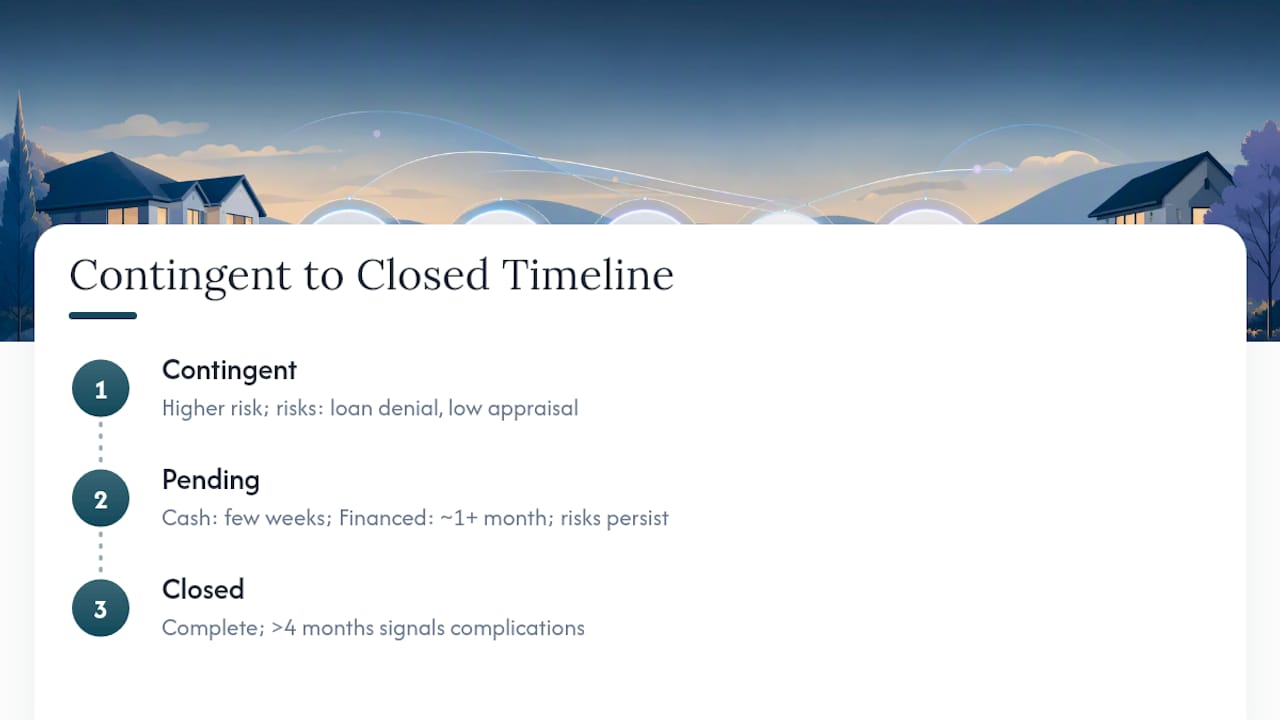
Watch the wording carefully. A listing sitting at "pending" for more than four months almost always signals a short sale, a lender delay, or a legal complication, not a normal closing timeline. "Taking backups" on a pending listing is the seller's way of admitting some doubt about the current buyer closing on schedule.
How an Agent Helps You Through the Contingent and Pending Stages
A good agent's job during these stages is mostly about speed and precision. That means drafting contingency language that protects you without scaring off the other side, negotiating kick-out clause timing so you're not caught off guard, and coordinating inspections and appraisals so nothing stalls past its deadline.
An experienced real estate group handles this daily for buyers and sellers, including:
- Verifying lender timelines directly so financing contingencies don't quietly slip past their deadline.
- Preparing competitive backup offers when a desirable home is already contingent or pending.
- Negotiating repair credits or price adjustments after inspection findings.
- Coordinating title searches early enough to catch problems before they threaten closing.
Clear, constant communication between agent, lender, and title company is usually what separates a contingency that resolves in five days from one that drags on for three weeks and jeopardizes the whole contract. Buyers dealing with a home-sale contingency of their own benefit especially from an agent who can negotiate a fair kick-out window instead of an unreasonably tight one.
A Practical Checklist for Where You Stand Right Now
If you're a buyer: get preapproved before you do anything else, prepare a backup offer if a home you love is already under contract, and keep contingencies short rather than absent. Protect your earnest money by never waiving a contingency you can't afford to lose.
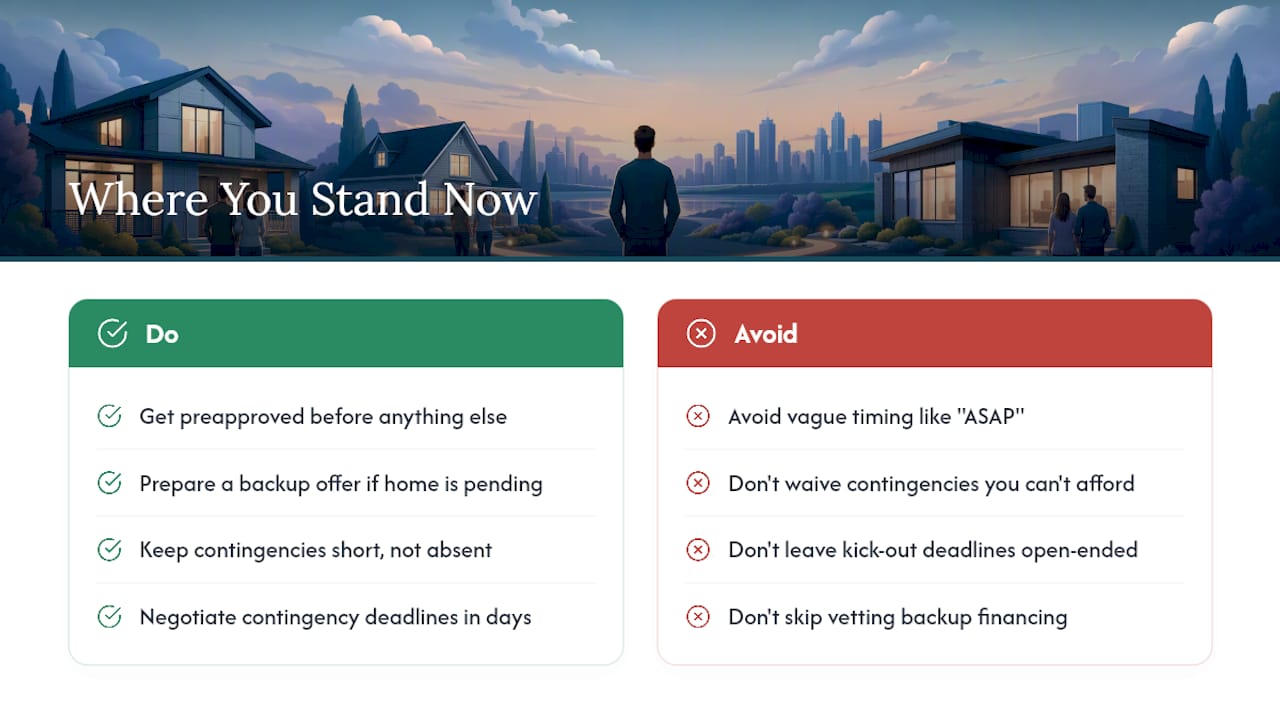
If you're a seller: decide early whether you'll keep showing a contingent home or switch to backups only, set a firm kick-out deadline instead of an open-ended one, and vet any backup offer's financing just as carefully as the first one.
One habit separates smooth closings from painful ones: negotiate contingency deadlines in days, not "as soon as possible." Vague timing is where deals quietly stall.
— Myra
Get Help Negotiating Your Contingent or Pending Offer
Real estate agents regularly work these exact situations, negotiating kick-out clauses, coordinating inspections against tight deadlines, and preparing backup offers strong enough to actually convert when the first deal falls through.

Whether you're a buyer trying to time a backup offer right or a seller deciding whether to keep showing a contingent listing, the difference between a smooth closing and a canceled one usually comes down to how fast contingencies get resolved and how clearly everyone communicates along the way. That's the part a hands-on agent actually controls. If you want help structuring an offer or reviewing where your current contract stands, reach out to Beams Realty Group and get specific guidance for your situation before your next deadline hits.
Where to Learn More
- NAR: Real Estate Sales Contract Contingencies
- HUD: Fair Housing Resources
- Navy Federal: Under Contract vs. Contingent vs. Pending
- Real Estate Glossary for Home Sellers
This article is general information, not a substitute for advice from a qualified financial advisor. Consult a qualified financial professional about your own circumstances before acting on anything here.
Sources
- Consumer Guide: Real Estate Sales Contract Contingencies
- Home Buying: Under contract vs. Contingent vs. Pending
- Contingent vs. pending real estate: What’s the difference?
- Pending vs Contingent: What Is the Difference? | SoFi