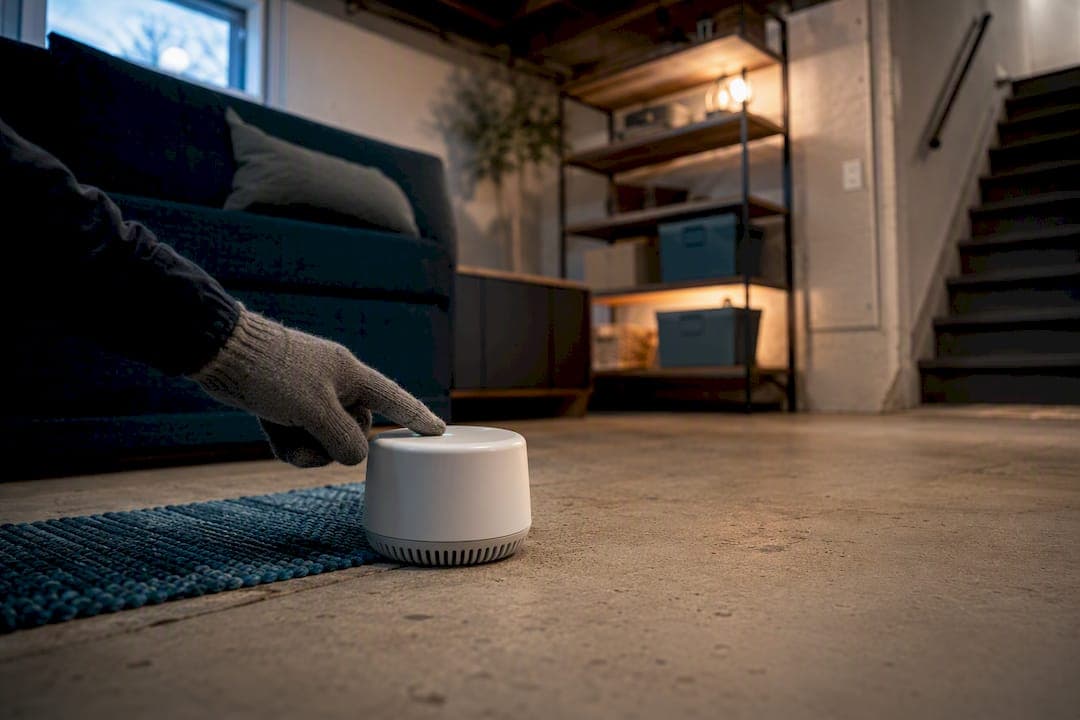
Yes: every Virginia homeowner should test for radon, and the lowest livable level of the home is the recommended place for that test. Start with a short-term charcoal or alpha-track kit if you just want a baseline reading. If you're buying or selling, hire an NRPP-certified tester who uses a continuous radon monitor instead. The EPA action level is 4.0 pCi/L, and plenty of Virginia homes land above it.
TL;DR:
- Testing during winter and early spring provides the most accurate results because radon levels tend to concentrate indoors during cold months.
- A short-term test with a certified professional CRM ensures verifiable results that satisfy real estate and lender requirements for transactions.
- Placing radon tests in the lowest livable level, away from drafts and high humidity areas, reduces the risk of false readings.
- Radon levels above 4.0 pCi/L typically require mitigation, with post-mitigation testing essential to confirm the system's effectiveness.
- Ongoing follow-up testing every two years is recommended, as radon levels can change over time due to home alterations or seasonal shifts.
Table of Contents
- Radon testing Virginia homeowners can actually rely on
- Where to place your test for an accurate reading
- What your radon results mean and what to do next
- How to vet a certified radon pro in Virginia (and what it costs)
- Virginia radon resources worth bookmarking
- Why Beams Realty Group treats radon testing as a standard step
- Why the "test once and forget it" habit is the real problem
- A different way to handle radon during your home sale
- Sources
Radon testing Virginia homeowners can actually rely on
Two test formats exist, and picking the wrong one wastes your time. A short-term test runs 2 to 7 days and uses charcoal canisters, alpha-track detectors, or a plug-in continuous radon monitor (CRM). It's the fastest way to get a number, and it's what most homeowners grab first. A long-term test lasts several months and provides a more reliable annual average, accounting for seasonal and weather-related radon variations.
Timing matters more than most people realize. Radon tends to concentrate indoors during colder months, when windows and doors stay shut and heating systems pull more air through the foundation. That's why winter and early spring are the best windows for a short-term test in Virginia. Avoid testing during major storms or unusually high winds, since pressure changes can skew the reading in either direction.
Not all kits perform equally:
- Charcoal canisters are cheap and widely available at hardware stores, but they're sensitive to humidity and handling errors.
- Alpha-track detectors work well for longer exposure periods and tolerate a wider range of conditions.
- Digital CRMs give you hour-by-hour data, flag tampering, and are what certified professionals use for real estate transactions because buyers and sellers need results that can't be disputed.
If you're closing on a house within weeks, skip the drugstore kit. A CRM run by a certified tester produces a verifiable record that satisfies lenders, agents, and skeptical buyers all at once.
Where to place your test for an accurate reading
Placement mistakes are the number one reason homeowners get a misleading result. Local health guidance is consistent on this point: test the lowest livable level of the home, whether that's a finished basement, a walkout lower level, or a ground-floor room built directly on a slab.
- Set the device at an appropriate height above the floor and away from drafts.
- Keep it a reasonable distance from exterior doors, windows, and vents.
- Avoid closets, kitchens, bathrooms, and anywhere with high humidity or heavy air movement.
- Close windows and exterior doors for a suitable period before starting and during the entire test period, running your HVAC system normally.
- If the home has multiple foundation types (a basement plus a slab addition, for example), run a separate test in each section.
Pro Tip: If you've got a big house with several ground-contact areas, don't rely on one canister in the basement. Radon concentrations can vary room to room, and a single test can miss a hot spot in an addition or crawlspace conversion.
What your radon results mean and what to do next
Anything under 4.0 pCi/L is technically below the EPA's action level, but that doesn't mean zero risk. The World Health Organization uses a lower reference point for long-term health guidance, so a reading in the 2 to 4 range isn't something to ignore forever, especially in a home where you or family members spend a lot of time in the basement.
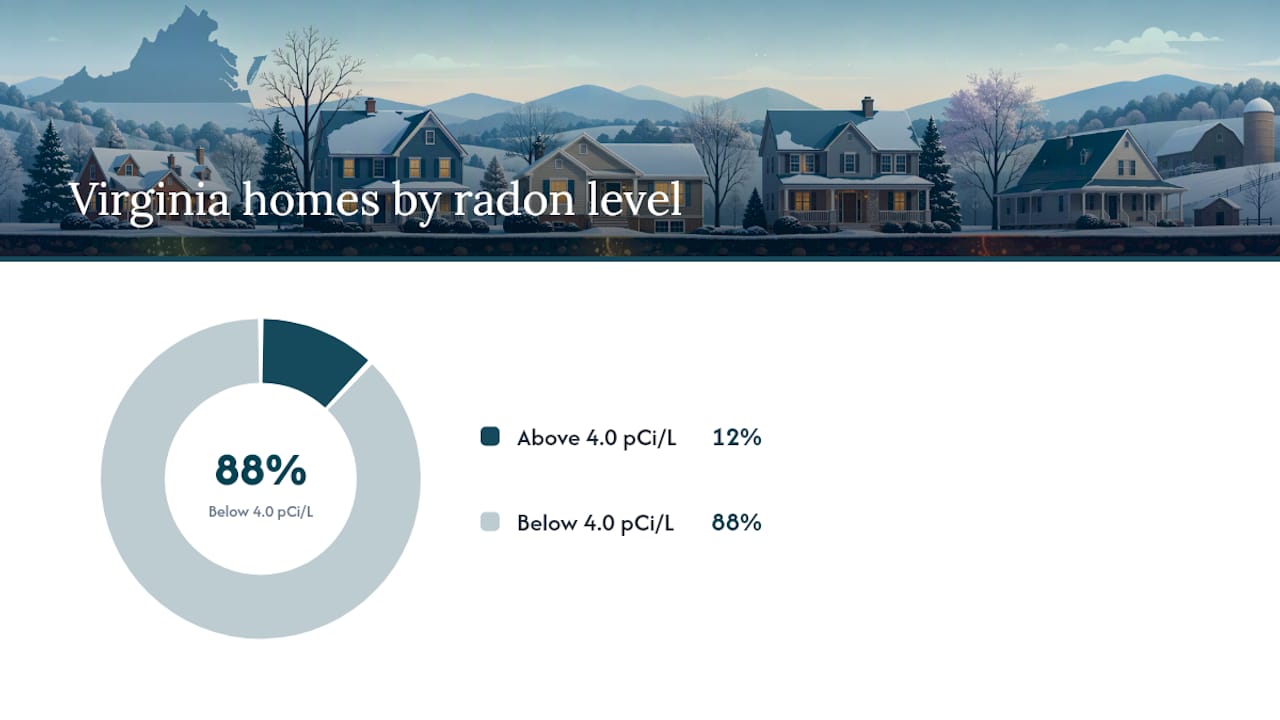
Virginia's own numbers put this in context. The state's median indoor radon level runs around 2.9 pCi/L, and historical testing shows roughly 12% of Virginia homes have measured above the 4.0 pCi/L threshold. That's not a rare outlier reading. It's a real chunk of the housing stock.
Here's how to act on your number:
- Below 4.0 pCi/L: retest every 2 years, or sooner if you finish a basement, add a sump pump, or seal up the foundation in ways that change airflow.
- At or above 4.0 pCi/L: hire a certified mitigation contractor for active soil depressurization, the standard fix that vents radon from beneath the foundation before it enters living space.
- After mitigation: always schedule a post-mitigation test. A properly installed system typically drops levels well below the action threshold, but only a follow-up test confirms it worked.
Mitigation isn't a one-time fix you forget about. Fan-driven systems have a motor that eventually wears out, so a quick annual check of the manometer gauge on the pipe tells you if the system's still running as intended.
How to vet a certified radon pro in Virginia (and what it costs)
Anyone testing or fixing radon problems for pay should hold NRPP or NRSB certification. Don't take a contractor's word for it. Ask for the certification number and verify it directly, and lean on the Virginia Department of Health's Indoor Radon Program, which maintains lists of credentialed testers and mitigators across the state.
A few things to check before signing anything:
- Confirm the contractor carries current NRPP or NRSB credentials, not an expired one.
- Ask for a written scope of work that specifies suction point locations, pipe routing, and fan placement before work starts.
- Insist on post-mitigation verification testing as part of the price, not an upcharge.
- Walk away from anyone who won't put a guarantee or warranty on the system in writing.
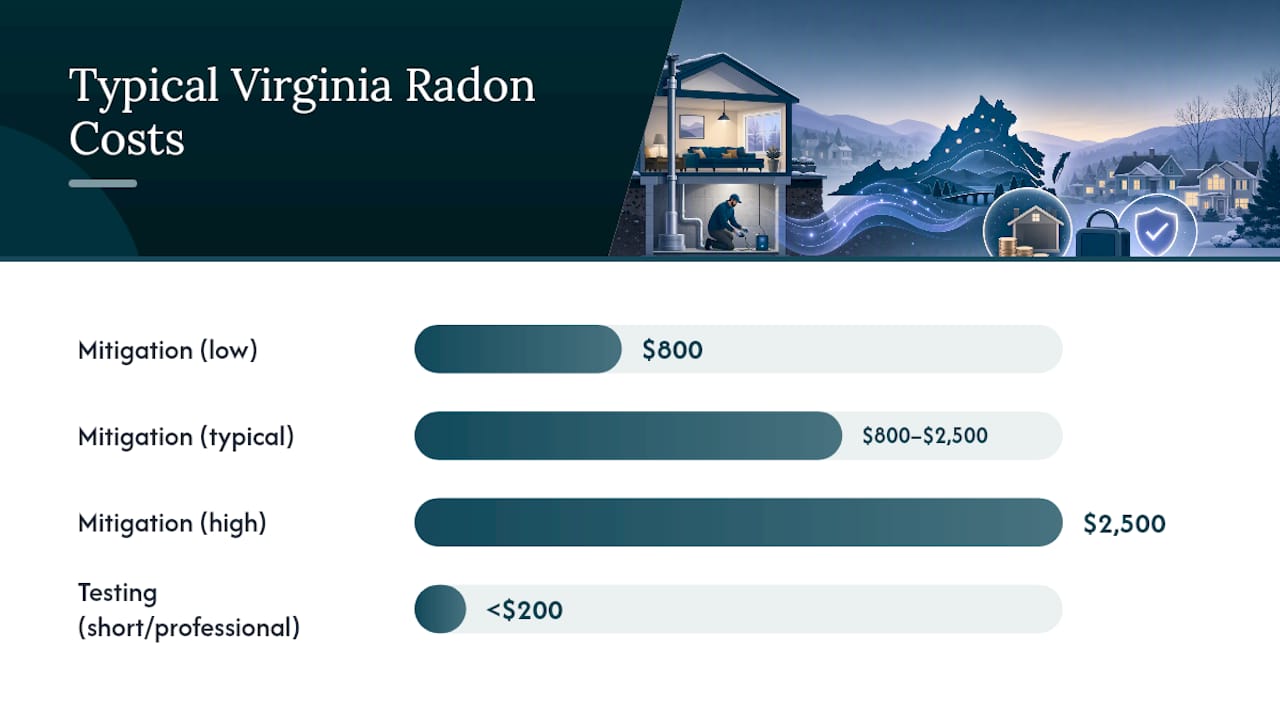
Cost varies by foundation type and how many suction points the house needs. Industry estimates put typical Virginia mitigation costs in the $800 to $2,500 range, with crawlspaces and multi-level foundations pushing toward the higher end. Testing alone runs far less, usually well under $200 for a short-term kit or a couple hundred dollars for a professional CRM measurement.
Virginia radon resources worth bookmarking
The VDH Indoor Radon Program is your first stop for kit orders, contractor lists, and general guidance, and the program runs discounted kit outreach around National Radon Action Month each January. The EPA's radon site explains the national zone map, though Virginia Energy's geological data is a better guide to why certain counties trend higher based on local soil and bedrock. County health departments, like Fairfax County's radon page, often add local testing instructions worth reading before you buy a kit.
Why Beams Realty Group treats radon testing as a standard step
We recommend radon testing on nearly every transaction we handle, and we build radon contingencies into offers as a matter of practice, not an afterthought. When a client's home tests high, we coordinate directly with certified testers and mitigation contractors and factor the results into negotiation. That coordination often keeps a deal on track that might otherwise stall over a surprise result late in the process.
Why the "test once and forget it" habit is the real problem
Most radon advice treats testing like a one-time chore: buy a kit, get a number, move on. That's backwards. Radon levels shift with seasons, renovations, and even how tightly you seal your windows for winter, so a clean result from five years ago tells you almost nothing about today.
The bigger issue I see in how this topic gets covered is the obsession with zone maps. Homeowners see their county listed as "moderate risk" and assume they're fine, or see "high risk" and panic. Geology influences the odds, but it doesn't determine your reading. A home two doors down can test completely differently based on foundation cracks, sump pump design, or how the HVAC system pulls air.
If you take one thing from this, prioritize placement and timing over the brand of kit you buy. A $15 charcoal canister placed correctly in your lowest livable level, tested during cold weather with the house closed up, beats an expensive digital monitor placed wrong. Get the fundamentals right first.
— Myra
A different way to handle radon during your home sale
There are other paths here: order a kit yourself and DIY the whole process, or call a mitigation contractor directly and manage the paperwork on your own. Both work fine if you have the time and already know the local certified providers. Where Beams Realty Group changes the equation is coordination. Instead of you tracking down a certified tester, interpreting the report, and then renegotiating price or repairs solo, we handle referral coordination with vetted, credentialed professionals and disclose those referral relationships upfront.
That means less guessing about who to call and how a radon result affects your closing timeline. If your home has a reading above 4.0 pCi/L or you're about to list a property with an older mitigation system, reach out through Beams Realty Group and we'll walk you through the next step. We can also help you build the right contingency language into an offer so radon results don't derail a deal you've already found. Visit Beamsrealtygroup to get started on your transaction.
This article is general information, not a substitute for advice from a qualified doctor. Consult a qualified healthcare professional about your own circumstances before acting on anything here.