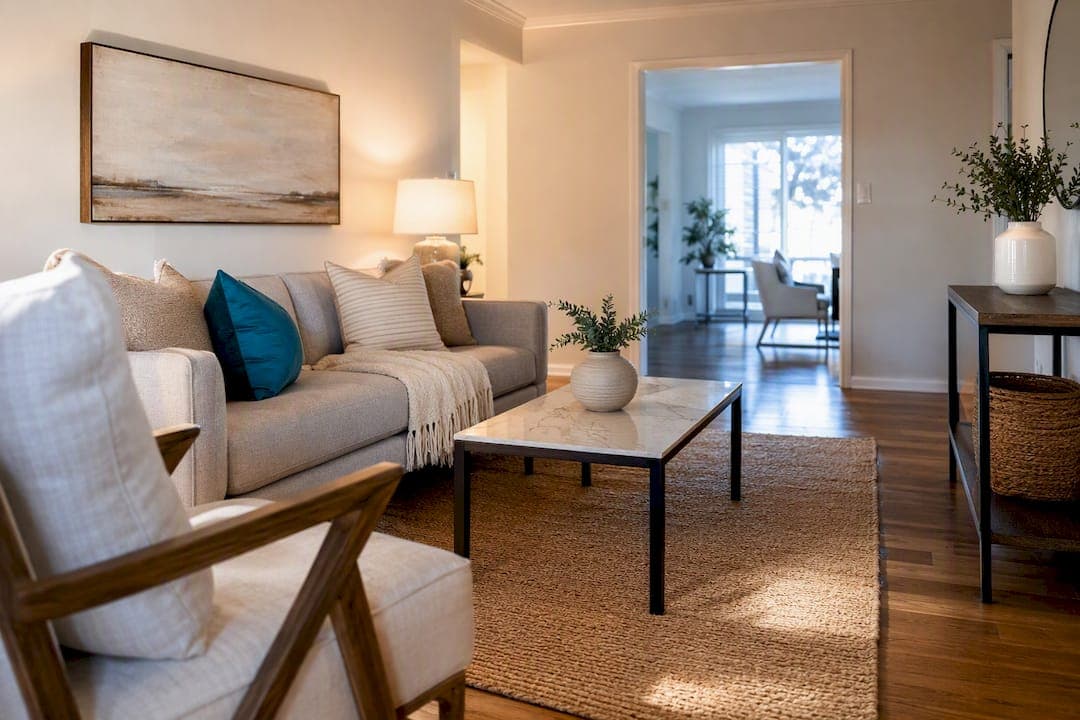
Staging a house is worth it in most cases: 83% of buyers' agents say it makes it easier for buyers to picture themselves living there, and nearly a third report it increases offers by 1% to 10% (source). Before you book a photographer, do three things: declutter and pack away personal items, run a 60-minute pre-photo reset, and shoot fresh photos with a few neutral tweaks. Expect a modest cash outlay for a real shot at a faster sale and stronger offers.
TL;DR:
- Focus on decluttering and depersonalizing key areas like the kitchen, primary bedroom, and bathroom to maximize buyer appeal in photos and showings.
- Prioritize staging the living room, kitchen, and primary bedroom, as these spaces significantly influence first impressions and buyer interest.
- Use low-cost fixes such as hardware swaps, fresh towels, and strategic lighting, often achieving high returns on a minimal investment.
- Choose virtual staging for vacant homes and physical staging for occupied homes that will host multiple showings to match buyer expectations.
- Keep the home consistently show-ready with daily tidying routines and simple quick-fix supplies to maintain appeal throughout the selling process.
Table of Contents
- What To Stage First for Photos and Same-Day Showings
- How Do You Stage Each Room for Maximum Impact?
- Can You Stage a House Without a Big Budget?
- Should You Choose Virtual Staging or Physical Staging?
- How Do You Keep a Staged Home Show-Ready Every Day?
- What Does the Data Say About Staging ROI?
- When Should You Hire a Professional Stager?
- What Shots Should You Plan Before Staging Day?
- Does the Season You List In Change How You Stage?
- Why Does Staging Change How Buyers Feel About a House?
- Author Perspective: Lessons From Real Transactions
- How Beams Realty Group Helps You Stage and Sell
- Sources
What To Stage First for Photos and Same-Day Showings
Photos go online before most buyers ever see the house in person, so the staging that happens before the camera arrives matters more than almost anything else you'll do. A photo-first staging plan speeds time-to-list and generates more showings, which is exactly why the checklist below starts with what the lens will see.
Here's the order that gets a house camera-ready without wasting a weekend:
- Clear every counter. Kitchen and bathroom counters should hold no more than one or two items each. Coffee makers, mail piles, and soap dispensers all go in a box.
- Make every bed and close every closet. Beds get made hotel-tight; closet doors stay shut unless you've thinned them out first.
- Stage the exterior and entry. Sweep the walkway, wipe down the front door, and add a simple potted plant or two.
- Reset the living room. Fluff pillows, straighten the rug, and clear the coffee table down to one tray or a small stack of books.
- Open every curtain and turn on every light. Natural light photographs better than any staged prop.
- Do a final scan for personal items. Family photos, medications, and pet bowls should disappear from any room a camera or buyer will enter.
Keep one to three intentional objects per surface. A single ceramic bowl on a console table reads as styled; five scattered items read as clutter. This is also the moment to pull anything that could be a turnoff for a stranger walking through, including religious items, political material, or anything overtly personal. The goal isn't to erase your life from the house. It's to make the space easy for someone else to imagine living in.
How Do You Stage Each Room for Maximum Impact?
Not every room deserves equal attention. Living rooms, kitchens, and primary bedrooms carry the most weight in a buyer's first impression, according to priority checklists that consistently rank these spaces first. Here's what to actually do in each one.
Living room:
- Pull furniture away from the walls slightly to create conversation groupings, rather than lining every piece against the perimeter.
- Use one area rug sized to fit under the front legs of your seating, not a rug that floats awkwardly in the middle of the floor.
- Pick one focal point (usually the fireplace or the largest window) and arrange seating to face it.
- Oversized rugs and too much furniture are the most common visual mistakes sellers make, so measure before you rearrange anything.
Kitchen:
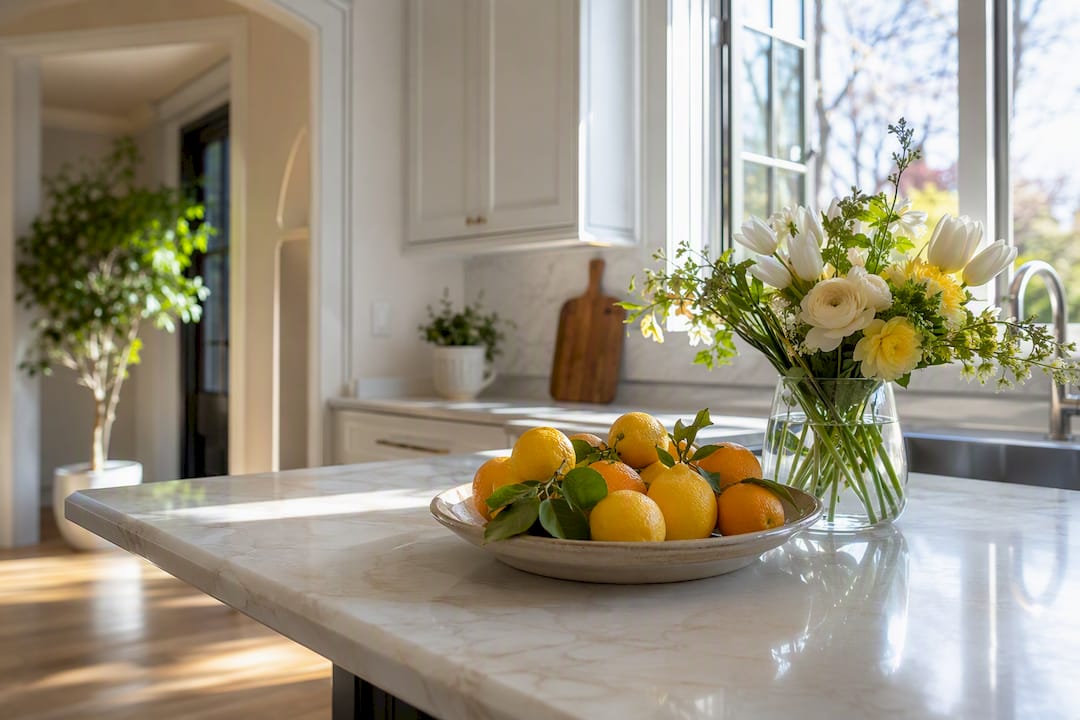
- Clear counters down to one appliance or a bowl of fresh fruit, nothing more.
- Swap dated cabinet hardware for simple brushed nickel or matte black pulls, which run $2 to $5 apiece and photograph like a mini renovation.
- Replace any dim or yellow-toned bulbs with daylight bulbs (around 5000K) so the room reads bright and clean in photos.
- Wipe down appliance fronts and the inside of the microwave. Buyers open things.
Primary bedroom:
- Dress the bed in neutral, matched bedding. White, cream, or light gray reads as calm and hotel-like.
- Use two matching nightstand lamps and two matching pillows on each side for symmetry.
- Thin the closet down to about half its contents so buyers see storage space, not your entire wardrobe.
Bathrooms:
- Hide personal toiletries, razors, and prescription bottles in a basket under the sink.
- Hang matching white or neutral towels, rolled or folded the same way.
- Polish faucets and mirrors. Water spots show up in photos far more than they do in person.
Entry and curb appeal:
- Repaint or clean the front door. Buyers form an opinion before they cross the threshold.
- Trim overgrown shrubs and edge the lawn.
- Add a new doormat and a pair of symmetrical potted plants flanking the entry.
Small, low-cost fixes to curb appeal tend to punch well above their price tag, since it's the first thing every buyer sees, in person or online.
Can You Stage a House Without a Big Budget?
Yes, and the highest-return staging activity costs nothing at all. Decluttering, depersonalizing, and deep cleaning are consistently the highest-ROI activities a seller can do, and plenty of homeowners get strong results without ever hiring a professional stager.
Pro Tip: Rent a storage unit or borrow a garage for one month rather than cramming excess furniture into closets. Buyers open closets, but they never open a storage unit two towns away.
Once you've cleared the decks, a handful of small purchases go a long way:
- New bath towels and a bath mat: $30 to $60
- Two decorative throw pillows and a neutral throw blanket: $40 to $80
- A set of daylight-temperature light bulbs for the whole house: $20 to $40
- Cabinet or door hardware swap: $50 to $150
- Paint supplies for one accent wall or the front door: $60 to $100
Thrifted furniture, a slipcover over a dated couch, or a borrowed area rug can simulate a fully staged look for a fraction of rental costs. Sellers on tight budgets sometimes achieve results comparable to a full professional staging package because modest investments in lighting, paint, and decluttering tend to outperform full remodels.
Here's roughly what different budget tiers buy you: under $200 covers deep cleaning supplies, bulbs, and a couple of decor pieces. $200 to $500 adds hardware swaps, fresh towels, and paint for one or two rooms. A moderate budget range can cover rented accent furniture, professional cleaning, and minor landscaping for the exterior.
Should You Choose Virtual Staging or Physical Staging?
Choose virtual staging for vacant homes and physical staging for anything buyers will walk through more than once. Virtual staging digitally furnishes empty rooms in listing photos, and it's become a practical shortcut for vacant properties or tight timelines.
- Virtual staging fits best when: the home is empty, the seller has already moved out, or the budget can't stretch to rented furniture. Per-photo pricing generally lands in the range typical of virtual-staging vendors, well below the cost of a full physical staging package for the same rooms.
- Physical staging fits best when: the home is occupied and will host multiple open houses or private showings, or it's a luxury listing where buyers expect to touch, sit, and linger in furnished space.
- Disclosure matters: listings using virtual staging should note it clearly in the photo captions or listing description, and sellers should schedule at least one physical walkthrough to avoid disappointing a buyer who shows up expecting furnished rooms that don't exist.
The practical rule: if buyers only ever see the space in photos before an offer, virtual staging works fine. If they're going to walk the halls, virtual staging alone sets up a letdown at the front door.
How Do You Keep a Staged Home Show-Ready Every Day?
Staging a house once for photos is the easy part. Keeping it that way for weeks of showings is where most households lose momentum.
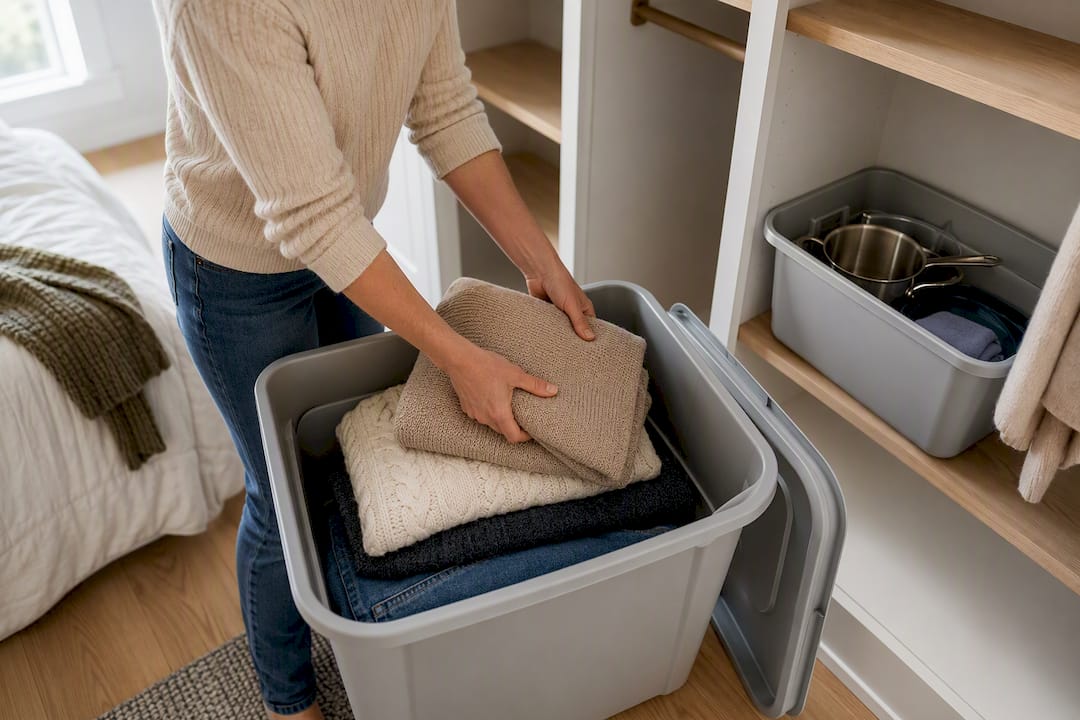
- Build a "hide bin." One large bin or basket lives in a closet, ready to catch mail, shoes, toys, and dishes in under five minutes before any showing.
- Run a 60-minute reset before every open house. Beds made, counters cleared, trash emptied, lights on.
- Do a 15-minute daily tidy. Assign one task per household member, dishes, floors, bathroom counters, so no single person carries the whole load.
- Treat staging like early packing. Every box of decluttered items you store now is one less box to pack later.
Pro Tip: Keep a small "show kit" by the door: paper towels, glass cleaner, and air freshener. A five-minute wipe-down before a last-minute showing beats scrambling through cabinets.
This routine also does double duty. Every bin of off-season clothes or extra kitchen gear you clear out for staging is inventory you've already packed for the move.
What Does the Data Say About Staging ROI?
The numbers back up what most agents already tell sellers: staging tends to pay for itself, and often by a wide margin.
| Metric | Finding |
|---|---|
| Buyers' agents reporting staging helps visualization | 83% |
| Buyers' agents reporting staging increases offers 1% to 10% | nearly a third |
| Highest-ROI staging activity | Decluttering and depersonalizing (free) |
| DIY staging supply budget | Roughly $200 to $500 |
Run the math on a $400,000 home: a 1% to 10% lift on offers translates to somewhere between $4,000 and $40,000 in additional buyer interest, against a staging spend that, for DIY sellers, often stays in the low hundreds of dollars. That gap between cost and potential upside is why staging keeps showing up as one of the highest-leverage moves before listing, even for sellers who skip a professional entirely.
When Should You Hire a Professional Stager?
Bring in a professional when the house is vacant, when it's a higher-end listing where buyer expectations run higher, when the layout photographs awkwardly without furniture to establish scale, or when you're on a tight timeline and can't spend weekends decluttering room by room.
A full-service agent or stager typically coordinates:
- Furniture rental and delivery scheduling around your photo and showing dates
- Room-by-room styling, including rugs, art, and accessories sized correctly for each space
- Direct coordination with the photographer so staging and shoot day happen back to back
Some real estate agents work with sellers to figure out exactly where that line sits for a given property. Some homes need a full staging package. Others need two hours of decluttering and a fresh coat of paint on the front door. The pre-listing inspection process often surfaces the same issues staging tends to expose, like a primary bedroom that reads small or a kitchen that photographs dark, so tackling both together saves a second round of fixes later.
What Shots Should You Plan Before Staging Day?
Stage to the shot list, not the other way around. Decide what the photographer needs before you touch a single cushion.
- Exterior front, taken at an angle that captures the full facade and landscaping
- Entry and foyer, staged with the front door open and lights on
- Living room, widest angle available, furniture pulled slightly off the walls
- Kitchen, shot from the entrance showing counters and the main workspace
- Primary suite, bedroom and closet, plus the primary bathroom if renovated
Swap every bulb in shot rooms to the same color temperature. Mixed warm and cool light creates an orange-and-blue tint that's hard to fix in editing. Small props like a single vase or a stack of neutral throw pillows read well; avoid mirrors that catch the camera flash, and skip anything with a logo or text visible in frame.
Does the Season You List In Change How You Stage?
It changes what buyers respond to, even if the core staging rules stay the same. Spring and early summer listings benefit from bright, fresh touches: a bowl of citrus on the kitchen counter, lighter throw blankets, and open windows for natural airflow when the weather allows. Buyers touring in April and May respond well to color, so a few live plants or fresh flowers near the entry do real work.
Fall listings lean warmer. Swap bedding and throw pillows to deeper neutrals like camel or charcoal, and lean on layered lighting since daylight hours shrink. A lit fireplace, if you have one, is one of the strongest seasonal staging moves available.
Winter listings need extra attention to light, since shorter days mean more showings happen after dark or in low afternoon sun. Every bulb should be on, curtains open, and outdoor lighting checked before evening showings. Clear driveways and walkways of snow and ice before any scheduled visit, since a buyer's first impression starts at the curb, not the front door.
Summer listings in hot climates should keep the air conditioning running before every showing. A house that's uncomfortably warm gets a shorter walkthrough and less attention to detail from buyers who just want to leave. Across every season, the same principle holds: match the small details, scent, temperature, lighting, to what feels comfortable for the time of year, and buyers stay longer in the space.
Why Does Staging Change How Buyers Feel About a House?
Staging works on buyers at a level below conscious evaluation. A cluttered room forces a buyer's brain to do extra work filtering out what doesn't belong, and that mental friction gets misread as dislike for the house itself rather than dislike for the mess. Clear a room down to a few intentional objects, and buyers spend their attention on the bones of the house: the light, the layout, the flow between rooms.
Smell plays a bigger role than most sellers expect. Scent is tightly linked to memory and mood, which is why a musty basement or a lingering pet odor can undo an otherwise well-staged home in the first ten seconds of a showing. Neutral, clean scents don't just avoid a negative reaction. They keep buyers relaxed enough to actually notice the good features you've staged for.
Symmetry and matched sets, two nightstand lamps, two identical throw pillows, a rug that's centered under furniture, create a subconscious sense of order and care. Buyers translate that visual calm into an assumption about how well the house has been maintained overall, even in rooms they haven't seen yet. That's the real psychological trick behind staging: it doesn't just show a room. It shapes the buyer's story about how much the house has been loved.
Author Perspective: Lessons From Real Transactions
One listing stalled for weeks with barely any showings. The seller swapped a cluttered home office into a simple guest bedroom, cleared the primary closet by half, and repainted the front door. Showings picked up within days, and the house went under contract shortly after.
The takeaway: staging fixes almost never live in the room sellers assume. Buyers react to the spaces they can picture themselves using, not the ones stuffed with the seller's leftover project supplies.
— Myra
How Beams Realty Group Helps You Stage and Sell
A direct alternative to guessing your way through staging alone is to work with a local agent who walks the house with you, flags the two or three changes that will actually move buyer interest, and coordinates photo day so nothing gets shot before it's ready. That combination, local market knowledge plus staging coordination under one roof, is what separates a listing that sits from one that moves in the first two weeks.

Whether your home needs a full staging plan or just a sharp eye for what to fix before photos, some real estate agents can walk through it with you room by room. If you're also weighing how staging choices affect your listing price, the pricing strategy guide pairs well with a staging consult. Visit Beamsrealtygroup to schedule a consultation and get a straight answer on what your specific house needs before it hits the market.
Sources
- 2025 Profile of Home Staging — National Association of REALTORS®
- How to Stage Your House to Sell (Property Glow)
- 15 home-staging tips to sell your house fast — HGTV