For most Virginia sellers, the best window is mid-April through June. List in mid-April if top price is your priority since that timeline tends to close in May, and list in May or June if speed matters more than price. Local conditions vary by region, and 2026's mortgage rate movement has cooled some demand, so check a current local valuation before locking in a date.
TL;DR:
- Northern Virginia listings can start in March or early April, while Richmond favors late April through May and Hampton Roads stays strong into June.
- Delay one or two months when at least two warning signs align: rising days on market, more price cuts, or falling pending sales.
- Allow six weeks for preparation; spring listings typically spend 7 to 14 days on market, versus 30 to 45 in fall or winter.
- Start repairs and staging by late February for a spring closing, and list late Thursday to capture weekend showings while the listing is fresh.
Table of Contents
- Best months and seasons to sell in Virginia
- How timing shifts by Virginia region
- Market signals that should change your plan right now
- Your prep-to-close timeline, month by month
- Listing day and time matter more than you think
- How we time listings for Virginia sellers
- How weather shapes showings and timing in Virginia
- How local jobs and new development affect timing
- Tax timing considerations when selling in Virginia
- When I tell Virginia sellers to list now versus wait
- Get a personalized timing plan for your home
- FAQ
- Sources
Best months and seasons to sell in Virginia
Nationally, May produces the strongest seller premium above estimated market value, with May and June tying for the shortest median days on market, both landing around 33 days. That pattern holds up across most of Virginia too, though county-level MLS data can shift the exact peak by a few weeks depending on local inventory and school calendars.
The practical rule: list in mid-April if you want your home under contract and closing in May, when buyer competition and price premiums run highest. If speed matters more than squeezing out the top dollar, listing in May or June still performs well and often attracts multiple offers within the first two to three weeks.
Here's what sellers can generally expect by season:
- Spring (March-May): Peak buyer activity, the lowest days on market, highest price premiums, especially for move-in ready homes.
- Early summer (June): Strong activity continues, slightly longer days on market than May but still fast, popular with families timing a move around the school year.
- Late summer (July-August): Activity cools as vacations and back-to-school prep compete for buyer attention.
- Fall (September-October): Secondary bump as serious buyers return, inventory thins, but pricing power softens compared to spring.
- Winter (November-January): Slowest season for both volume and price; buyers who are shopping tend to be more motivated, which can work in a seller's favor if you're flexible on timeline.
Nationally, April through June consistently outperform October through January in both seller premium and days on market, and Virginia's own sales data tracks closely with that national curve, though 2026 brought some softening.
That combination, fewer closings but higher prices, means timing still favors spring listings, but sellers heading into the fall and winter of 2026 should expect a slower pace than in prior years.
How timing shifts by Virginia region
Virginia isn't one market. Buyer pools, commuting patterns, and even school calendars differ enough across the Commonwealth that the "best month" shifts depending on where your home sits.
- Northern Virginia: Job-driven demand from federal agencies, contractors, and tech employers keeps this market active earlier than elsewhere in the state. Listing in March or early April often captures buyers relocating ahead of summer start dates.
- Richmond and Central Virginia: Follows the statewide pattern closely, with April through June as the strongest stretch. Richmond's steadier, less federally-driven economy means less of the early-spring rush seen in Northern Virginia, so late April through May is typically the sweet spot.
- Tidewater and Hampton Roads: Military relocation cycles and PCS (permanent change of station) orders keep this market moving well into early summer. Listings in May and June often perform just as well as April, since relocation-driven buyers don't disappear as quickly after spring.
- College towns (Charlottesville, Harrisonburg, Blacksburg, Lynchburg): Academic calendars matter here. Listings timed for a late spring closing, ahead of fall semester moves for faculty and staff, tend to draw the deepest buyer pools.
Beyond these general patterns, the final call should come down to your specific neighborhood. Pulling recent closed sales and current days-on-market figures from your local MLS gives a much sharper read than any statewide average, especially in submarkets where inventory is tight or a new employer has just announced local hiring.
Market signals that should change your plan right now
Month-on-the-calendar advice only goes so far. The smarter approach is watching a handful of live indicators that tell you whether to list now or hold off.
Mortgage rate movement is the biggest lever. When rates climb, the pool of qualified buyers shrinks and price growth tends to slow even if list prices haven't dropped yet. Virginia REALTORS® flash survey data from late August and early September 2026 found that rising mortgage rates and limited housing choices ranked among the top challenges agents reported, with outlook indicators for both buyer and seller activity softening month to month. That kind of survey data is a useful early warning sign well before it shows up in closed-sale statistics.
Watch for these short-term warning signs in your local market:
- Rising days on market compared to the same month last year, a sign buyer urgency is fading.
- A growing share of price cuts among active listings, which signals sellers are already overpricing for current demand.
- Falling pending sales counts, a leading indicator that fewer contracts are being written even before closed sales reflect it.
- Local employment or relocation news, like a major employer announcing layoffs or a new corporate campus opening, that can shift buyer demand within a single quarter.
If two or more of these signals point in the same negative direction, it's often worth delaying a listing by a month or two rather than competing into a softening market. If they're flat or improving, current conditions usually support listing as planned.
Your prep-to-close timeline, month by month
Getting from decision to closed sale usually takes longer than sellers expect once prep work is factored in. Here's a realistic sequence:
- Weeks 1-2: Order a home valuation, walk the property with an agent, and identify repairs or updates that affect buyer perception.
- Weeks 2-6: Complete repairs, deep cleaning, and staging. Budget more time if you're tackling flooring, paint, or landscaping.
- Week 6-7: Schedule professional photography and finalize your listing description and pricing strategy.
- Week 7: List the home. Expect 7 to 14 days on market during peak spring season, closer to 30 to 45 days during slower fall and winter months.
- Weeks 8-12: Negotiate and go under contract, then move through inspection, appraisal, and lender underwriting.
- 30-45 days after contract: Close. Most Virginia closings fall within this window once financing and title work are complete.
Not every improvement is worth the time. Curb appeal projects, fresh mulch, pressure washing, and a well-maintained lawn, consistently deliver some of the strongest returns relative to cost, and our Virginia curb appeal guide breaks down specific low-cost fixes worth prioritizing before listing.
Pricing strategy should match your timeline. A home priced accurately for its condition and comps tends to sell within the expected days-on-market range for the season, while an overpriced listing in a fast market can sit long enough to miss the spring window entirely.
Pro Tip: If you're working toward a spring close, start repairs and staging by late February so photography and listing day land in early to mid-April.

Listing day and time matter more than you think
The month gets most of the attention, but the day of the week you list can move the needle just as much. Listing late on a Thursday tends to maximize weekend showing traffic, since buyers actively searching over the weekend see your listing fresh rather than buried under several days of new inventory.
A few tactical details worth getting right:
- Photography: Schedule it on a clear day with good natural light, ideally a few days before your listing goes live so edits are ready in time.
- Staging: Finish staging before photos are taken, not after the listing is already up.
- Open houses: Hold your first open house the weekend immediately following listing day, while interest is highest.
Pro Tip: Ask your agent to preview the home to other local agents a day or two before it hits the public market, then limit the first week's showings to a tighter schedule to create urgency among early buyers.
How we time listings for Virginia sellers
Picking a listing date isn't just about the calendar. We consider MLS-level comps, neighborhood-specific days-on-market trends, and staging or repair investments that tend to pay off in your submarket before recommending a date.
That local lens matters because statewide averages can mask what's happening on a single street. A home in a neighborhood with low inventory might support an earlier listing than the regional average suggests, while a property competing with new construction might benefit from waiting a few extra weeks.
For sellers preparing a home, our guides on staging on a budget and the HOA resale package requirements for condo and HOA communities cover the paperwork and prep details that often get overlooked until late in the process. Our broader selling my home plan lays out the full checklist we walk clients through from valuation to closing.
How weather shapes showings and timing in Virginia
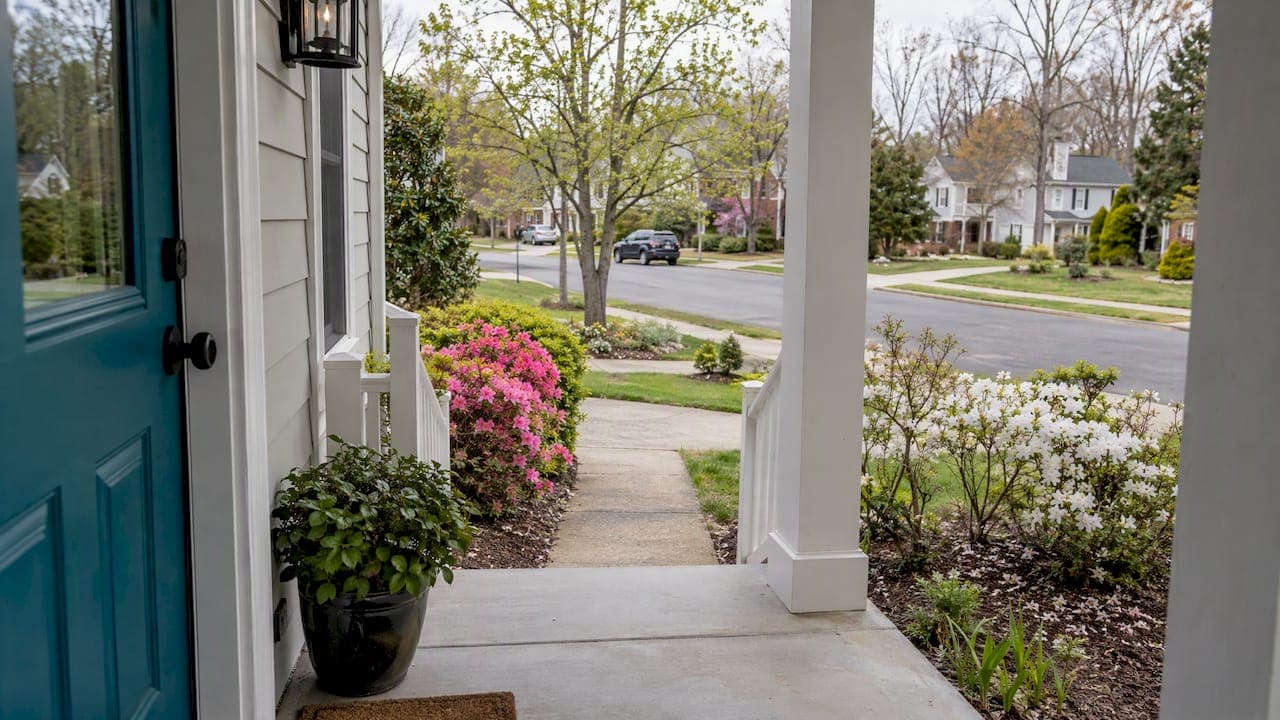
Virginia's weather swings from humid summers to the occasional ice storm, and both ends of that range affect how a home shows. Spring offers the best combination of blooming landscaping, comfortable temperatures for walkthroughs, and enough daylight for strong photography, which is part of why it consistently outperforms other seasons.
Summer showings can suffer when high humidity makes homes feel stuffy, especially older properties without updated HVAC systems. Buyers touring in July or August often notice air conditioning performance more critically than they would in a mild April.
Winter brings its own friction. Shorter daylight hours compress the window for showings and photography, and snow or ice can keep buyers from touring entirely on bad-weather days. Homes with strong curb appeal in spring can look comparatively bare in winter without leaves on trees or flowers in beds, which is one more reason the April through June window tends to show properties at their best.
Sellers listing outside peak season aren't doomed. Well-lit interior photography and flexible showing hours can offset weaker exterior conditions, but it takes more deliberate effort than during spring's naturally favorable light and landscaping.

How local jobs and new development affect timing
Virginia's regional economies move at different speeds, and that affects how quickly a home sells regardless of the calendar month. Northern Virginia's federal and contracting employment base creates a steady stream of relocation buyers almost year-round, which softens the usual seasonal slowdown compared to more purely residential markets.
New development matters too. A new corporate campus, data center project, or hospital expansion nearby can pull in buyers faster than typical seasonal patterns would predict, sometimes compressing days on market even during a traditionally slower month. The reverse is also true: news of layoffs or a major employer relocating out of an area can soften demand even during peak spring.
Sellers in areas with active new construction should also factor in competition. A flood of new homes nearby can extend days on market for resale listings unless pricing or condition stands out. Checking recent permit activity and employer announcements in your county gives a more current read than relying on seasonal averages alone.
Tax timing considerations when selling in Virginia
The timing of your sale can affect your tax picture, though the rules depend heavily on your personal situation rather than the calendar month. The federal capital gains exclusion for a primary residence generally requires that you've owned and lived in the home for at least two of the five years before the sale, and selling just before or after that threshold can change your tax outcome significantly.
Closing near the end of a calendar year versus early the next year can also shift which tax year any taxable gain lands in, which matters if your income or deductions vary year to year. This is a conversation worth having with a tax professional rather than deciding based on general guidance, since individual circumstances, filing status, and prior-year gains all factor in.
Beyond capital gains, timing also affects your cash to close. Our Virginia closing costs breakdown walks through typical costs sellers should budget for, which is worth reviewing alongside any tax planning before you pick a closing date.
When I tell Virginia sellers to list now versus wait
My general advice: list now if your local days-on-market is trending flat or improving, your home is move-in ready, and you're not racing a major local layoff or new-construction wave. Wait if two or more warning signs are stacking up, rising local DOM, falling pending sales, or a slower fall market like the one Virginia REALTORS® flagged for 2026.
A seller in a tight Richmond neighborhood with low inventory usually benefits from listing as soon as prep work is done. A seller competing against a wave of new construction in a growing county might do better waiting a season. If your situation matches one of these, reach out and we'll walk through what your specific numbers suggest.
— Myra
Get a personalized timing plan for your home
We build timing recommendations around your specific neighborhood, price point, and condition rather than a generic calendar date. That means the window we suggest accounts for your actual local comps and current buyer activity, not just a statewide average.
- Request a free local market snapshot and a recommended listing window for your home through Sell My Home.
- If your situation involves a 1031 exchange, probate sale, or pre-foreclosure, our full range of services covers those paths too.
If you need a faster, as-is sale outside the traditional listing process, DeCosta Buys Homes offers direct cash purchases with flexible timelines, a different route worth knowing about if speed matters more than maximizing price. For sellers who want to dig into state-level indicators themselves before deciding, Mayday's primer on reading market signals is a useful starting point.
FAQ
Are real estate prices dropping in Virginia?
No, median prices in Virginia continued climbing even as sales activity slowed. Virginia REALTORS® reported August 2026 closed sales down 4.6% year-over-year statewide while median prices kept rising, a sign of cooling demand rather than falling prices.
What is the hardest month to sell a house?
Winter months, particularly December and January, tend to be the slowest for both sales volume and buyer traffic nationwide. Shorter daylight hours, holiday schedules, and weather all reduce the pool of active buyers during this stretch.
What is the best month to sell a house in Virginia?
May generally delivers the strongest combination of price and speed, with April close behind for sellers aiming to close in May. Local conditions vary, so checking recent days-on-market figures in your specific county through a current valuation gives a sharper answer than a statewide average.
Is Virginia a buyers or sellers market?
Conditions vary by region and have been shifting, with rising mortgage rates in 2026 giving buyers somewhat more leverage in parts of the state even as prices continue rising. Virginia REALTORS®' flash survey from late summer 2026 found agents reporting softening outlook indicators for both buyer and seller activity, suggesting a more balanced market than in recent years.