
Downsizing in Virginia makes sense for most homeowners who want lower upkeep, less debt, or cash freed up from years of built-up equity. Start now by picking your next home or target neighborhood and getting it measured, working on a 6 to 12 month runway. A local agent like Beams Realty Group can help you time the sale and price your current home correctly from day one.
TL;DR:
- Downsizing is most advantageous for homeowners with paid-off mortgages and substantial equity, especially in Northern Virginia, where large checks can fund smaller homes.
- Planning a move over 6 to 12 months allows time to choose a destination, measure furniture, declutter, prepare the current home, and coordinate sales without rushing.
- Most clients eliminate around 80 percent of their possessions by using decluttering strategies like the four-box method and fitting big items against measurements of the new space.
- Listing a Virginia home typically takes 2 to 4 weeks on the market, with closing in 30 to 45 days, and buyers should budget for upfront sale preparations and moving costs.
- Hiring experienced local agents, move managers, and service providers streamlines the process and ensures pricing, staging, and timing align with current Virginia market conditions.
Table of Contents
- Why People Downsize in Virginia and Who It Helps Most
- What Housing Options Fit Virginia Downsizers?
- How Do You Plan a Downsizing Timeline in Virginia?
- What's the Best Way to Declutter Before Downsizing?
- How Do You Prepare a Virginia Home for Sale?
- Which Professionals Should You Hire for a Virginia Downsize?
- How Experienced Local Agents Support Virginia Downsizers
- What Downsizing Actually Feels Like Once It's Done
- Ready to Start Your Downsizing Plan?
- Sources
- FAQ
Why People Downsize in Virginia and Who It Helps Most
Downsizing pays off fastest for homeowners who've paid off most of their mortgage and are sitting on equity that a big house is quietly wasting. A smaller home means smaller heating bills, less lawn to mow, and fewer repairs waiting to surprise you. Northern Virginia sellers, in particular, often walk away from a sale with a large enough check to buy a smaller home outright and still have savings left over.
That said, downsizing isn't automatic math. Here's what actually pushes people to make the move, and what to weigh before you do:
- Physical triggers: stairs, a big yard, or a house that's become harder to maintain solo.
- Financial triggers: freeing equity, cutting utility and maintenance costs, or eliminating a mortgage entirely.
- Lifestyle triggers: wanting walkability, coastal access, or proximity to family and healthcare.
- Trade-offs to watch: HOA fees on condos and 55+ communities can eat into your monthly savings, and coastal properties near Virginia Beach or the Eastern Shore often carry higher flood insurance premiums.
- Tax note: Virginia doesn't tax Social Security benefits, which matters when you're recalculating your retirement budget after a move.
What Housing Options Fit Virginia Downsizers?
Your destination shapes everything else in your plan, so pick it before you start sorting boxes. Virginia offers a wide spread of options depending on how much yard, community, and support you still want:
- Condos and townhomes: low maintenance, often walkable to shops and healthcare, but watch HOA dues closely.
- Smaller single-family homes: keeps a yard and more privacy without the size (or bills) of your current place.
- 55+ active adult communities: built-in social life and amenities, common around Richmond, Williamsburg, and Northern Virginia.
- CCRCs (continuing care retirement communities): bundle housing with a path to assisted living or nursing care later, worth it if healthcare access is a top concern.
- Renting: gives flexibility if you're not sure where you want to land long term, or if you're testing a new city first.
Before you evaluate any of these, check HOA fees, flood insurance costs if you're near water, and how close each option sits to hospitals or your existing doctors. Different cities suit different priorities. Roanoke tends to fit tighter budgets, Virginia Beach suits coastal living, and Charlottesville draws people who want strong healthcare and cultural amenities. Shortlist two or three neighborhoods before you touch a single closet.
How Do You Plan a Downsizing Timeline in Virginia?
A rushed downsize is a stressful one. Experts recommend starting 6 to 12 months before your target move date, which gives you room to make good decisions instead of panicked ones. Here's how that stretch typically breaks down:
- Months 1 to 2: Plan and decide. Choose your destination city or community, gather vital documents (deed, will, insurance policies), and set a rough budget.
- Months 3 to 4: Secure your next home. Get it under contract or leased, then measure every room so you know exactly what furniture fits.
- Months 4 to 6: Declutter and build your floor plan. Sort room by room, matching what you own to the space you measured.
- Months 6 to 8: Prepare and list your current home. Handle repairs, staging, and any estate sale or donation pickups.
- Months 8 to 10: Sell, close, and move. Coordinate closing dates on both ends if you're selling and buying simultaneously.
- Months 10 to 12: Settle in. Unpack in priority order and update your address everywhere that matters.
The biggest mistake homeowners make is waiting for a crisis, a fall, a health scare, a spouse's passing, to force the decision. That approach shrinks your options and usually costs you money on a rushed sale.
Pro Tip: Measure your new space before you sort a single box. Once you know your new living room is 20 percent smaller, deciding what to keep gets a lot easier.
What's the Best Way to Declutter Before Downsizing?
Start in the room that carries the least emotional weight, the garage or a hall closet, not grandma's china cabinet. Momentum matters more than order here.

The four-box method works well for most people: label boxes Keep, Donate, Sell, and Discard, and force every item into one of them before moving to the next shelf. Pair that with the floor-plan fit test: hold every big item up against your new home's measured dimensions before deciding it makes the cut. Specialists who work with Virginia seniors report that clients commonly part with roughly 80 percent of what they own during a downsize, so give yourself permission to let go of more than feels comfortable at first.
A few rules of thumb that make the emotional part easier:
- Keep multi-use items over single-purpose ones, one good chair beats three specialty pieces.
- Photograph keepsakes you're letting go of instead of keeping the physical object.
- Set a firm pickup deadline for family members who want heirlooms, or they'll sit in your garage for months.
- Sell higher-value furniture and collectibles, donate the rest, and check with your county on hazardous material disposal (paint, batteries, propane tanks) rather than tossing it curbside.
Pro Tip: Give family members a two-week window to claim heirlooms, in writing. Vague offers turn into indefinite storage problems.
How Do You Prepare a Virginia Home for Sale?
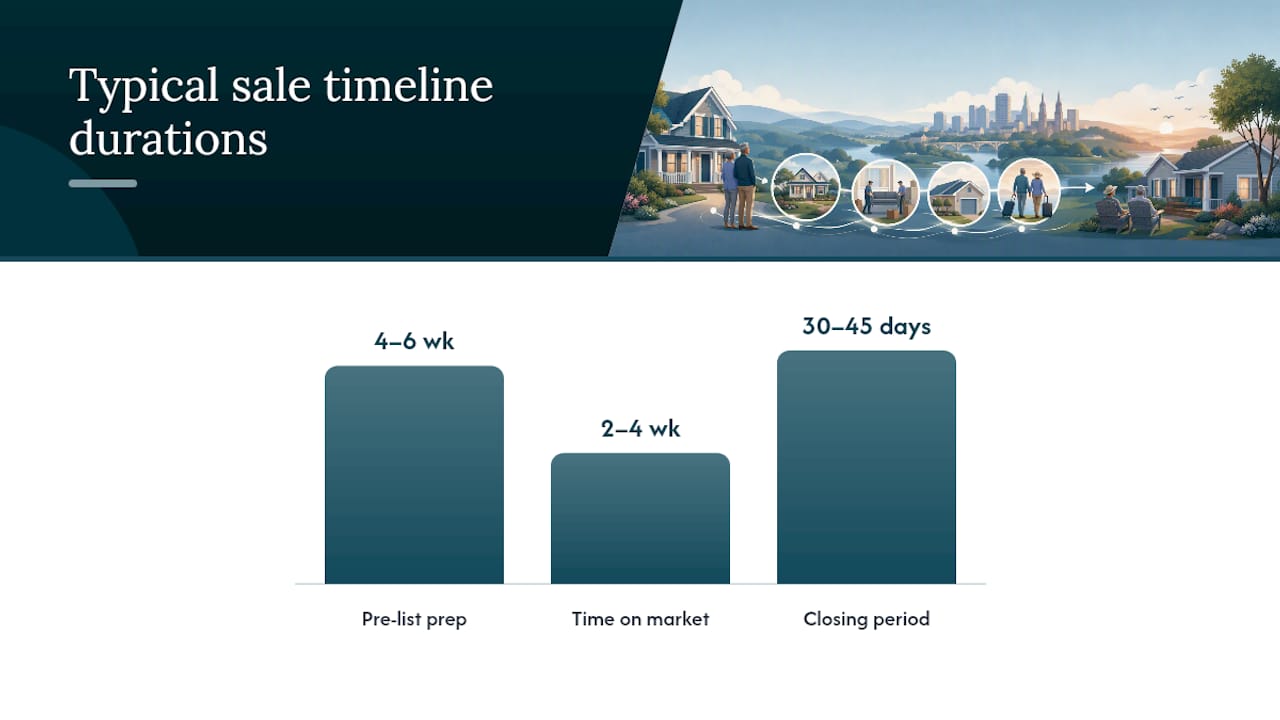
Getting your current home sale-ready runs on its own clock, separate from your move-out timeline, and it pays to start early. Local real estate guidance suggests budgeting 4 to 6 weeks to prep before listing, since decluttering and staging measurably improve how a Virginia home performs on the market.
Your pre-listing punch list should cover: if your home needs serious decluttering or an as-is sale, consider practical options for hoarder houses to speed the process.
- Decluttering every room (this overlaps with your downsizing sort, so do them together).
- Targeted repairs, fix the things a home inspector will flag, not everything on your wish list.
- Curb appeal, small fixes here often return more than they cost.
- Staging on a budget and professional photography.
- A pre-listing inspection to catch problems before a buyer's inspector does.
Once listed, a typical Virginia home spends 2 to 4 weeks on market before going under contract, with closing another 30 to 45 days out. Budget for closing costs on your sale, plus moving costs on the other end. Decide early whether you're selling first or buying first. Selling first protects you financially but may mean a temporary rental gap; buying first requires bridge financing or a contingency offer, so talk through the trade-offs with your agent before you commit either way.
Which Professionals Should You Hire for a Virginia Downsize?
You don't have to run this alone, and trying to do everything yourself is usually where downsizing plans stall out. A few roles are worth the money for most people:
- Senior move manager: coordinates the entire move, from sorting through the final unpacked box, and is worth hiring for complex or emotionally difficult moves. Look for NASMM membership as a credential; the organization exists specifically to vet and train these specialists.
- Estate sale company: liquidates what you're not keeping, best scheduled after you've pulled keepsakes and staged the house for sale.
- Movers: get written estimates from at least two companies and check their Better Business Bureau profile before booking.
- Cleaners and junk removal: handle the final sweep once the house is empty.
- Appraisers: useful if you're settling an estate or dividing high-value items among family.
Many Virginia moving firms now bundle decluttering, estate sales, and junk removal into a single senior-focused package, which can simplify hiring if you'd rather make one call instead of five.
How Experienced Local Agents Support Virginia Downsizers
Pricing and timing are where most downsizing plans succeed or fail, and that's exactly where local market knowledge earns its keep. Experienced local agents provide home valuations tailored to specific neighborhood demand rather than generic online estimates, plus guidance on when to list based on current Virginia market conditions.
Beyond pricing, they coordinate the pieces that make a downsize actually work: contractor and mover referrals, staging oversight so your home photographs well, and closing coordination timed against your move-out date.
What Downsizing Actually Feels Like Once It's Done
Clients who downsize well typically describe the same two things afterward: less maintenance stress and more cash in the bank. Getting there is rarely simple, though. The hardest part usually isn't logistics, it's the emotional weight of letting go of a house full of memories.
Start with documents and a floor plan before you touch anything sentimental. And don't be afraid to hand off the parts that drain you, whether that's an estate sale or the moving truck itself, to someone whose job it is to handle them well.
— Myra
Ready to Start Your Downsizing Plan?
Choosing a local real estate team can be a better alternative to guessing your home's value or hiring a generic agent unfamiliar with Virginia's downsizing market. Such teams price your home accurately from the start, coordinate staging and repairs, and arrange referrals for movers, contractors, and cleaners, turning a stressful move into a manageable one.

Whether you need a home valuation to see what your equity actually looks like, help selling your home, or guidance buying your next, smaller place, the process starts with one conversation. Request a valuation or consultation today and get a clear, honest read on your timeline and your numbers before you make a single decision.
Sources
The guidance above draws on a handful of sources worth bookmarking if you want more detail:
- Arlington Magazine — Downsizing tips for seniors
- NASMM — Why hire a move manager?
- Travel + Leisure — Best places to retire in Virginia
FAQ
Why are people moving away from Virginia?
Some Virginia residents relocate for lower costs of living elsewhere, milder winters, or to be closer to family, but Virginia continues to attract retirees for its mix of coastal, mountain, and urban options. The state's varied geography means someone leaving one Virginia city often lands in another, not necessarily out of state.
What are the biggest risks of living in Virginia?
Coastal areas near Virginia Beach and the Eastern Shore face flood risk and rising insurance costs, which downsizers should factor into their housing budget. Beyond that, Virginia's risks are largely regional, harsh winters in mountain areas versus humidity and storms along the coast, so the right fit depends on which part of the state you choose.
What is the nicest city in Virginia to live in?
There's no single answer since it depends on your priorities. Roanoke suits tighter budgets, Virginia Beach fits coastal lifestyles, and Charlottesville draws people prioritizing healthcare access and cultural amenities.
Are more people moving to or leaving Virginia?
Virginia remains a popular retirement and relocation destination, particularly for downsizers drawn to its healthcare access, tax treatment of Social Security income, and range of housing options from urban condos to rural acreage. Northern Virginia in particular continues to see strong housing demand tied to federal and private-sector employment.
How much does Beams Realty Group charge for a home valuation?
Beams Realty Group's current pricing and service details are listed directly on its home valuation page. Reach out through the site for a personalized estimate based on your property and timeline.