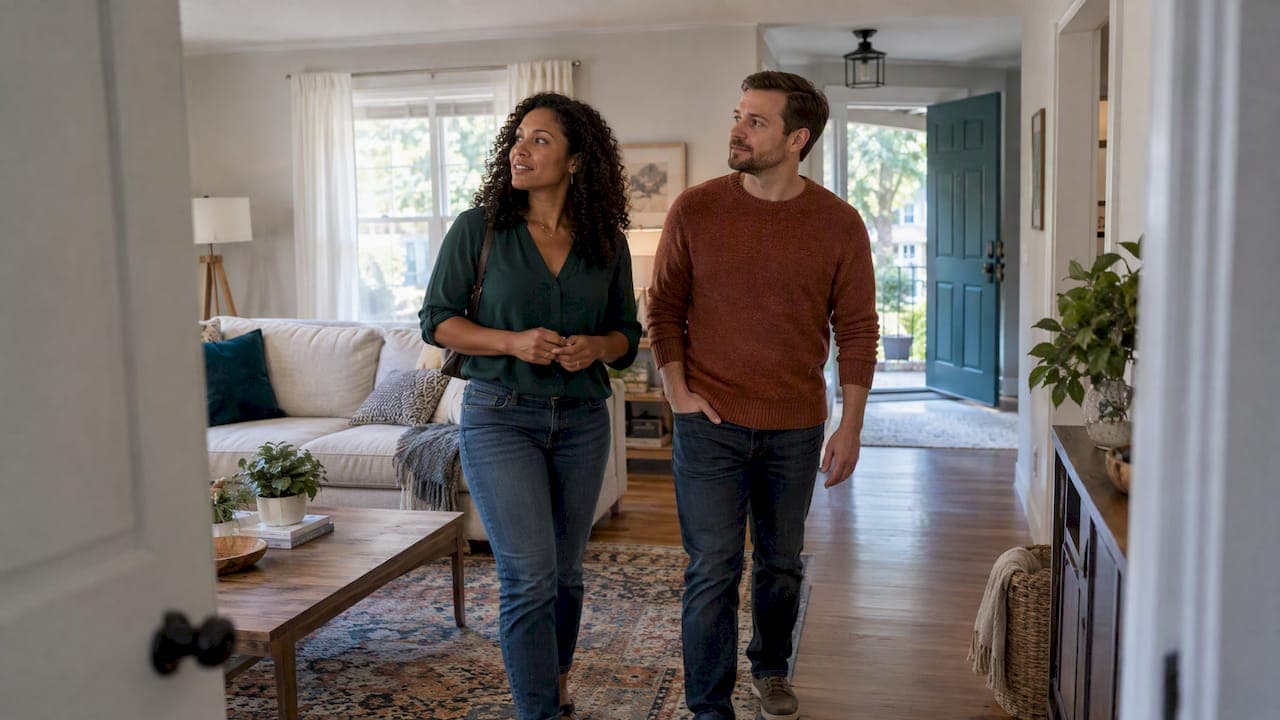
A good Virginia open house strategy comes down to four things: price the home right, list it so the first weekend counts, stage it like a performance, and capture every visitor so the event keeps working after the doors close. An open house will not rescue an overpriced listing. Used on purpose, it adds exposure, produces feedback and sometimes produces the buyer.
This guide is written for sellers and for the agents who work for them. It covers what the Virginia market looks like right now, when to hold the event, how to prepare the house, how to run the day, what the rules say about visitors and agency, and what to do afterward.
TL;DR
- Virginia is in a slower-sales, higher-inventory market, so your open house competes with more listings than a year ago. Preparation matters more than ever.
- Hold it the weekend after the home goes live, when buyer interest peaks, and promote it online before that.
- Declutter, depersonalize and remove valuables and paperwork. Open houses carry a low rate of violent crime but a high rate of theft.
- Use a sign-in with a non-agency disclosure, keep conversation to listing facts, and plan to end the event with a colleague.
- Follow up within a day, and track what visitors say about price and condition.
Table of Contents
- What the Virginia market means for your open house
- Are open houses worth it in Virginia?
- Price first, then plan the event
- Timing: when to hold it
- Prepare the house like a stage
- Promote it before the doors open
- Run the day: roles, flow and safety
- Visitors, agency and written agreements
- Turn visitors into data and leads
- A note on virtual visits
- Our perspective
- How we can help
- FAQ
- Sources
What the Virginia market means for your open house
Strategy starts with context. According to the Virginia REALTORS® August 2026 report, closed sales statewide fell 4.6% from a year earlier to 8,985, while the median sold price rose 4.4% to $449,000. Active listings reached 28,560, up 13.8% year over year.

Read that as a seller. Prices are still climbing, so your home has value. But buyers have more choices, and they are not rushed. Mortgage rates are a large part of the slowdown. Fannie Mae's forecast points to rates easing toward roughly 5.9% by the end of 2026, but that is a forecast, not a promise, and you should not time your sale around it.
The practical effect: a buyer touring five homes on a Sunday will remember the one that felt cared for, priced honestly and easy to picture living in. That is what an open house strategy is built to deliver. For a wider look at the numbers, see our breakdown of the Virginia housing market in 2026.
Are open houses worth it in Virginia?
Yes, in the right situation, and not as a stand-alone plan. The National Association of REALTORS® says open houses are an effective selling tool that offers wide viewing and reach, and that they can be especially powerful when a home has unique features or an exceptional location. They also give online shoppers a personal connection and a chance to see listings they missed on screen.
Where open houses help most:
- Homes with a standout feature, such as a renovated kitchen, a big lot, water access or a walkable location.
- Move-in-ready homes in busy price bands, where several buyers can see the house at once and the energy in the room can push offers.
- Neighborhoods with foot traffic, where neighbors bring friends and relatives who may be looking.
Where they help least: homes that are priced above the comparable sales, homes with deferred maintenance you have not disclosed or addressed, and remote properties where a casual drive-by is unlikely. In those cases, put your effort into pricing and private showings first.
Price first, then plan the event
No amount of baked cookies fixes a wrong price. Before you set a date, look at recent closed sales within a half mile or so, the current competing listings, and how long they have sat. A free home valuation from an agent who knows your street is the cheapest way to get this right.
Price also shapes who shows up. A home priced a little under a round threshold appears in more online searches, which means more people available to attend. That is exposure you cannot buy later once the listing has gone stale.
Timing: when to hold it
There are two timing questions: when in the year, and when in the listing's life.
The listing's life
NAR's consumer guidance suggests holding the open house the weekend after the property is listed, when interest peaks. In practice that means the home goes live midweek with strong photos, and the first public event happens that Saturday or Sunday. Do not wait three weeks. By then buyers have seen the listing and filed it under "tried to sell for a while."
The season
Virginia is not one market. Northern Virginia, Richmond, Hampton Roads and the Shenandoah Valley each have their own rhythm. Our guide to the best time to sell in Virginia walks through the mid-April-through-June window and how it varies by region. If you are listing in colder months, the winter selling plan covers how to keep the event worth attending when daylight is short and curb appeal is thin.
The day and hour
Weekend afternoons are the default. A two-to-three-hour window is usually enough. A short event can also work: one-hour open houses are a familiar tactic among Virginia agents, creating a sense of a tight, purposeful viewing. Whatever you choose, publish the exact hours and stick to them. Check the calendar for local events, such as a big game, a road race or a holiday weekend, that could pull your crowd elsewhere.
Prepare the house like a stage
NAR describes an open house as something close to a staged performance: clean, decluttered and depersonalized so buyers can form an emotional connection. Here is the checklist we would walk you through.
- Declutter every surface. Clear counters, shrink bookshelves to a third of their content, and clear closets enough to look roomy.
- Depersonalize. Pack family photos, diplomas and refrigerator art. Buyers need to picture their own things there.
- Deep clean. Windows, baseboards, grout, and the oven. Smell matters: neutral and fresh beats scented.
- Fix the small stuff. Burned-out bulbs, sticky doors, dripping faucets and scuffed paint signal neglect.
- Light it up. Open blinds, turn on every lamp, and replace dim bulbs with consistent warm-white ones.
- Work the front. Sweep, trim, mulch, and add a clean doormat and a few plants. The first ten seconds happen at the curb.
- Handle pets. Take them out for the day, and clear litter boxes and bowls.
Staging does not have to cost much. Our article on staging a house on a budget shows where a small spend pays off. Photos matter too: a guide to project photos that are resale ready explains how documenting rooms and upgrades helps when you present the home's history to buyers.
Gather your paperwork
Serious buyers will ask what has been updated and what is disclosed. Virginia sellers should know which forms must be delivered before ratification; we summarize them in the three DPOR forms sellers must deliver. Have a one-page feature sheet at the door with the year of the roof, HVAC, water heater, recent upgrades, taxes and HOA fees if any.
Promote it before the doors open
An open house nobody knows about is just a clean house. A solid promotion plan includes:
- The MLS listing, with the open house date and time entered so portals pick it up.
- Social posts from the agent and the seller, with a short walkthrough video and the address and hours.
- Neighbor invitations, by door hangers or a mailer. Neighbors often know someone who wants to move to the area.
- Directional signs at the nearest main road, within local sign rules and HOA limits.
- Email to the agent's active buyer list and local agents, so buyers who are already working with someone also hear about it.
Lead with your best three photos and one sentence about what makes the home different. "Walk to the Metro in eight minutes" beats "charming and spacious."
Run the day: roles, flow and safety
If the seller's agent is working alone, keep it simple. If there is a team, use clear roles. A common model has a greeter at the door who handles sign-in, a tour guide who answers questions, and a floater who watches rooms and handles logistics, as NAR's open house guidance outlines in its safety discussion. A short huddle beforehand keeps everyone on the same page.
What the seller does
Leave. Take pets and go out for the afternoon. Buyers speak more freely, and linger longer, when the owner is not in the kitchen.
Safety and valuables
NAR notes that open houses have a very low incidence of violent crime compared with showings, but a very high incidence of theft. So before the event:
- Remove or lock up jewelry, cash, prescription medication, firearms and small electronics.
- Put away mail, bills and anything with personal information.
- Walk the home and note every exit. Unlock back doors only if you can watch them.
- Count the people in the home, and keep rooms in sight where you can.
NAR also warns that the end of an open house is often the most dangerous time for solo agents, so plan to close the event with a colleague. Sellers can help by hiring an agent who has a team or a partner available.
Flow of the visit
Greet each visitor, hand over the feature sheet, and let them walk. Offer to answer questions rather than narrating every room. Turn on soft music if it suits the home. Have bottled water and a bowl of something simple, not a spread that leaves crumbs.
Visitors, agency and written agreements
This is where the rules changed, and where many visitors are confused. NAR's consumer guide to open houses and written agreements explains that, as of August 17, 2024, many professionals nationwide ask buyers to sign a written agreement before touring a home. But simply attending an open house is a different matter.
In plain terms:
- Visitors can tour an open house without committing to an exclusive agreement with the host agent, as long as they are not asking for personalized services from that agent.
- The listing agent represents the seller. Good practice is to have visitors sign in with a disclosure that says so, which prevents confusion or an accidental claim of dual agency.
- Agents should keep talk to factual listing information and avoid discussing a buyer's motivations or negotiating strategy while the visitor is unrepresented.
For sellers, this is reassuring: your agent is protecting you, and your visitors know where they stand. For buyers, it means you can tour without pressure. If you decide you want help writing an offer, that is when to choose your own representation, and you can learn how we approach it on our home buying page.
Turn visitors into data and leads
The open house is also a market test. Track:
- How many parties came, and how many were already working with an agent.
- What they said about price, layout, condition and the neighborhood.
- Which rooms they spent time in, and which they skipped.
Three weeks of the same feedback, such as "great house, but the price feels high," is information. Act on it with the agent, either by adjusting the price or by fixing the item people keep mentioning.
The next 24 hours
- Send each visitor who shared contact details a short, personal message the same evening.
- Send the seller a debrief with the numbers and verbatim comments.
- Tell the agents who attended whether you expect offers by a certain date, if the seller wants to set a deadline.
- Update the listing with any new details people asked about, such as school zones or commute times.
If you want a wider playbook on this, our four-step open house strategy for agents is aimed at turning each event into pipeline.
A note on virtual visits
Not every buyer will come in person, especially relocation buyers moving into Northern Virginia or Hampton Roads from out of state. A virtual walk-through, hosted live or recorded, widens the audience. Virtual tour etiquette applies equally to agents and sellers: be on time, be clear about what the viewer is seeing and respond to questions promptly. A good video is not a replacement for the Saturday event. It is a way to qualify buyers before they drive two hours.
Our perspective

We have found that sellers tend to overestimate what an open house can do on its own and underestimate what preparation can do. The best events we describe to clients share a few traits: the price was right from day one, the home was ready before the first photo, and the seller stayed out of the way. Clear communication matters at every stage, so you should know the plan, the date, how we will report the results and what happens if the first weekend is quiet.
We also think visitors deserve honesty. Open houses are a legitimate low-pressure way to look at homes, and a listing agent should explain who they represent without a hard sell. When a buyer later asks for help, we step in with a separate, transparent conversation. Whether you are a first-time seller, a family moving for work, or a retiree downsizing, the goal is the same: a prepared home, a clear strategy and no surprises.
— Myra
How we can help
If you are planning to sell in Virginia, we build the open house into a broader marketing plan covering valuation, preparation, staging, marketing and negotiation. Start with a home valuation to see where your price should sit, or read about how we sell your home. If you are selling after a probate, a divorce or a pre-foreclosure, we can also guide that process on our main site.
FAQ
Should I hold more than one open house?
Usually one or two. The first weekend captures the pent-up demand from buyers who were waiting for a new listing. A second, a few weeks later, makes sense only if something changed, such as a price reduction, new photos or a notable improvement. Repeating the same event with no change rarely adds new visitors.
Do I have to be there as the seller?
No, and you should not be. Buyers talk more freely when the owner is away, and your agent can control the flow and the safety of the event. Take pets and valuables with you, or secure them, and let the agent do the work.
Can I visit an open house without signing a buyer agreement?
Yes. NAR's guidance says attending an open house is different from asking an agent to work with you. You may be asked to sign in, and the host agent still represents the seller. If you want that agent to give you personal advice or help with an offer, a written agreement may come up at that point.
Is the Virginia market a buyer's or a seller's market right now?
It is shifting toward buyers, though prices are still rising. The latest Virginia REALTORS® data shows sales down 4.6% and active listings up 13.8% from a year earlier, while the median sold price rose 4.4%. Conditions differ by region and price range, so ask for local comparable sales.
Sources
- Key Takeaways: August 2026 Virginia Home Sales Report, Virginia REALTORS®
- Mortgage Rates Expected to Move Below 6 Percent by End of 2026, Fannie Mae
- Open Houses, National Association of REALTORS®
- Consumer Guide: Marketing Your Home, National Association of REALTORS®
- Consumer Guide to Open Houses and Written Agreements, National Association of REALTORS®