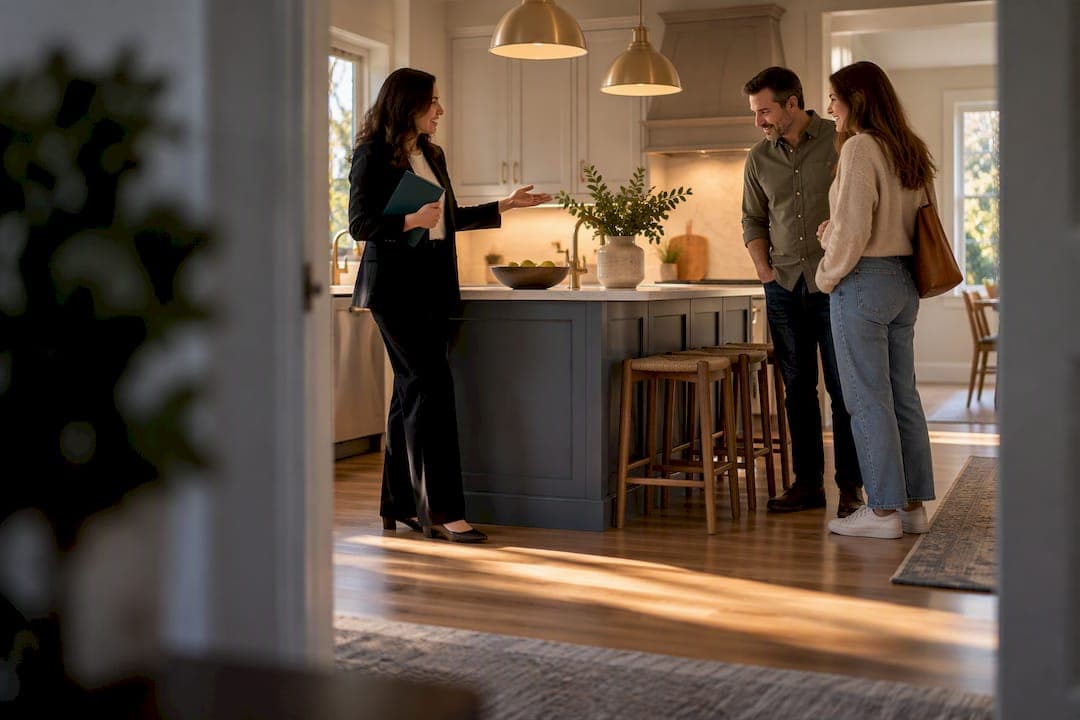
The highest-leverage open house strategy treats the event as a lead-generation campaign, not a one-time showing: validate your price with a current CMA, follow NAR safety guidance, and follow up with every visitor promptly after the event. Agents who run open houses this way treat each event as a repeatable system rather than a one-off gamble.
TL;DR:
- Proper pricing, confirmed by a current CMA, is essential since open houses mainly generate interest that already exists in the market.
- Pre-event preparations should follow a four-phase timeline, including staging, repairs, neighborhood outreach, and safety checks, to ensure success.
- Targeted marketing with clear online listings, social media ads, directional signs, and neighborhood outreach attracts motivated buyers rather than just increasing foot traffic.
- Effective sign-in procedures, safety measures, and prompt follow-up, especially within hours for hot leads, significantly improve conversion into appointments or sales.
- Tracking KPIs and testing one variable per event help refine open house strategies, and virtual or hybrid options extend reach and engagement.
Table of Contents
- Pre-event planning and timeline for a successful open house
- Marketing and signage that bring the right buyers to your door
- Staging, photos, and listing presentation that convert lookers into leads
- Day-of operations, safety, and lead capture that don't feel pushy
- Turning sign-ins into appointments with a follow-up system
- Measuring what an open house actually delivers
- Making virtual and hybrid open houses work
- Qualifying and engaging visitors without feeling pushy
- Handling tough questions and objections at the open house
- Coordinating with listing agents and the rest of the team
- Reviewing results and refining the next open house
- Beams Realty Group's approach to running an open house
- Let Beams Realty Group run your open house playbook for you
- Sources
- FAQ
Pre-event planning and timeline for a successful open house
An open house succeeds or fails before the first visitor walks through the door. The prep window breaks into four phases, and skipping any one of them shows up in your sign-in sheet.
Start with price. An overpriced listing will not sell no matter how many balloons you tie to the mailbox, so confirm the number with a current CMA before you spend a dollar on marketing. Open houses amplify interest that already exists in the market; they rarely create demand for a listing priced above where buyers see value.
- 7 to 10 days out: Book photography, finish staging, and complete any repairs that would distract a buyer during a walkthrough.
- 3 to 5 days out: Send neighborhood postcards, start knocking on nearby doors, and post the first social teaser.
- 24 hours out: Place directional signage, deep clean, and do a final walkthrough for clutter or odors.
- Day of, morning: Confirm the lockbox code, stage refreshments, and set out sign-in materials.
Seller safety belongs on this checklist, not as an afterthought. Sentrilock's homeowner showing-safety guidance recommends removing pets, prescription medications, checkbooks, and other sensitive items before visitors arrive, and switching the lockbox to electronic so every entry is logged with a name and timestamp. NAR's own consumer guide to open houses echoes this: visitors do not need a written buyer agreement to walk through, but sellers should still clear out valuables and personal information ahead of time.
Round out the checklist with logistics that get overlooked until they cause a problem: confirm the seller has signed off on hosting the event, check that homeowner's insurance covers visitor liability, and note any MLS restrictions on photography or video before you or a visitor start recording the interior.
Marketing and signage that bring the right buyers to your door
Getting the right people to show up matters more than getting a crowd. A flyer taped to a stop sign brings curious neighbors; a targeted campaign brings buyers who are actually shopping.
Start with the listing itself. Optimize the MLS entry with keyword-rich language, professional photos, and a link to a 3D virtual tour so online browsers can preview the space before deciding to attend in person. From there, layer in a short campaign timeline:
- Post a teaser on social media midweek to build anticipation ahead of the weekend.
- Boost the post with a small ad budget the day before the event.
- Run paid local targeting aimed at buyers actively searching in the area.
Offline tactics still pull weight. A single yard sign gets missed; a mapped plan with multiple directional signs, placed at every turn a driver would need to make, gets followed. Pair that with neighborhood postcards and some door-knocking in the days before the event, and consider QR codes on the signs themselves so interested passersby can pull up listing details without waiting for the open house to start.
Once visitors arrive, the materials on your table decide whether they remember the listing tomorrow. Keep a single-page flyer with photos, price, and contact information, and use a digital sign-in tool instead of a paper sheet whenever possible. Include clear opt-in language on that form, since the FTC has warned businesses that information collected in a context like a home visit needs affirmative express consent before it gets used for marketing or resold for financial gain.
Pro Tip: Tag each sign-in with the visitor's source, whether that's a specific sign location, a social ad, or a postcard, so you know which tactic actually produced the lead.
Staging, photos, and listing presentation that convert lookers into leads
Buyers decide whether to click into a listing based on the photos, and they decide whether to stay engaged during a walkthrough based on how the rooms feel in person. Both need attention before the sign goes in the yard.
Prioritize rooms by impact. The entry sets the first impression, the living room and kitchen do the heaviest lifting online, and the primary suite closes the deal for buyers imagining themselves living there. Curb appeal gets visitors through the door in the first place, so a fresh mulch bed and a clean walkway matter more than people expect.
- Shoot exterior photos during golden hour for warmer light and stronger curb appeal.
- Use wide-angle lenses indoors and clear every countertop and surface first.
- Follow a documented photo checklist so no room gets skipped or shot at the wrong time of day.
- Depersonalize before you declutter: family photos and personal collections come down first.
Small staging investments tend to pay for themselves. Internal guidance on staging a house on a budget points to uplift in the 1% to 10% range from low-cost fixes like fresh paint, rearranged furniture, and better lighting rather than a full furniture rental.
The flyer and digital one-pager should carry the listing's key facts, the best photo, and the agent's direct contact information in a font a visitor can actually read while standing in the kitchen.
Day-of operations, safety, and lead capture that don't feel pushy
The event itself runs on a script, even when it doesn't look like one. Arriving with a plan keeps you focused on visitors instead of scrambling with a extension cord.
- Arrive 60 minutes early to check lighting, adjust the temperature, set out refreshments, and confirm every sign is still standing.
- Greet with curiosity, not a pitch. Ask what brought them to the neighborhood or what they're hoping to find in their next home.
- Offer the sign-in as a courtesy, framing it as a way to send them additional details rather than a gate they have to pass through.
- Manage flow by limiting how many groups are in a room at once and photographing the property yourself for a simple inventory record.
- Run an end-of-event sweep with a colleague if one is available: NAR's personal safety resources note that the final minutes of a showing are often the riskiest for a solo agent, and a scheduled overlap with another agent to check every room reduces that risk.
Buyers still rank agents as their top source of information during a home search, according to NAR's generational trends research. An open house is one of the few moments that personal connection happens face to face instead of through a screen.
Keep the electronic lockbox active throughout the event so every entry logs automatically, and stick to the safety basics from the pre-event checklist: no valuables on display, prescriptions out of sight, and a colleague aware of your schedule.
Turning sign-ins into appointments with a follow-up system
The follow-up window decides whether the event pays off. A visitor who walked through on Saturday afternoon and hears nothing until Wednesday has usually moved on to another agent by then.
Segment leads the moment the open house ends:
- Hot leads (asked detailed questions, mentioned a timeline) get a text within 1 to 4 hours and a phone call within 24 hours.
- Warm leads (browsing seriously but no urgency) get a personalized email within 24 hours with a follow-up call later in the week.
- Neighbors and referral sources get a short thank-you note and an offer to keep them posted on the sale price once it closes.
- Cold sign-ins (casual visitors, no clear intent) get added to a monthly newsletter list rather than a call queue.
A short text to a hot lead might read: "Great meeting you at the open house today. Happy to send over the comps we discussed. Any time this week work for a quick call?" Log every contact in the CRM with an event tag so you can trace which open house produced which lead months later.
Track appointments booked, reply rates, and how many sign-ins eventually convert into a listing or buyer client. Those three numbers tell you whether the follow-up system is working better than the open house itself.
Measuring what an open house actually delivers
An open house without measurement is just a Saturday with strangers in the living room. Track a compact set of KPIs after every event: sign-ins, appointments set within 14 days, listings or buyer clients generated, cost per lead, and the conversion rate from sign-in to appointment.
A simple ROI test makes this concrete: divide attributed revenue over the following 12 months by the total cost of the event, and track that ratio across at least three open houses before drawing conclusions about what works.
- Change one variable per event, such as sign count, refreshment type, or social ad timing.
- Compare the KPIs across events to isolate what actually moved the numbers.
- Keep a running log so the next agent on the team can see what's already been tested.
Making virtual and hybrid open houses work
Not every buyer can make it to a Saturday afternoon walkthrough, and a virtual option extends the campaign beyond the people who show up in person. A livestreamed walkthrough, hosted over video call at the same time as the in-person event, lets out-of-town buyers ask questions in real time while an agent physically walks the property.
A hybrid format works best when the two audiences get distinct experiences instead of one distracted host. Assign one team member to guide in-person visitors and another to run the camera and answer chat questions, so neither group feels like an afterthought.
Promote the virtual option the same way you'd promote the in-person one: a dedicated link in the MLS listing, a mention in the social teaser, and a reminder in any postcard or email campaign. Capture contact information from virtual attendees the same way you would in person, through a short registration form before the link goes live, and apply the same segmentation rules once the event ends. A recorded version of the walkthrough also becomes reusable marketing material for buyers who couldn't attend either format live.
Qualifying and engaging visitors without feeling pushy
Not every visitor is a buyer, and treating everyone identically wastes time on both sides. A few open, curiosity-based questions early in the conversation tell you who's worth a follow-up call and who's just enjoying a Saturday afternoon.
Ask what brought them to the neighborhood, whether they're currently working with an agent, and what their timeline looks like. Answers to those three questions sort a room of ten visitors into hot, warm, and casual almost instantly, without ever sounding like an interrogation.

Engagement works best when it feels like a conversation about the house rather than a sales pitch about the agent. Point out a detail in the kitchen or the yard and pause, letting the visitor react before moving to the next room. Visitors who ask about school districts, closing timelines, or financing options are almost always further along than those asking about square footage alone, and that distinction should shape how quickly you follow up.
Handling tough questions and objections at the open house
Every open house brings a few pointed questions, and how you answer them shapes whether a visitor stays engaged or heads for the door. The most common ones center on price, condition, and how long the home has been listed.
When a visitor pushes back on price, point to the comparable sales that informed the CMA rather than defending the number personally. When they raise a repair or condition issue, acknowledge it plainly and mention what the seller has already addressed, since a defensive answer tends to raise more doubt than the original question did.
Questions about how long a home has been on the market deserve a direct answer, not a deflection. Visitors respect a straightforward response far more than a vague one, and an agent who answers clearly tends to keep the conversation moving toward the next steps instead of stalling on the objection itself.
Coordinating with listing agents and the rest of the team
An open house rarely runs smoothly when one person tries to handle setup, hosting, and follow-up alone. Coordinating with the listing agent and any support staff ahead of time keeps the event from turning into three separate improvisations.
Confirm who owns each piece before the day arrives: who sets up signage, who greets visitors at the door, who mans the sign-in table, and who handles questions about price or terms that only the listing agent can answer with authority. When a showing agent isn't the listing agent, a short briefing beforehand on the seller's timeline, any recent price changes, and known objections saves an awkward pause mid-conversation.
After the event, share the sign-in sheet and lead notes with everyone who'll be involved in follow-up, so a hot lead doesn't sit untouched because two people assumed the other was handling it.
Reviewing results and refining the next open house
The value of tracking KPIs shows up after the event, when you sit down and compare what happened against what you expected. A quick debrief, ideally within a day or two while details are still fresh, turns one open house into a lesson for the next one.
Look at where sign-ins came from, which segment converted fastest, and whether the signage or the social campaign drove more foot traffic. If a particular sign placement or ad produced most of the qualified leads, that's worth repeating; if a tactic produced traffic but no real engagement, it's worth cutting.
Feed those findings directly into the next event's plan. Adjust one variable at a time, whether that's sign count, timing, or the follow-up script, and keep a simple log so patterns become visible after three or four events instead of getting lost in memory.
Beams Realty Group's approach to running an open house
At Beams Realty Group, every open house starts with a current valuation, not a guess, so the marketing spend goes toward a price buyers already believe. Staging and photography follow a documented checklist and photo timeline before a single sign goes in the yard.
Tagging sign-ins by source and calling hot leads quickly instead of waiting can significantly increase the number of visitors who book private showings afterward. That kind of result comes from treating the event as a system with steps, not a single Saturday.
— Myra
Let Beams Realty Group run your open house playbook for you
Planning, staging, marketing, and following up on an open house is a lot to coordinate alone, and getting any one step wrong costs you leads. Beams Realty Group builds the full campaign around your listing so you're not managing signage, sign-in sheets, and follow-up texts by yourself.
- Home Valuation confirms your price is right before any marketing dollars go out the door.
- Sell My Home covers staging coordination, photography, and the open house campaign itself.
- Ongoing reporting keeps you informed on sign-ins, appointments, and follow-up progress after each event.
If you're weighing a for-sale-by-owner open house against hiring an agent, tools like the tracking templates from Nest Noted or the campaign framework from Ryan Case can help you run one on your own. When you'd rather have a team execute the pricing, staging, marketing, and follow-up for you, request a home valuation or start the conversation about selling your home with Beams Realty Group.
Sources
- Sentrilock — Homeowner showing safety tips
- NAR — Consumer guide to open houses and written agreements
- FTC notice — Misuse of information collected in confidential contexts
- NAR — 2025 home buyers and sellers generational trends report
FAQ
What is the 3-3-3 rule in real estate?
Definitions vary by agent and brokerage, so there's no single official standard behind this phrase. A common version calls for following up with a new lead within 3 hours, 3 days, and 3 weeks, which lines up with the segmented follow-up timing described above for hot and warm open house leads.
Is selling your home to Opendoor worth it?
Whether an instant offer from an iBuyer makes sense depends on how much you value speed and certainty against getting the highest possible sale price, since instant offers typically trade convenience for a lower net proceeds figure than a traditional listing. An open house campaign paired with the right pricing strategy is built to maximize price through buyer competition rather than convenience.
How much does a realtor make off of a $300,000 house?
Realtor compensation is commission-based and set individually between the agent and client, so there's no fixed public rate to quote for any specific sale price. Beams Realty Group's commission structure is available on request when you reach out about listing a property.
What are some tips for a successful open house?
Confirm your price with a current CMA, promote the event with a mix of signage, social media, and neighborhood outreach, and treat every sign-in as the start of a follow-up sequence rather than the end of the interaction. Following NAR's safety guidance on removing valuables and using an electronic lockbox protects both the seller and the agent throughout the event.