
The most effective price reduction strategy is a single, well-sized cut, timed to real buyer-activity data and documented with current comps, rather than a string of small markdowns. Act inside 14 to 21 days if showings and online engagement are weak, and size the cut to clear the next buyer search bracket, typically 3% to 6%. If showings are steady but offers aren't coming, fix the property or the terms before you touch the price.
TL;DR:
- Price reductions should be well-sized, typically between 3% and 6%, and timed to the market conditions, with quicker action in buyer's markets.
- Sellers should analyze current pending sales and recent comparable closings, not older data, to determine if the problem is price, condition, or marketing.
- Small, repeated price cuts can appear indecisive, whereas one strategic, data-backed reduction often results in a faster buyer response.
- Fixing condition issues, improving photos, staging, or increasing curb appeal can sometimes revive interest more cost-effectively than lowering the price.
- Proper protocol involves fresh CMA, buyer feedback review, careful bracketed pricing, and relisting with updated visuals to optimize the chances of sale.
Table of Contents
- What's the Right Price Reduction Strategy for a Stalled Listing?
- How Much Should You Cut, and When?
- What Should the Price Reduction Checklist Look Like?
- Do You Have to Cut Price, or Are There Better Levers First?
- What Legal and Contract Terms Apply to a Price Reduction?
- How Beams Realty Group Runs a Pricing Adjustment Protocol
- How Beams Realty Group Helps You Execute a Price Reduction
- Sources
- FAQ
What's the Right Price Reduction Strategy for a Stalled Listing?
Before you touch the price, figure out what's actually broken. A home that isn't getting clicks has a different problem than one that's getting plenty of showings but no offers, and the fix is not the same in both cases.
Start tracking numbers the day the listing goes live, not the day you get nervous. Portal views, saved listings, showing requests, and written buyer feedback all tell you something a gut feeling can't.
- Fewer than 5 to 10 online views per day in the first week signals a photo, price, or exposure problem before condition even enters the conversation.
- Fewer than one showing per week after the first two weeks usually points to price, since low-traffic listings rarely fix themselves with patience alone.
- Multiple showings but zero offers almost always means condition, layout, or terms are turning buyers off after they walk through the door.
- Repeated feedback mentioning "priced right but needs work" is a condition signal disguised as a pricing complaint.
Pending sales matter more than closed sales at this stage. A comp that closed four months ago reflects a different market than the one you're competing in now, while a home that just went under contract down the street tells you exactly what today's buyers are willing to pay. NAR's guidance on navigating price reductions notes that listings priced wrong from the start, and left there too long, consistently sell for less than homes that get repriced early and decisively. A CMA built on current data rather than last quarter's averages is the tool that turns these signals into an actual number.
How Much Should You Cut, and When?
Sizing a reduction is where most sellers get it wrong, either by cutting too little to matter or waiting too long to cut at all. The right number depends on the market you're actually in, not the market you wish you were in.
In a seller's market, hold longer. Two to three weeks of soft traffic is tolerable if inventory is tight and comparable homes are still moving fast. In a balanced market, a soft first two weeks is your signal to act. In a buyer's market, don't wait for three weeks of silence. If the first week brings nothing, that's often enough.
- Seller's market: wait 3 to 4 weeks; cut 2% to 4% if needed.
- Balanced market: wait 2 to 3 weeks; cut 3% to 6%.
- Buyer's market: wait 1 to 2 weeks; cut 5% to 8% or more.
Data-backed timelines show homes that eventually reduce their price typically sit a median of about 23 days before that first cut, which means a lot of sellers wait longer than the market rewards. The window for peak buyer attention closes fast, and a stale listing loses momentum every extra week it sits.
The bracket rule explains why a 1% or 2% trim often does nothing at all. Most buyers filter homes by round-number search ranges, so a home listed at $405,000 that drops to $399,900 suddenly appears in searches capped at $400,000 that never saw it before. A cut from $405,000 to $399,000 crosses that same line and barely costs the seller anything extra in real terms. HomeLight's guidance puts the typical meaningful reduction at 3% to 5%, with larger cuts justified in softer markets where competition is thick and buyers have leverage.
Peer-reviewed research on pricing psychology backs this up from a different angle: buyer behavior responds more strongly to one clear, well-calibrated reduction than to a pattern of small, repeated trims that read as hesitation rather than confidence.

What Should the Price Reduction Checklist Look Like?
Executing a price reduction well is a project, not a single click in the MLS. Skip a step and you risk repeating the same mistake that stalled the listing the first time.
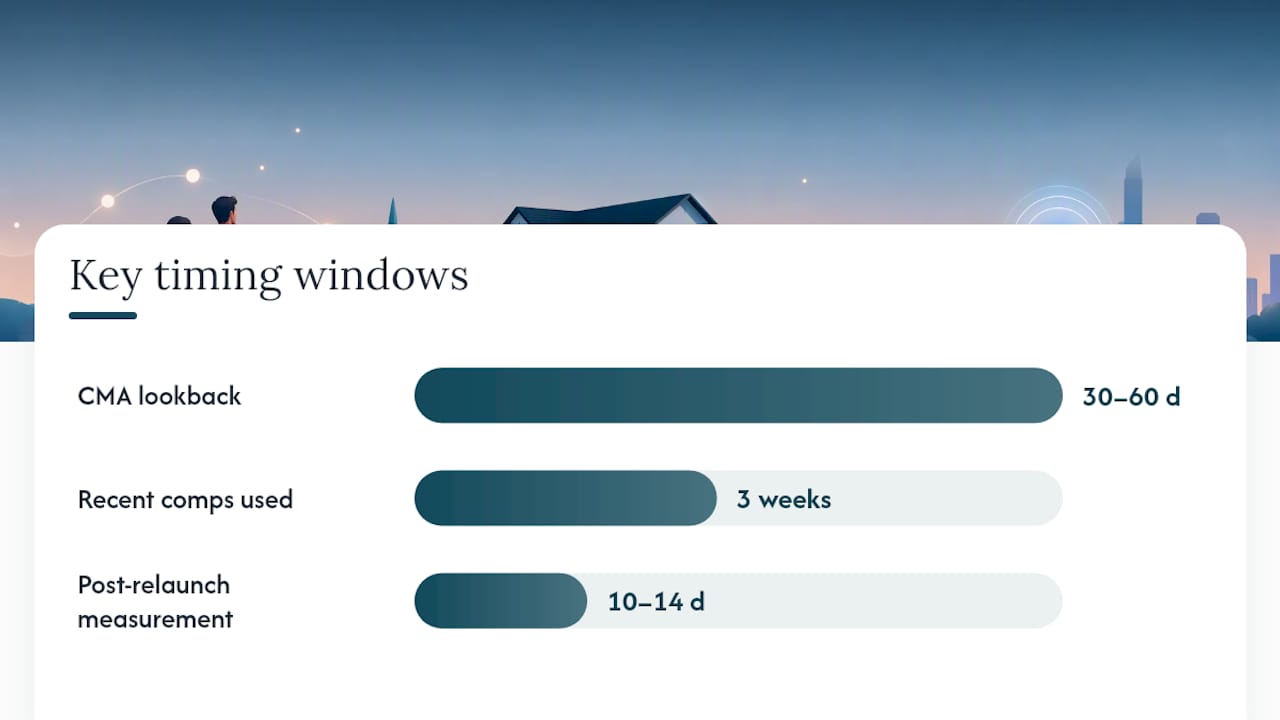
- Pull a fresh CMA using pending sales and closings from the last 30 to 60 days, not older data that no longer reflects buyer demand.
- Review portal analytics and buyer feedback side by side to confirm whether the problem is price, condition, or something fixable in the listing itself.
- Calculate the new price using bracket logic, showing the seller exactly which search thresholds the new number clears and why.
- Refresh the listing before relaunch, including updated photos, revised copy, and a "price improvement" label rather than a plain markdown.
- Relist midweek, typically Wednesday or Thursday, so the listing catches the Thursday through Sunday search surge with a fresh timestamp.
- Set a measurement window of 10 to 14 days post-relaunch and agree in advance what "working" looks like, whether that's a jump in showings or an actual offer.
Agents who present this as data, not opinion, get faster seller buy-in. A script that works: "Here are three homes that went pending in the last three weeks, all within half a mile. Here's where we sit against them, and here's the number that puts us back in the buyer pool actively searching right now." That's a very different conversation than "I think we should lower the price."
Pro Tip: Ask your agent to show you the bracket math before you agree to any number. If the new price doesn't cross a search threshold buyers actually use, you're paying the psychological cost of a price cut without getting the visibility benefit.
Do You Have to Cut Price, or Are There Better Levers First?
A price cut is not the only lever, and it's often not the first one worth pulling. Before you touch the number on the listing, look at what's cheap to fix and what actually moves buyers.
Tired photos and a listing description that reads like a form letter can sink a home's performance long before price becomes the issue. A new set of photos, an updated virtual tour, and sharper copy sometimes revive traffic on their own, especially if the original photos are more than a few months old or were shot in a different season.
- Staging on a modest budget can lift offers meaningfully, with Beams Realty Group's own client data showing a 1% to 10% increase in offers for Virginia sellers who invested in targeted staging rather than a price cut.
- Curb appeal fixes are another underused lever. Beams Realty Group has tracked an average uplift of $9,195 in sale proceeds from low-cost exterior improvements alone.
- Offering seller concessions or mortgage rate buydowns can enhance buyer interest without changing the public list price, avoiding stigma associated with visible price reductions.
- Timing the relaunch, including a midweek relist and an email blast to agents who've shown similar homes, often generates a fresh wave of activity that a quiet price change alone won't.
Pro Tip: If your agent hasn't sent a direct email to the agents who showed comparable homes in the last 60 days, ask for it before you cut price. That's often a faster path to a second look than a public reduction.
For regional context, pricing and positioning guidance for other markets shows these same principles, condition first, price second, hold up across very different local markets.
What Legal and Contract Terms Apply to a Price Reduction?
Cutting your list price isn't just a marketing decision. Your listing agreement and a few disclosure rules govern how and when it happens, and skipping that piece can create friction later.
Most listing agreements give the agent authority to adjust the marketed price within the terms of that agreement, but the actual contract price on a signed purchase agreement can only change with both parties' written consent. If you're already under contract with a buyer and considering a price adjustment as part of renegotiation, that's a different process entirely from adjusting an active listing that hasn't gone under contract.
Sellers should also know that a price change doesn't erase the disclosure obligations tied to the sale. If a price cut follows a discovery from an inspection, such as a foundation issue or an aging roof, that condition typically still needs to be disclosed to future buyers regardless of the new number on the listing. A pre-listing inspection done before the home ever hits the market helps you get ahead of this, so a price adjustment is a market response rather than a reaction to a discovered defect.
Check your specific listing agreement for any clauses tied to reduction timing, marketing commitments, or required seller approval steps. Agreements vary by brokerage and by state, and your agent should walk through the relevant language with you before any number changes publicly.
How Beams Realty Group Runs a Pricing Adjustment Protocol
At Beams Realty Group, every listing starts with a CMA and a conversation about what triggers a price adjustment, agreed on before the sign ever goes in the yard. That upfront agreement removes the emotion from the decision later, because the seller already knows what a soft first two weeks would mean and what the next step looks like.
When the data calls for a change, the same team that built the original pricing plan handles the relaunch: new photos, updated staging where it counts, and a repriced listing timed to catch peak buyer search activity. It's one coordinated move, not a guessing game.
— Myra
How Beams Realty Group Helps You Execute a Price Reduction
Beams Realty Group is the alternative to guessing your way through a stalled listing. Instead of a generic markdown and a hope for the best, you get a pricing review built on a current CMA, pending sales in your specific neighborhood, and a clear read on whether your listing has a price problem, a condition problem, or a marketing problem.

A pricing review meeting with Beams Realty Group walks through the exact bracket math behind any recommended change, along with a relaunch plan covering photos, staging touches, and relist timing designed to catch buyer attention rather than just quietly resetting a number. If your home is already listed and stalling, start with a home valuation to see where you actually stand against recent comps. If you haven't listed yet and want the pricing strategy built in from day one, Sell My Home is the place to start that conversation with an agent who treats every price decision as a documented, data-backed call rather than a shot in the dark.
Sources
- Article on pricing psychology (ScienceDirect)
- Listing price reduction guidance (NAR)
- When to cut your asking price: a data-backed timeline (EffectiveAgents)
- How long to wait before reducing house price (HomeLight)
FAQ
How Long Should You Wait Before Reducing a House Price?
In a balanced market, wait 2 to 3 weeks of weak showings or online engagement before cutting; data shows homes typically sit a median of about 23 days before their first reduction.
What Percentage Should You Cut Your Home's Price?
A 3% to 6% reduction is the common effective range, sized to clear the next buyer search bracket rather than picking a round number that doesn't change your listing's visibility.
Is One Big Price Cut Better Than Several Small Ones?
Yes. Repeated small cuts read as hesitation and can signal desperation to buyers, while one well-documented reduction backed by current comps tends to generate a faster, stronger response.
What If Showings Are Steady but I'm Getting No Offers?
That pattern usually points to condition, layout, or terms rather than price, so address staging, repairs, or concessions before adjusting the number on the listing.
Does Beams Realty Group Help With Price Reduction Decisions?
Yes. Beams Realty Group builds a pricing adjustment protocol into every listing agreement upfront, using a current CMA and local pending sales to guide any reduction decision; current service details are available through Sell My Home.