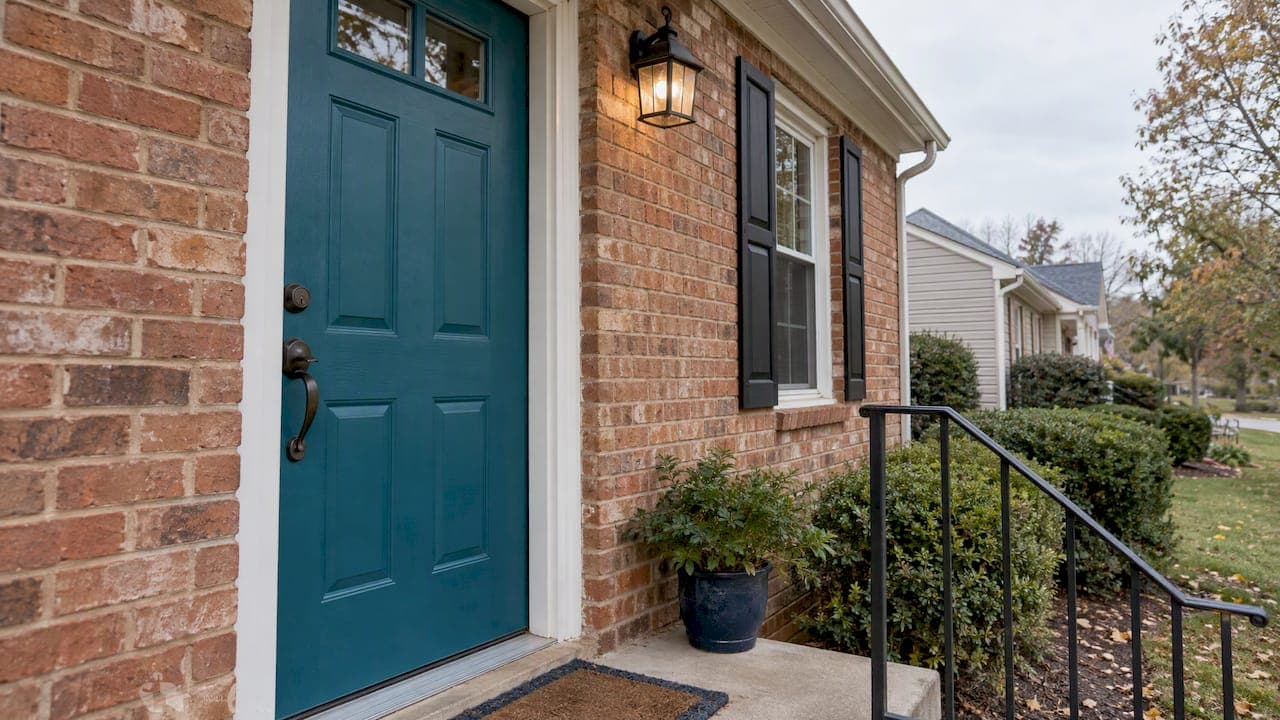
Most Virginia sellers do not need a major renovation before listing. The best pre-sale spending is usually small and targeted: repairs that remove buyer objections, fresh paint, a sharper entry, and honest disclosure of what you know. Large remodels tend to return only part of their cost, and a buyer may want to change your choices anyway.
This guide walks through how to decide what is worth doing, what the available return data suggests for the Washington, DC, Maryland and Virginia region, what the rules say about permits and disclosure, and how to build a budget around your own neighborhood's comparable sales.
TL;DR
- Fix what a buyer's inspector will flag first (roof leaks, rotted siding, drafty windows, safety items) before you spend on anything cosmetic.
- Smaller, targeted projects tend to recoup more of their cost than big remodels. One regional report put a minor midrange kitchen remodel at 85% return and an upscale major remodel at 58%.
- Permits matter: do not let work start until your contractor shows you the officially issued permits, and disclose known material defects.
- Let recent comparable sales in your neighborhood, not a national list, decide where the money goes. Ask for a valuation before you hire anyone.
Table of Contents
- Do you need to renovate before selling in Virginia?
- What you must disclose, whether or not you renovate
- Which updates buyers reward most
- Which projects rarely pay for themselves
- Permits, contractors and code
- How to prioritize when budget or time is short
- Let your comparables set the budget
- Our perspective on renovating to sell
- How we can help you plan the sale
- FAQ
- Sources
Do you need to renovate before selling in Virginia?
Usually, no. Virginia buyers buy homes with dated kitchens and worn carpet every day. What stalls a sale is uncertainty: a stain on a ceiling, a door that sticks, a furnace of unknown age. Those items give a buyer a reason to ask for a credit, renegotiate or walk.
Think of pre-sale work in three tiers:
- Repairs that remove objections. Active leaks, rot, broken windows, failed seals, electrical hazards, non-working appliances.
- Presentation work. Paint, deep cleaning, lighting, landscaping, decluttering, a clean and welcoming front door.
- Upgrades. Kitchens, baths, additions, flooring replacement. These are optional, and they are where sellers most often overspend.
Start at tier one and move down only when the numbers justify it. If the house is older, the same logic holds: a buyer expects an older home to show its age, and does not expect you to have rebuilt it.
What you must disclose, whether or not you renovate
Renovation does not erase what you know about a house. Under Virginia Code § 54.1-2131, a real estate licensee working for a seller must disclose to prospective buyers all material adverse facts about the property's physical condition that the licensee actually knows. So if your agent learns about a past water problem, it cannot be papered over with new drywall and a coat of paint.
The seller's side has its own form. The Virginia Residential Property Disclosure Act covers what owners must tell purchasers, and the state's residential property disclosure page notes that the statement is effective July 1, 2026. The same page makes clear that owners do not make representations about condition, and buyers are advised to do their own due diligence on issues such as defective drywall, radon and historic district rules. In practice, that means your choices about what to repair come with a matching duty to be straight about what you did and did not fix.
Two of our own guides go deeper on this: the three DPOR forms Virginia sellers must deliver before ratification and how an as-is sale works when you disclose before ratification. If you are leaning toward selling as-is rather than renovating, read the second one first.
Which updates buyers reward most
No single list fits every Virginia neighborhood, but regional cost-versus-value data gives a useful starting point. A 2025 report from a home services company covering the DMV area (DC, Maryland, Virginia) found steel entry door replacements recouped 101% of their cost and manufactured stone veneer recouped 94%. The same report recommends dealing with roof leaks, siding rot and drafty windows before cosmetic upgrades.

Treat those figures as a directional guide, not a promise. They are regional averages from one report, and your result depends on your price point, your condition and your buyers. The pattern is still instructive: the projects that perform best are visible from the street, relatively inexpensive and tied to protecting the house.
The entry and the exterior
Buyers form an opinion before they reach the door. A sound, clean entry, tidy beds, a painted or replaced front door, working exterior lighting and a house number you can read all cost little. We have written a separate piece on low-cost curb appeal fixes for Virginia sellers with specifics.
Windows and original character
Windows are a double-edged item. Drafty, failing windows are an objection a buyer will raise, but wholesale replacement is costly. In older Virginia homes with period details, matching the original look matters, and a specialist such as an arched and elliptical window builder in Virginia can repair or replicate unusual shapes that standard replacement units cannot. Repairing one failing feature is often smarter than replacing everything to a stock pattern.

Paint, floors and light
Neutral paint, refinished hardwood where the boards are sound, and brighter bulbs with consistent color temperature make rooms read as larger and cleaner in photos. These are modest outlays with a wide appeal, and they photograph well, which matters because most buyers meet your home online first.
Which projects rarely pay for themselves
The more material and labor a project consumes, the harder it is to recover the cost at sale. The same regional report notes that rising construction costs and labor shortages in the DMV area have squeezed returns on large, high-material projects, which makes smaller, strategic renovations more attractive for short-term resale goals.
The kitchen shows the gap clearly. In that report, a minor midrange kitchen remodel averaged $28,500 with an 85% return, while an upscale major remodel averaged $72,000 with a 58% return. A midrange bathroom remodel averaged $24,000 with a 72% return.
Here is what those averages mean in dollars, using the report's own numbers:
| Project (DMV averages) | Average cost | Return at sale | Approximate cost not recovered |
|---|---|---|---|
| Minor midrange kitchen remodel | $28,500 | 85% | about $4,275 |
| Midrange bathroom remodel | $24,000 | 72% | about $6,720 |
| Upscale major kitchen remodel | $72,000 | 58% | about $30,240 |
The last column is simple arithmetic on the report's figures, not an additional finding. The point it makes is real: a bigger project does not just cost more, it leaves a larger gap between what you spend and what the buyer pays.
A Virginia remodeling contractor makes the same case from the design side. AZA Builders argues that a smaller kitchen refresh modernizes the look for buyers without the cost and the "taste risk" of a full gut-and-replace. A buyer who dislikes your custom tile or your cabinet color will mentally subtract the cost of changing it, and often subtract more than it cost you.
Additions deserve a special warning. The same regional report notes that in Arlington, major addition permits were down 10% while kitchen and bath permit volume held steady. That is one county and one year, so do not over-read it, but it fits what we see: sellers are generally choosing refreshes over expansions when the goal is a sale.
Permits, contractors and code
If you do any work beyond cosmetic touch-ups, treat permits as part of the job, not an afterthought. An unpermitted bathroom or finished basement is the kind of issue that surfaces at inspection or appraisal and can slow a closing.
The Virginia Department of Professional and Occupational Regulation (DPOR) publishes a consumer guide, Before You Hire a Contractor, that tells homeowners to make sure work complies with applicable building codes and not to let work begin until the contractor gives you copies of the officially issued permits. Before hiring, also confirm the contractor's license with DPOR and ask for a written contract with scope, price and schedule.
What if you plan to renovate and resell several homes rather than one? Virginia tax rulings explain that a business that actually performs renovation activities may be classified as a contractor for local business license tax purposes, and that whether a business renovating its own real estate counts as a contractor is a factual question for the locality, weighing things like how many properties and how significant the work is. A single homeowner fixing up one house for sale is in a different position from a repeat flipper, but if you are in the second group, read our piece on staying under 70% of ARV and avoiding BPOL traps and speak with your local commissioner of the revenue and a tax professional.
How to prioritize when budget or time is short
Here is the order we suggest to sellers who cannot do everything.
- Get a clear picture of condition. A pre-listing look from a licensed inspector shows you what a buyer's inspector will find. Our guide to verifying a licensed home inspector in Virginia explains what to check.
- Fix safety and water first. Leaks, roof flashing, gutters that dump water at the foundation, electrical hazards, failed handrails.
- Make the house clean and bright. Declutter, deep clean, repaint scuffed walls in a neutral color, replace burnt-out bulbs and worn switch plates.
- Do the cheap exterior work. Mulch, trimmed shrubs, pressure washing, a repainted or replaced front door.
- Address one dated focal point only if comparables demand it. A tired kitchen or bath might justify a refresh, not a rebuild. Swap hardware, paint or reface cabinets, replace the faucet and lighting, and update the counters if the rest is sound.
- Offer a credit for what you will not do. If a buyer in your price band expects new flooring and you lack time, pricing for it or offering a credit can beat a rushed install.
If time is the constraint
Time changes the calculation. A remodel that takes three months costs you three months of mortgage, taxes, insurance and utilities, and may carry you into a slower season. Our look at selling in winter in Virginia covers how to avoid loan-related flags and keep a listing moving when the weather turns. If you are also buying, avoiding two homes at once is worth reading before you commit to a long project.
Let your comparables set the budget
A national list cannot tell you what buyers in Fairfax, Richmond, Roanoke or Virginia Beach expect. Your neighborhood can. The question to answer is simple: what do the recently sold homes that most resemble yours have that yours does not, and what did the weaker sales have in common?
Work through it like this:
- Pull recent closed sales, not just active listings, for homes of similar size, age and location.
- Sort them by condition. Note which sold with updated kitchens, which had original finishes, and the price gap between them.
- Read the price tier. In a lower-priced segment, buyers often accept dated finishes and want a move-in-ready feel. In a higher tier, buyers expect updated kitchens and baths and may discount sharply when they are not.
- Check days on market. If dated homes sit while refreshed ones sell within weeks, the spend may pay. If both sell fast, save your money.
- Compare the gap to the cost. If a refreshed home sells for $15,000 more and the work costs $30,000, the math fails no matter how nice it looks.
This is exactly what a home valuation is for. A good agent will tell you not only what the house is worth now, but what specific changes move the number and which do not. Ask for that before signing with a contractor.
If an offer arrives before you finish the work, know how the process runs: the offer review process in Virginia explains the buyer's deposit deadline and your duties as a seller, and real estate contingencies explains how inspection and appraisal terms can turn unfinished or unpermitted work into a negotiation.
Our perspective on renovating to sell
We have a simple rule when sellers ask whether to renovate: do not spend a dollar until you know what the market will pay for it. The pressure to "do something" before listing is strong, and it usually leads to bigger projects than the house needs.
In our experience, the sellers who do best are the ones who get clear on three things early: what an inspector will say, what comparable homes are selling for, and how long they can afford to carry the house. Then they act on the first and cheapest items, and stop. Where a project is justified, we help sellers set a ceiling for the budget in advance.
We also push hard on candor. Disclosure is not a box to tick: a buyer who feels informed negotiates calmly, and one who finds a surprise does not. Sellers in complicated situations, such as probate, divorce or an inherited home, often face the added pressure of money and time. In those cases, selling as-is with a thoughtful price can beat a renovation the family cannot afford or does not have time to finish. We look at each house on its own facts.
— Myra
How we can help you plan the sale
If you are weighing repairs against selling as-is, we can help you work out the numbers before you spend anything. Beams Realty Group provides home valuations, local market analysis, home preparation and staging guidance, property marketing and negotiation support for sellers across Virginia. Start with a home valuation, or see how we approach selling your home.

If you are buying a home that needs work, our home buying team can help you weigh the cost of repairs against the price. We also assist with probate and divorce sales, 1031 exchanges, pre-foreclosures and REO properties, and you can reach us through our main site.
FAQ
Should I replace my kitchen before selling in Virginia?
Usually not. In regional data, a minor midrange kitchen remodel recovered about 85% of its cost, while an upscale major remodel recovered about 58%. A focused refresh of paint, hardware, lighting and fixtures often gets you most of the appeal for a fraction of the money. Check comparable sales in your price range before deciding.
Do I have to disclose repairs I made?
You must be truthful about material facts you know. Virginia's disclosure framework requires seller representatives to disclose known material adverse facts about physical condition, and the state disclosure form covers what owners tell buyers. If you repaired a past problem such as water intrusion, tell your agent so it can be handled properly on the paperwork.
Do I need a permit for pre-sale work?
For anything beyond cosmetic work, expect to need one, and your local building department decides the specifics. DPOR advises homeowners not to let work start until the contractor provides copies of the officially issued permits. Unpermitted work can create problems at inspection and closing.
Is it better to sell as-is?
It can be, particularly when time or money is short, the house needs heavy work, or the sale follows a probate or divorce. The tradeoff is price: buyers factor in repairs and risk. Complete your disclosures before ratification, and get a valuation so you can compare an as-is price with a repaired one.
Which small projects are best?
Start with repairs inspectors would flag, then paint, cleaning, lighting and the front entry. In the DMV report, steel entry doors recovered 101% of cost and manufactured stone veneer recovered 94%. Your own neighborhood's comparables should break any ties.
Sources
- Virginia Code § 54.1-2131, Licensees engaged by sellers
- Residential Property Disclosure Statement, Virginia DPOR
- Before You Hire a Contractor, Virginia DPOR
- Virginia Tax Ruling 13-221
- Virginia Tax Ruling 99-13
- 2025 Cost vs Value Report: Best Home Upgrades for ROI in the DMV
- Minor Kitchen Refresh vs. Major Renovation, AZA Builders