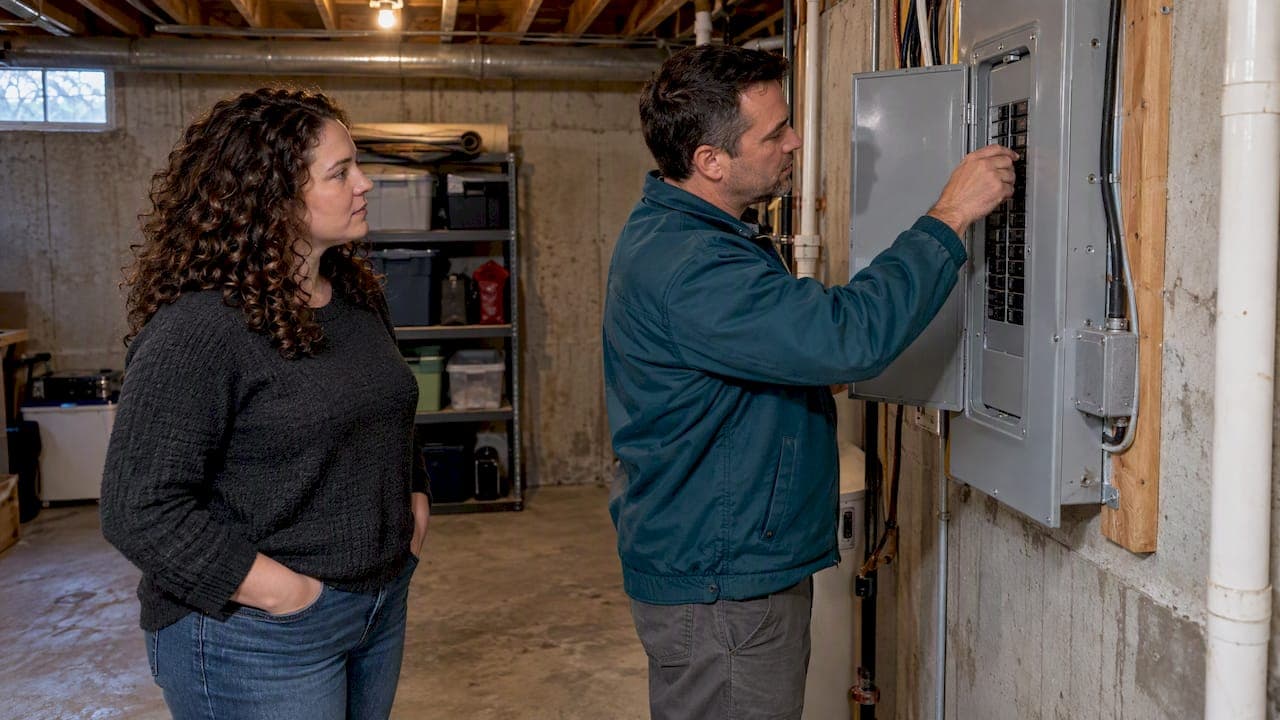
A contingency is a clause in your Virginia purchase contract that lets you renegotiate or walk away, usually with your deposit, if a specific thing goes wrong. The common ones cover the home inspection, your financing, the appraisal, the sale of your current home, and, for condos and HOA communities, the resale certificate. Each one comes with a deadline, and missing the deadline can quietly end your protection.
This guide explains how each contingency works in Virginia, what the statewide contract and state law say, and how to decide which ones to keep when you write an offer.
TL;DR
- Virginia is a buyer-beware state, so your inspection contingency is the main way to protect yourself before settlement.
- The standard contingencies are inspection, financing, appraisal, home sale, and (for HOA or condo purchases) the resale certificate review.
- Every contingency runs on a deadline written into the contract. Know the dates, and put them in your calendar the day you ratify.
- The Virginia REALTORS purchase contract was revised in 2026, so read the version your agent uses rather than relying on older advice.
- Waiving contingencies can make an offer stronger, but it moves risk onto you. Decide with numbers, not nerves.
Table of Contents
- Why contingencies matter more in Virginia
- The main contingencies at a glance
- Home inspection contingency
- Financing contingency
- Appraisal contingency
- Home sale contingency
- HOA and condo resale certificates
- The disclosure right to terminate
- Should you waive contingencies?
- Our perspective
- Buying or selling in Virginia with Beams Realty Group
- FAQ
- Sources
Why contingencies matter more in Virginia
Virginia follows the buyer-beware principle. Sellers do not have to hand you a full condition report. Under the Virginia Residential Property Disclosure Act, they provide a standard statement, and the statute places the burden of due diligence, such as hiring inspectors, on the buyer. The disclosure statement tells you what the owner knows. It is not an inspection.
That is why contingencies carry so much weight here. They are the contractual tools that turn "buyer beware" into "buyer can verify, then decide."
Most Virginia residential deals use the Virginia REALTORS Form 600, the Residential Contract of Purchase. A revised version was approved in early 2026 with updated language for inspection, appraisal, and financing. Virginia REALTORS also lists form changes taking effect in 2026, including a walkthrough warranty about the working condition of major systems. Northern Virginia deals may add regional forms on top. Your agent should walk you through the exact version and addenda in your offer, and Virginia REALTORS publishes section-by-section resources on the new contract for the financing, appraisal, and inspection sections.
The main contingencies at a glance
Timelines below are typical ranges, not rules. In Virginia, the windows are negotiated and written into your contract.
| Contingency | What it protects | Typical window | If it fails |
|---|---|---|---|
| Home inspection | Hidden defects and condition | Often 7 to 14 days | Negotiate repairs or credits, or terminate |
| Financing | Your loan approval | Set by contract date, often several weeks | Terminate and recover deposit if you met your obligations |
| Appraisal | Value at or above price | Tied to lender timeline | Renegotiate, bring cash, or terminate |
| Home sale | Your ability to buy after selling | Negotiated | Seller may continue marketing; you may need to release or proceed |
| HOA or condo resale certificate | Fees, rules, finances of the association | 3 days by default after receipt | Cancel within the statutory window |
| Property disclosure | Seller's known conditions | 3 to 5 days in some cases | Terminate if not delivered before ratification |
One caution on the numbers: windows vary by contract and by deal. Treat the dates in your signed contract as the only ones that count.
Home inspection contingency
This is the most used contingency in Virginia, and the one most worth keeping. It gives you a set number of days after ratification to inspect the home, then either accept it, ask the seller to fix or credit specific items, or terminate.
What to do inside the window:
- Book the inspector before you make the offer. Good inspectors fill up, and a 10-day window leaves little room to wait for an opening.
- Add specialists early. A general inspector will flag a possible issue with a roof, chimney, foundation, or sewer line, and a specialist confirms it. Order those the same day.
- Decide what you will ask for. Focus on safety, structure, water intrusion, and major systems. A long list of cosmetic items weakens your request.
- Deliver your request in writing before the deadline. Your agent drafts it, and it has to be delivered as the contract requires.
Virginia contracts can also provide a seller's right to cure, meaning the seller gets a set period to fix the identified defects. If the seller agrees to repairs, ask for receipts or a re-inspection of the work. If the seller prefers a credit, make sure your lender permits it, since lenders cap seller concessions.
Septic, wells, and roofs
Many Virginia homes outside town centers rely on a septic system or a private well, and those need their own inspections. We cover Virginia septic inspection report timing separately, because a late report can delay settlement. For a look at what a septic inspection involves during a sale, a North Carolina septic contractor's guide explains the basics, though local rules and prices differ from Virginia's.
Roof problems are another common repair negotiation. When a seller agrees to fix a roof, sometimes money is held back at closing to cover the work. A Florida roofing contractor explains how roof escrow holdbacks work there. The rules are Florida's, so ask your Virginia settlement agent and lender what they permit before relying on the idea.
Financing contingency
If your purchase depends on a mortgage, the financing contingency lets you cancel if you cannot get the loan on the terms the contract states. The Form 600 has separate parts for a contract that is contingent on financing and one that is not, so you choose a path at the offer stage.
The contingency is not a free exit. You are expected to apply promptly, provide the documents your lender asks for, and lock a rate on a reasonable schedule. If you let the deadline pass without getting approval or asking for an extension in writing, you may lose the protection and risk your deposit.
Practical steps:
- Get a full preapproval, not just a prequalification, before you tour seriously.
- Note the loan application deadline and the loan commitment deadline separately.
- If underwriting is slow, ask your agent for a written extension before the date, not after.
- Keep your finances still. A new car loan or job change in the middle of underwriting can sink an approval.
First-time buyers should also look at assistance programs. We explain how Virginia's down payment match program works, and the program's own requirements can affect your timeline.
Appraisal contingency
Your lender will order an appraisal, and the loan amount is based on the lower of the appraised value or the price. If the appraisal comes in under the contract price, an appraisal contingency lets you renegotiate, cover the difference, or terminate.
When the appraisal is low, you generally have four options:
- Ask the seller to reduce the price to the appraised value.
- Split the gap with the seller.
- Pay the difference in cash.
- Cancel under the contingency, if it is still active.
We break down how to prepare for this in avoiding low appraisals in Virginia, including minimum property requirements for VA loans. If you want to cover a possible gap in advance, read what appraisal gap coverage means before you commit cash you may not be able to replace. Some lenders also offer waivers that skip the appraisal, and we explain the trade-offs of appraisal waivers: you save money, but you may lose a check on value.
Home sale contingency
If you need the proceeds from your current home to buy the next one, a home sale contingency makes the purchase depend on your sale closing. Sellers tend to dislike it because their deal now depends on a second deal. In a competitive market, expect resistance.
Ways to make it work:
- List your home first and have it under contract, or close to it, before you write the offer.
- Offer a shorter contingency window.
- Ask your lender about bridge financing so you can buy without the sale.
- Agree that the seller can keep marketing and that you must either proceed or release if a backup offer arrives.
Families upgrading or relocating face this question often. Coordinating both transactions with one agent makes the timing easier to manage, which is why we usually plan the sale and the purchase together.
HOA and condo resale certificates
If you buy in a condo or an HOA community, the association must provide a resale certificate. Under the 2023 Resale Disclosure Act, a buyer can cancel within 3 days of receiving it by default, unless the ratified contract sets a different period. The same source reports state fee caps of $211.96 for a paper certificate and $176.64 for an electronic one, with extra charges allowed for rush orders or updates. The statute itself is Virginia Code § 55.1-2308.
Read the certificate for the following:
- Monthly dues and any special assessments
- Reserve funding
- Pending litigation
- Rental caps and pet or parking rules
Delays are common, so see our guide to how the HOA resale package timeline works.
The disclosure right to terminate
This one is not a negotiated contingency, but it works like one. If the seller does not deliver the Residential Property Disclosure Statement before ratification, the buyer may terminate within 3 days if it is delivered in person, or 5 days if it is postmarked U.S. Mail. The form itself is available from Virginia's Department of Professional and Occupational Regulation, and it opens with a notice telling buyers to do their own due diligence.
Sellers can also choose to sell as-is. That does not remove the disclosure duty, as we explain in our as-is sale guide and our list of the three DPOR forms sellers must deliver.
Should you waive contingencies?
Waiving makes your offer cleaner, and sellers like clean offers. It also means that if the inspection finds a failing foundation or the appraisal comes in low, you carry the cost or lose your deposit.
A sensible way to weigh it:
| Question | If yes | If no |
|---|---|---|
| Could you pay a low-appraisal gap in cash? | Appraisal waiver may be tolerable | Keep the appraisal contingency |
| Have you inspected the home before offering? | You may shorten or limit the inspection contingency | Keep it |
| Is your loan fully underwritten? | Financing waiver is less risky | Keep it |
| Could you afford a surprise $15,000 repair? | Higher risk tolerance | Keep your protection |
The dollar figure in that last row is only an illustration. Pick your own number. A partial approach often works better than waiving everything: shorten the inspection window, keep the right to terminate for major defects, and set a repair-cost threshold. Our checklist on noncontingent offer risks in Virginia goes through each step before you waive.
Our perspective
We see the same mistake from first-time buyers: they treat contingencies as legal fine print and focus on price. In Virginia, where sellers do not owe you a full condition report, the dates in your contract are the protection. A buyer who misses an inspection deadline by a day has often lost leverage that the price negotiation cannot recover.

Our advice is to calendar every deadline the day your contract is ratified, ask your agent to explain each one in plain words, and decide in advance what you would do if the inspection or appraisal went badly. Investors and retirees downsizing need the same discipline. The deals that close smoothly are usually the ones where the buyer knew the exit before they needed it.
Virginia also uses a settlement agent model, with title companies or attorneys running closing. You do not need a separate attorney at the table so long as a licensed settlement agent oversees it. Talk to the settlement agent early, because they often spot title and timing issues before they threaten your deadlines. For a complex deal, such as a probate sale, an estate property, or a 1031 exchange, ask a Virginia real estate attorney about your contract language.
— Myra
Buying or selling in Virginia with Beams Realty Group
If you are preparing an offer, we help you choose contingencies that fit your finances and the property, and we explain each deadline before you sign. See how we work with home buyers. If you are selling and want to know what buyers will ask for, start with a home valuation or read about selling your home with us. We also assist with probate, divorce sales, pre-foreclosures, and 1031 exchanges through our main site.
FAQ
What are the most common contingencies in a Virginia home purchase?
The most common are home inspection, financing, appraisal, and home sale contingencies. Condo and HOA purchases add the resale certificate review. Each runs on its own deadline in the contract.
Is Virginia a due diligence state?
Not in the way some states are. Virginia does not use a paid due diligence period by default. It is a buyer-beware state, so the inspection and other contingencies you negotiate are your due diligence window, and the contract sets the days.
How long does a buyer have for the inspection contingency in Virginia?
The contract decides. A range of 7 to 14 days is typical, but a competitive market may push it shorter. Schedule the inspector before you make the offer so you can use the time you get.
Can a buyer cancel a Virginia contract after the contingency deadline?
Generally no, not without risking the deposit. Once a contingency expires, you have usually accepted that condition. Ask your agent for an extension in writing before the date, and consult a real estate attorney if a dispute arises.
Sources
- Virginia REALTORS: New Residential Purchase Contract resources
- Virginia REALTORS: Updates Coming to Key Forms
- Summary of Rights and Obligations under the Virginia Residential Property Disclosure Act
- Virginia DPOR Residential Property Disclosure Statement
- Virginia Code § 55.1-2308
- HOA Notes: HOA Disclosure Deadlines and Fee Caps by State
- Quill: Virginia Real Estate Closing Guide